




(WRITEUP IN PROGRESS)
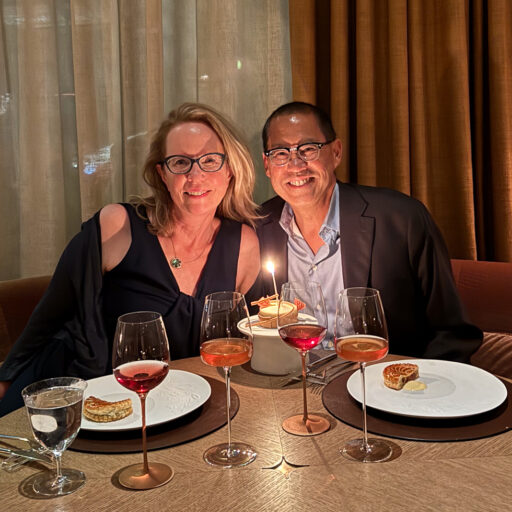
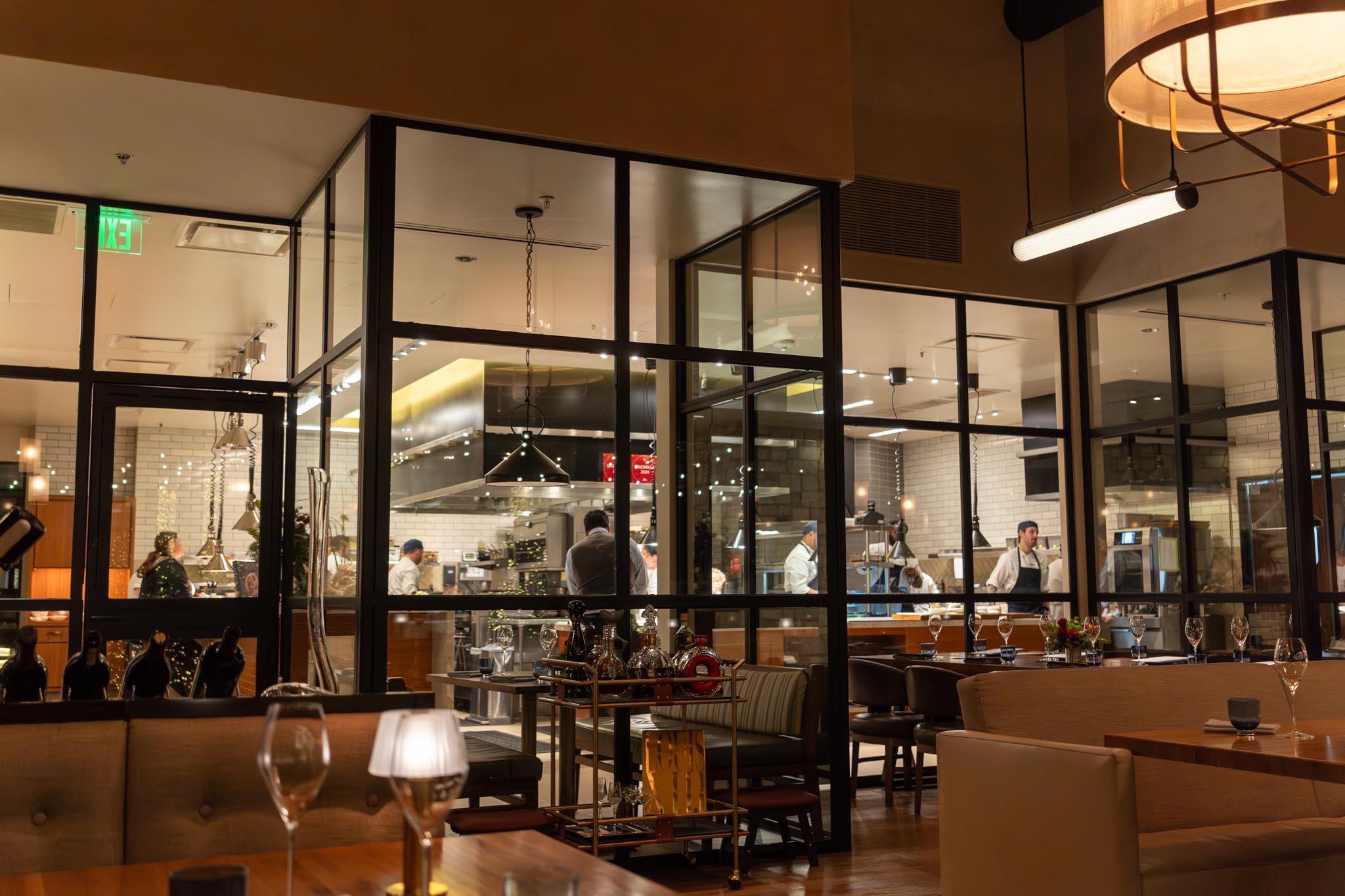
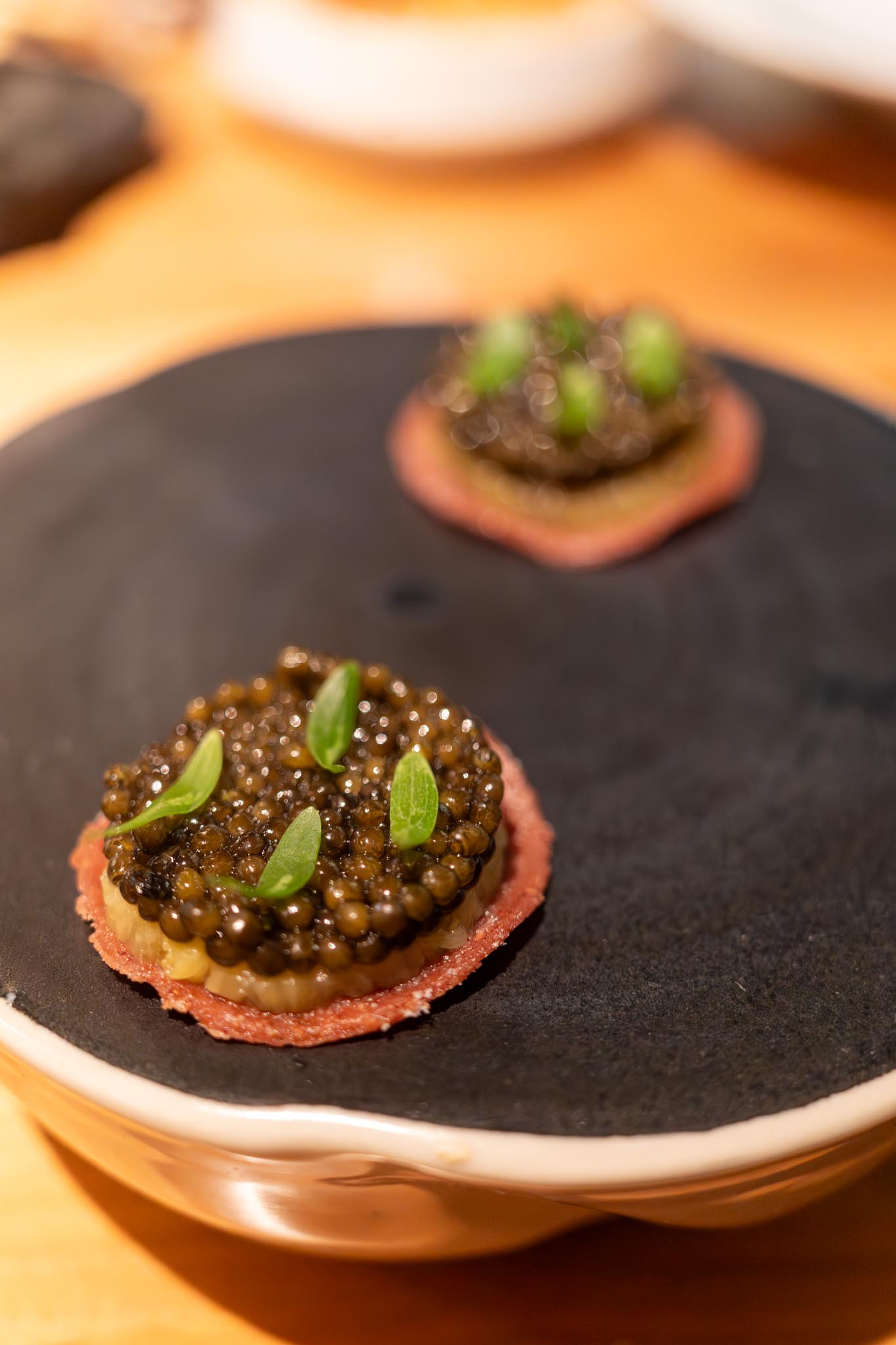
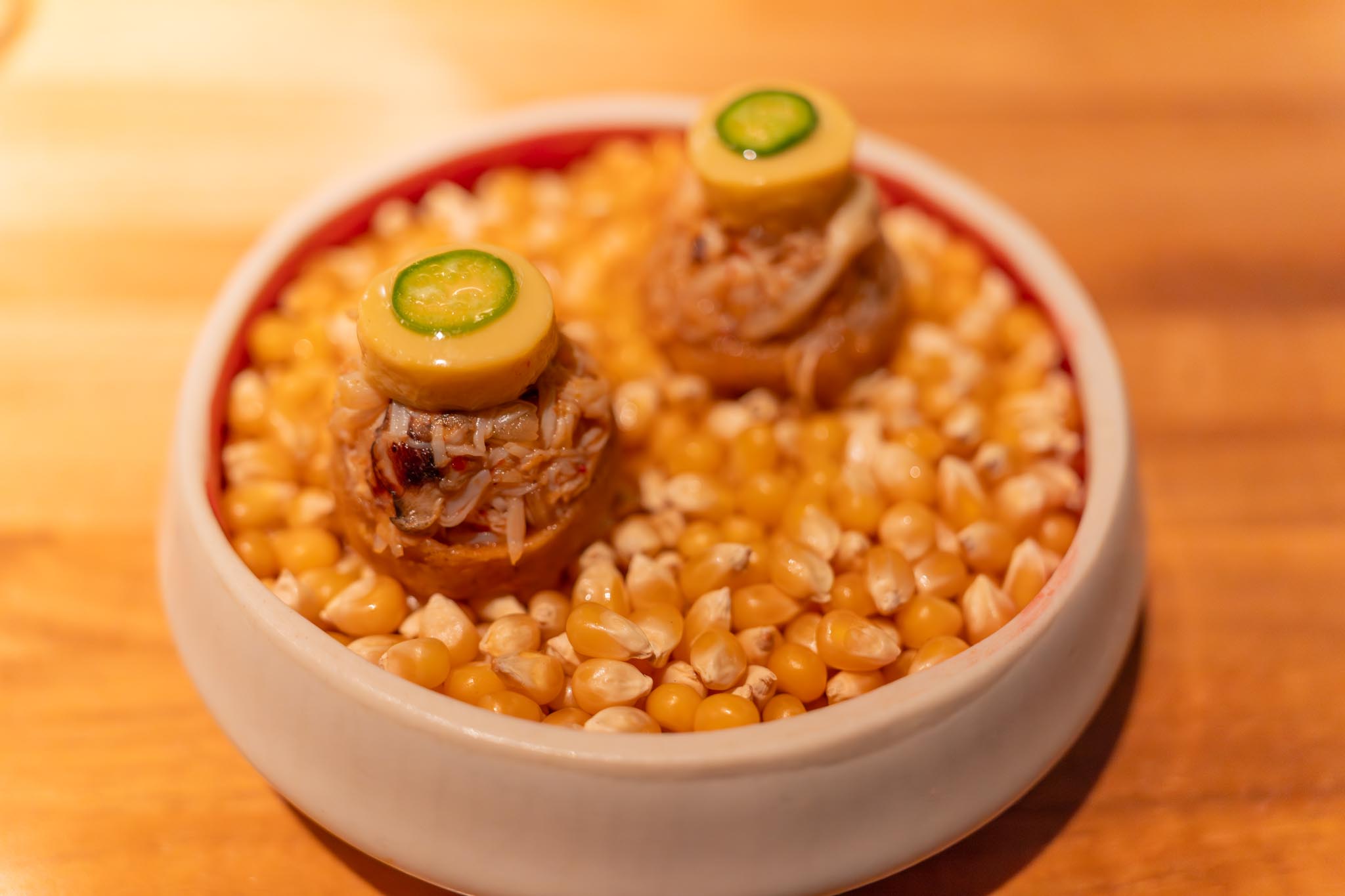
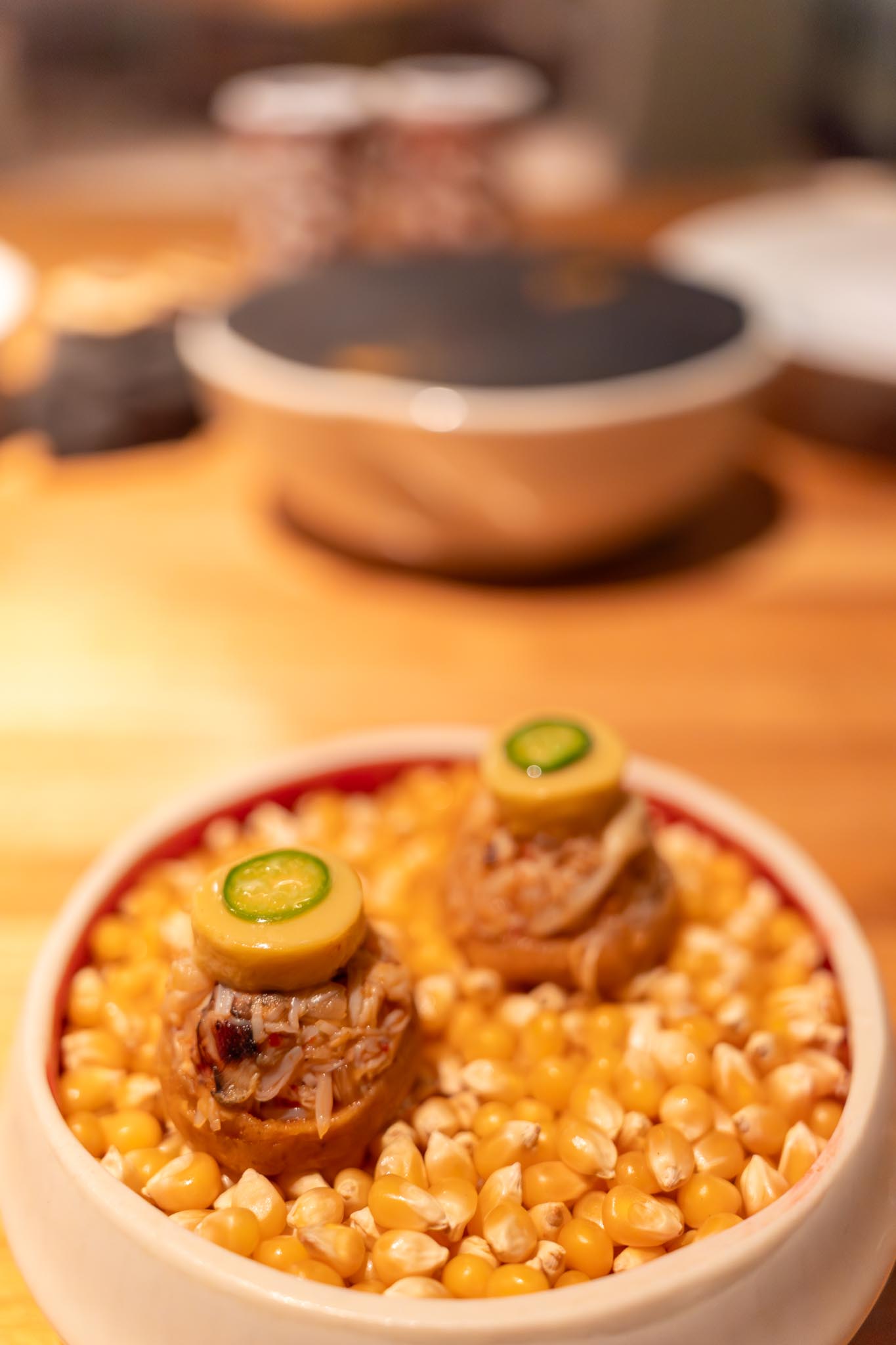
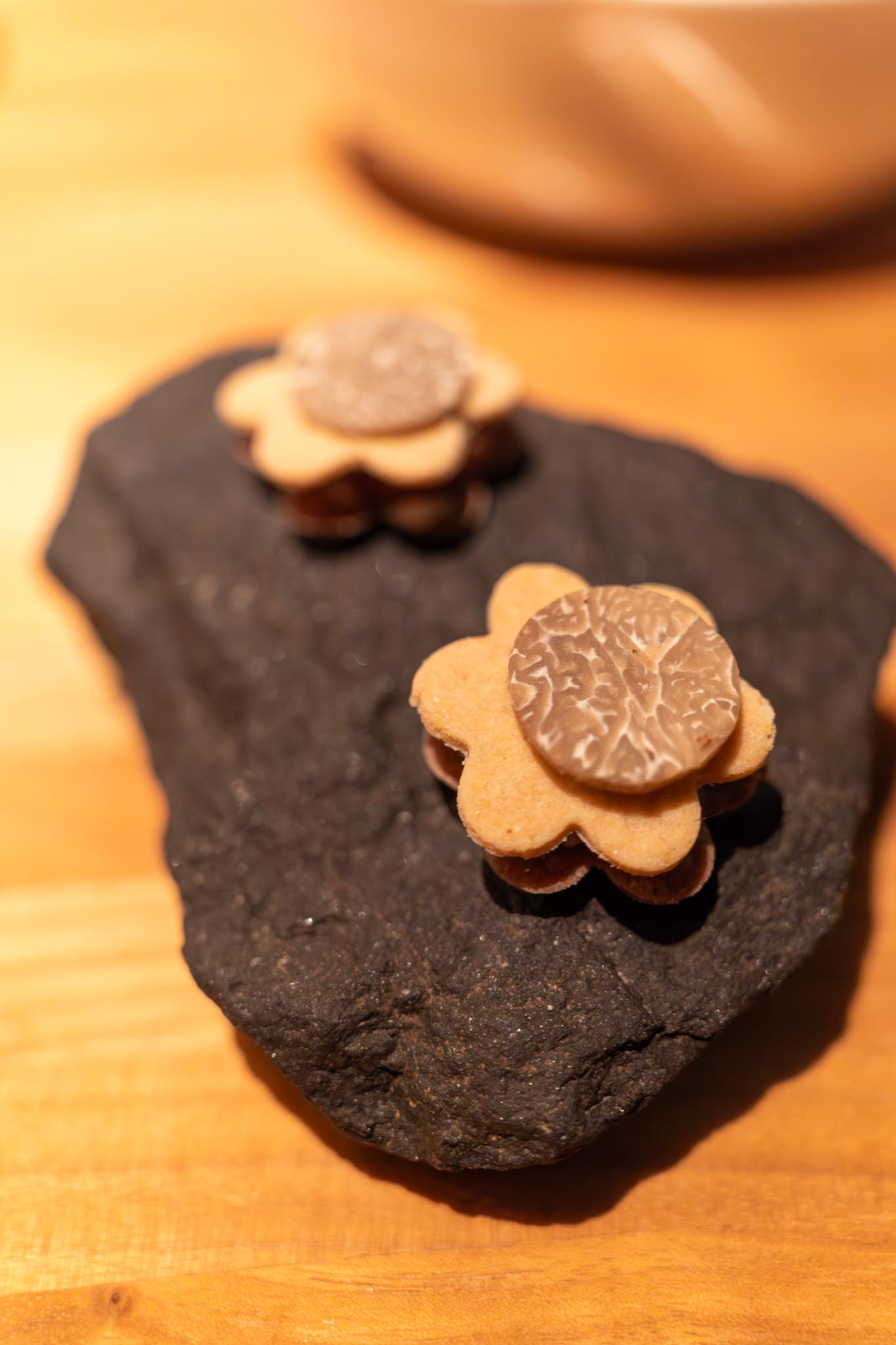
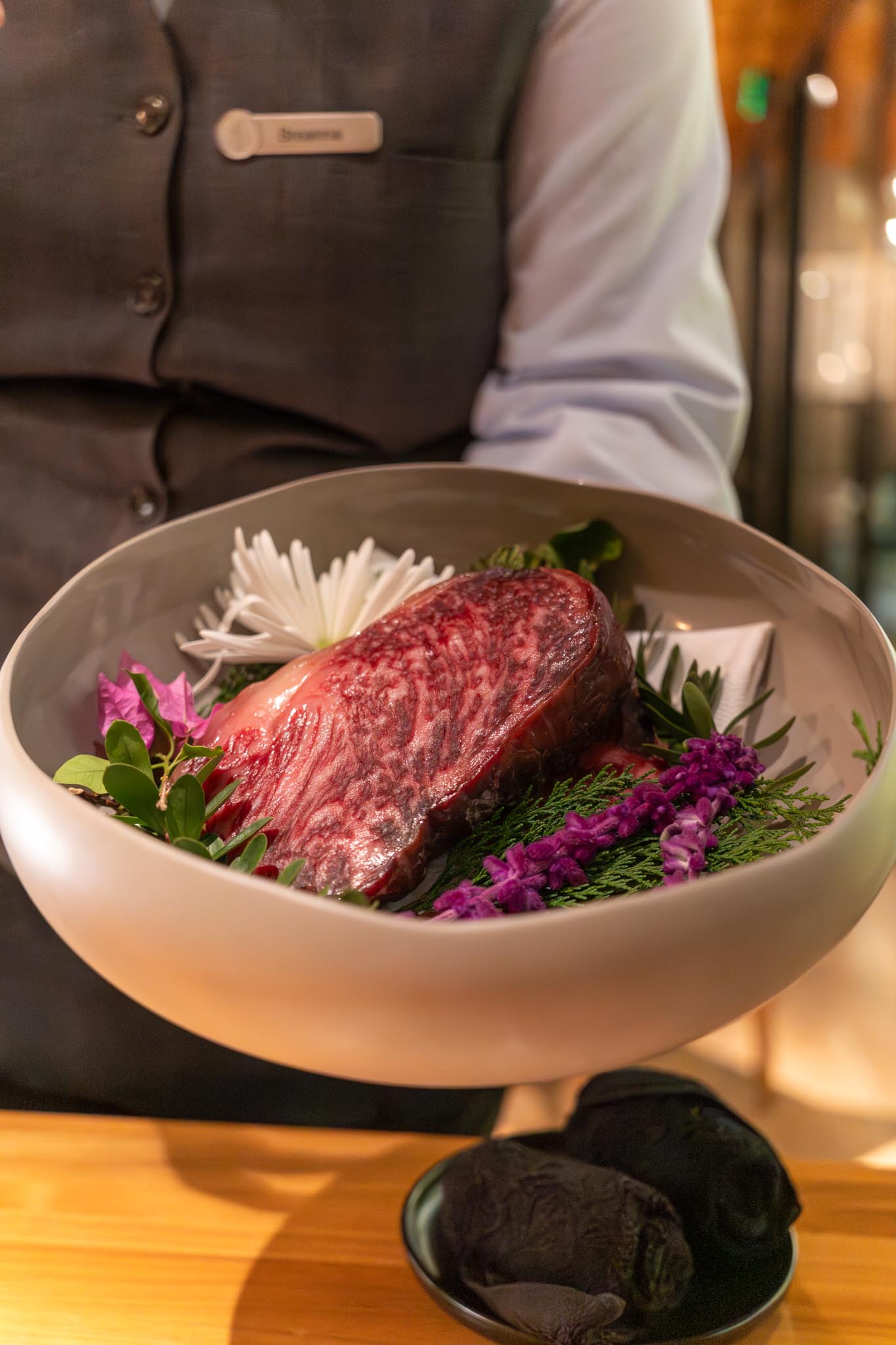
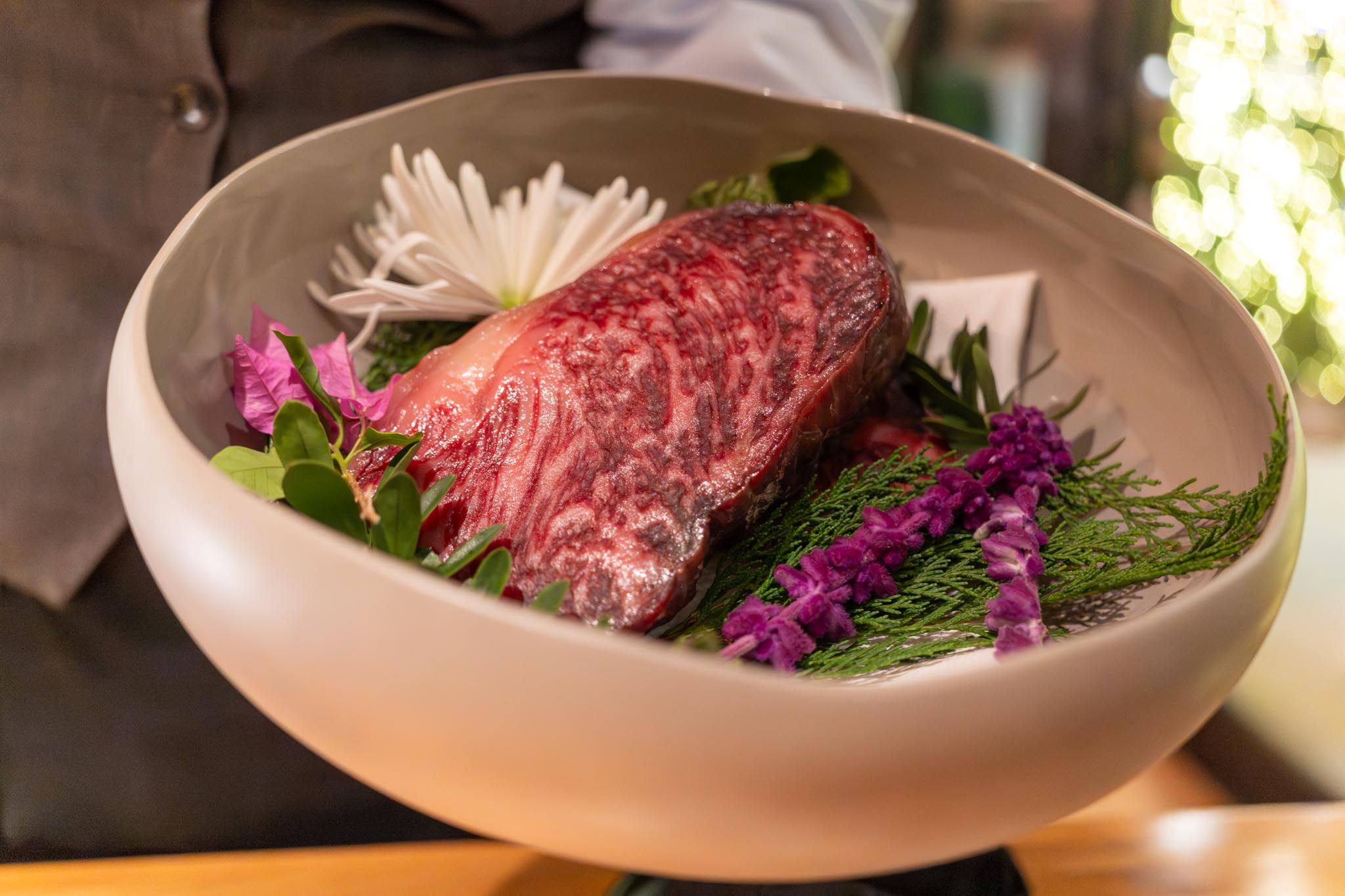
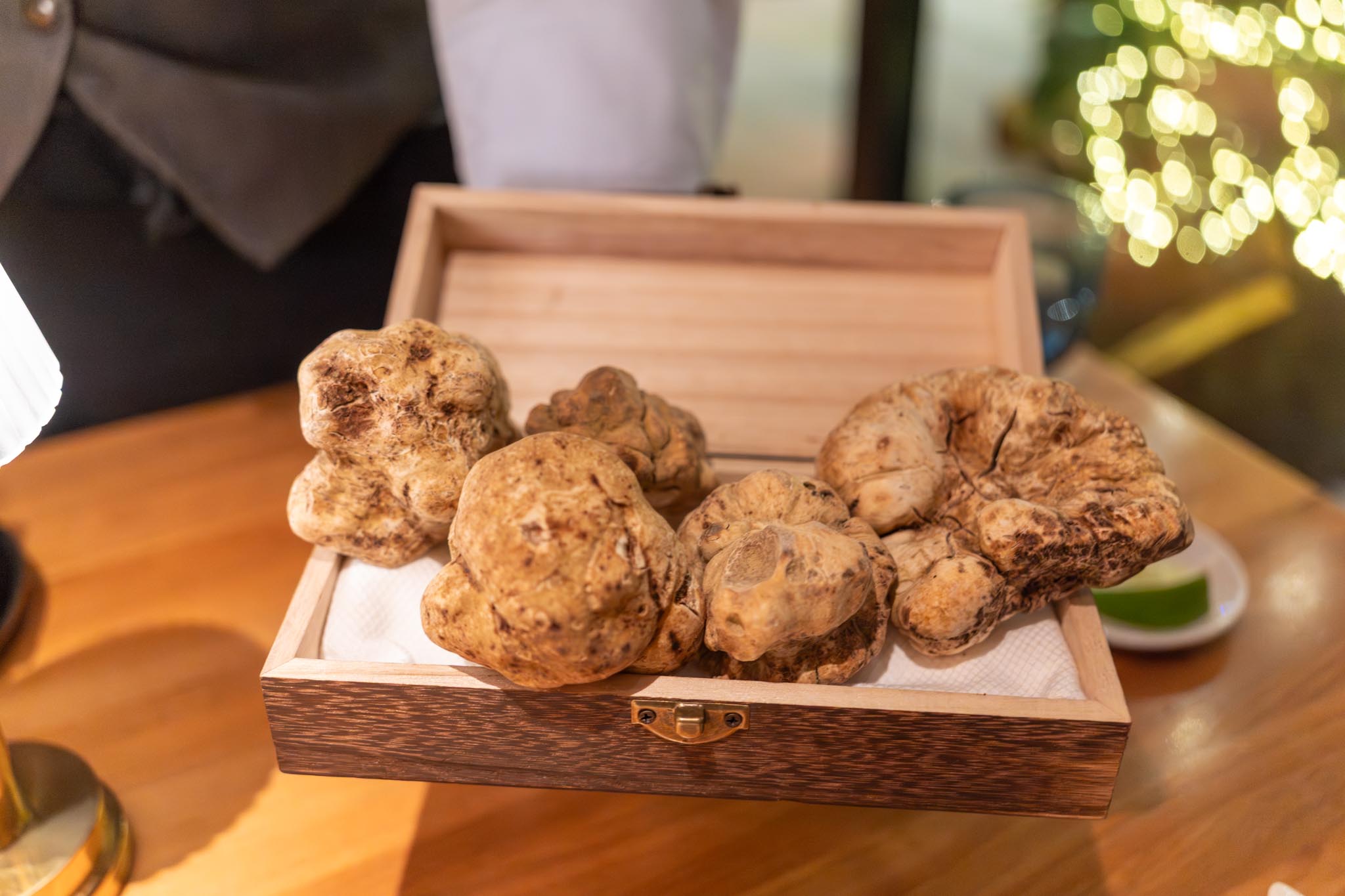
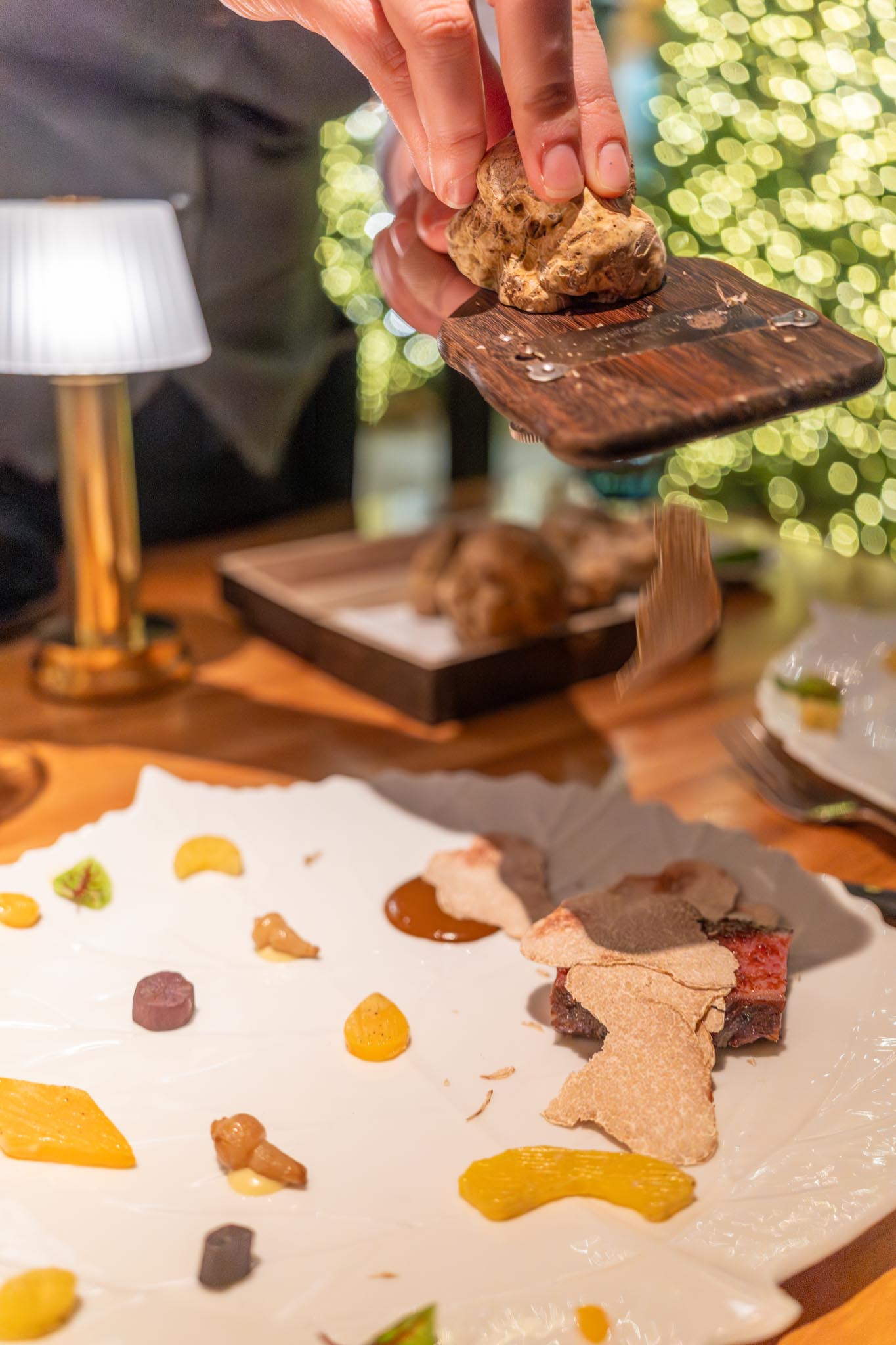
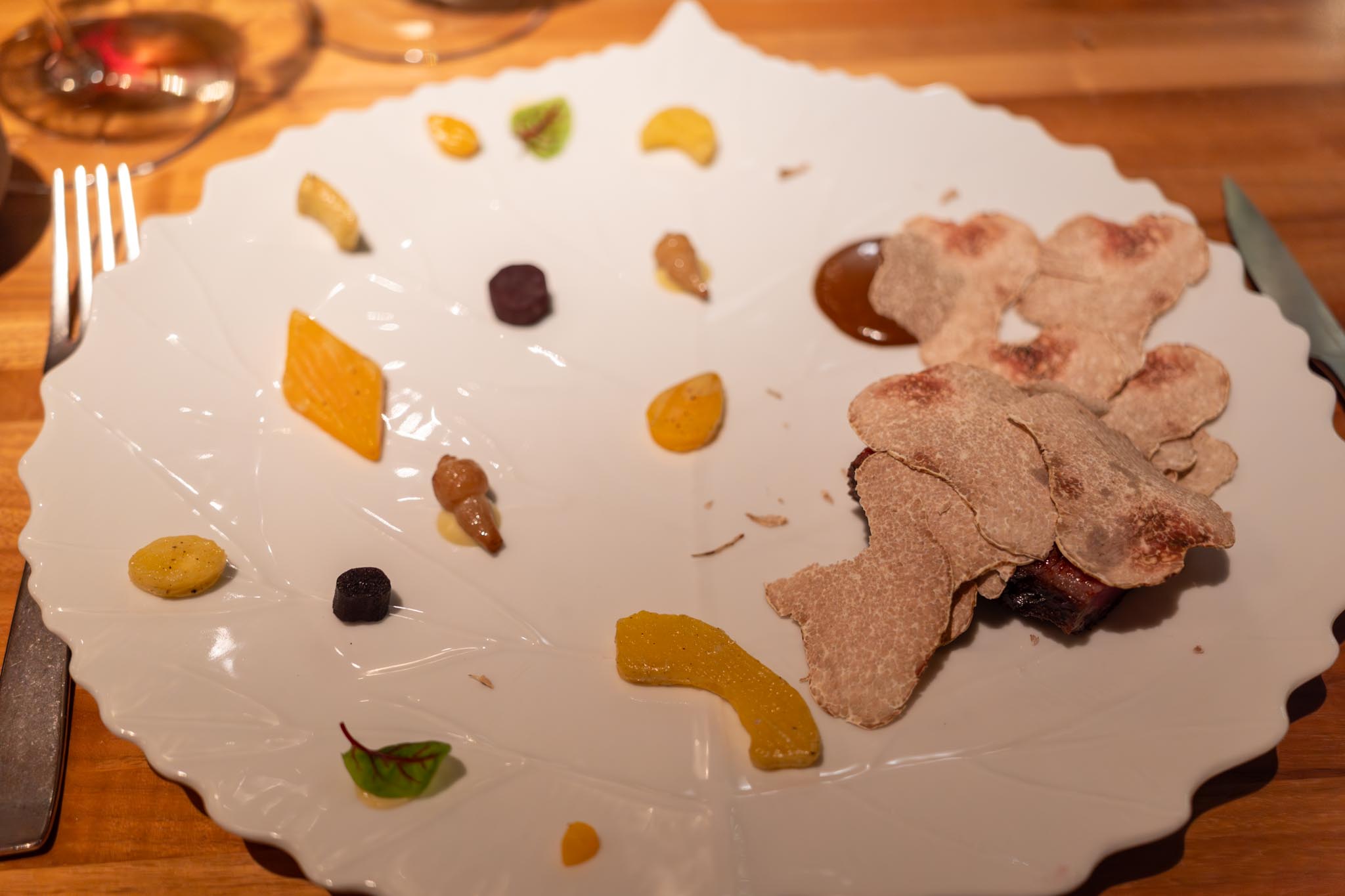
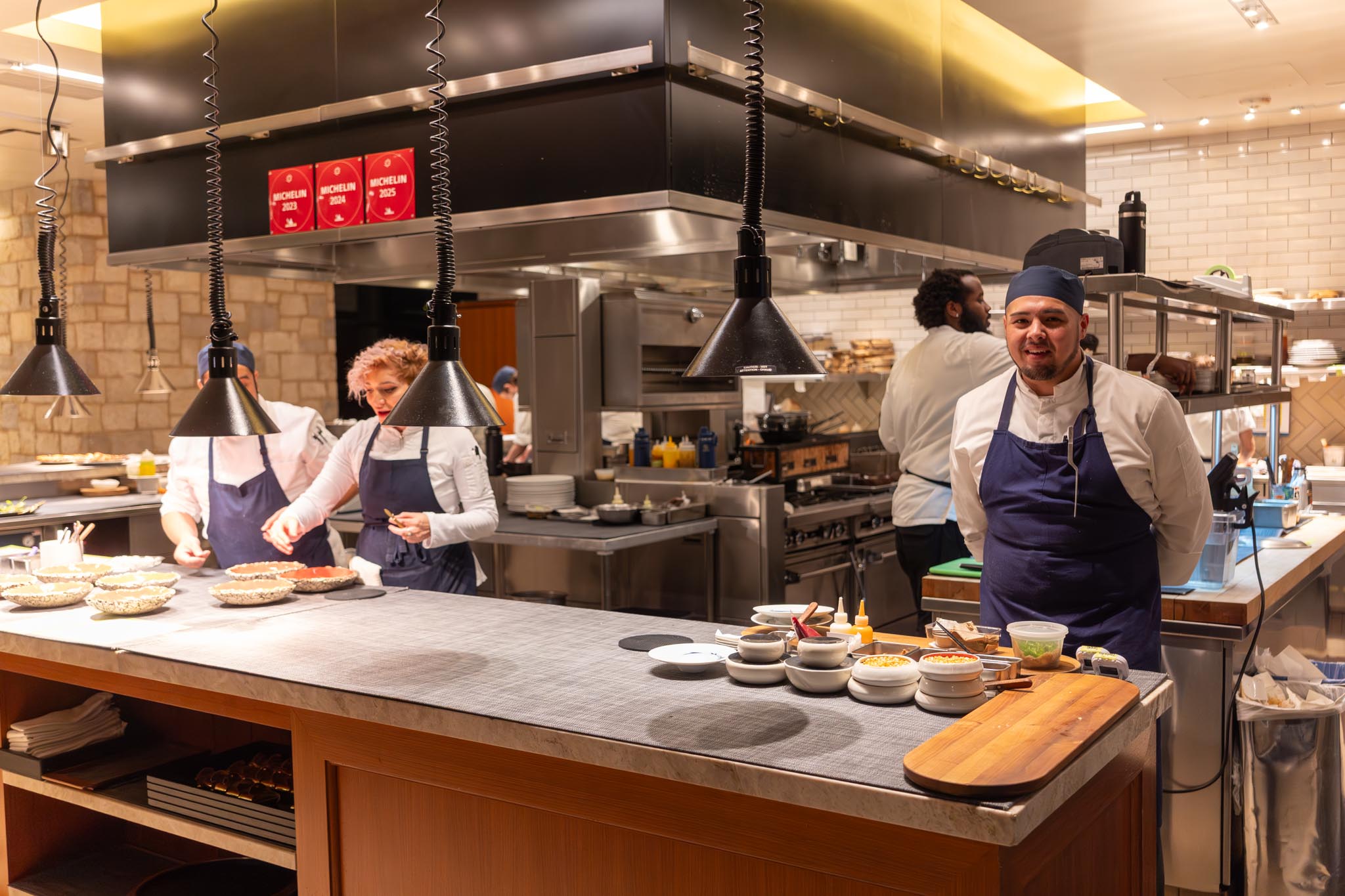
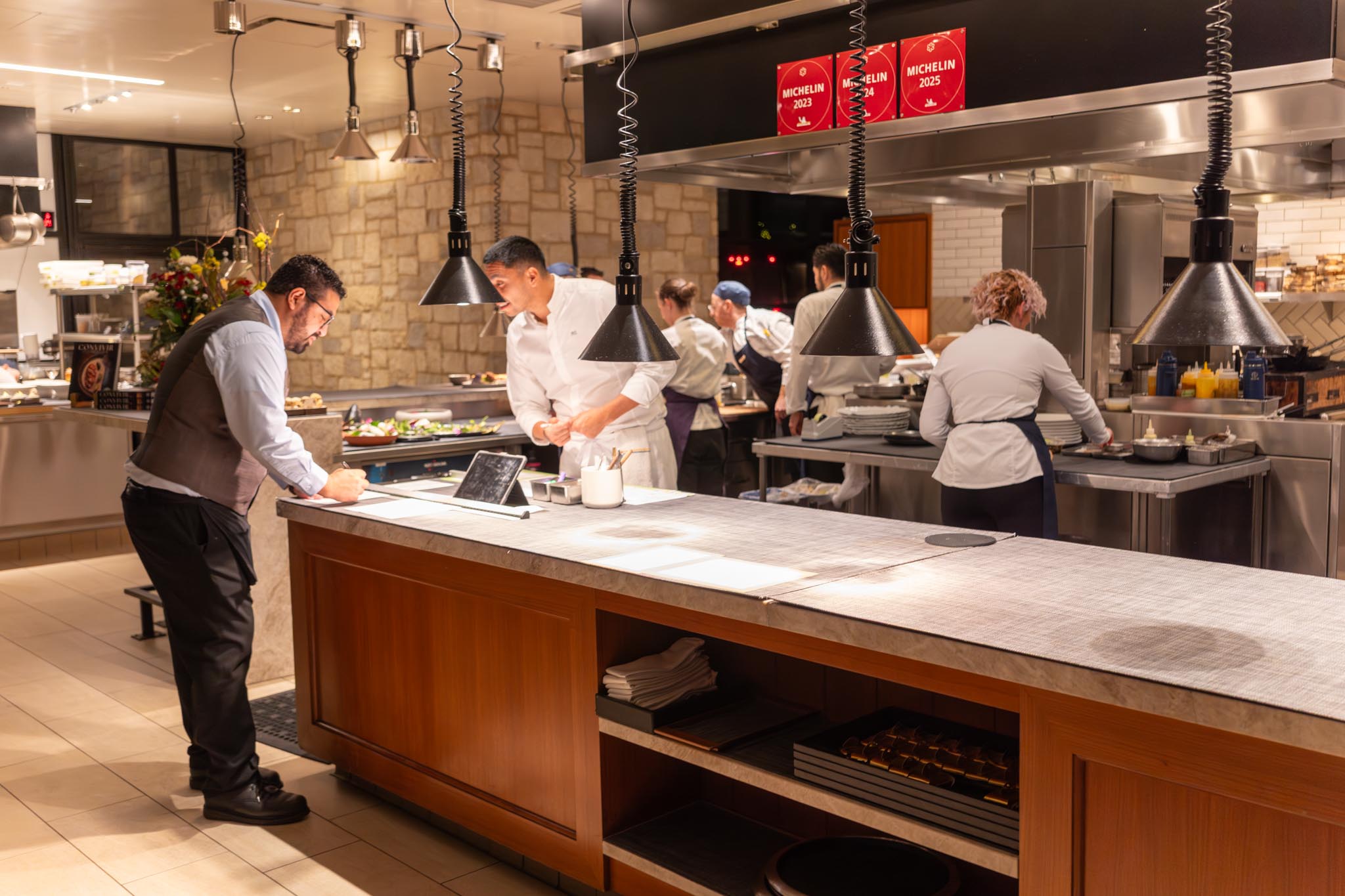
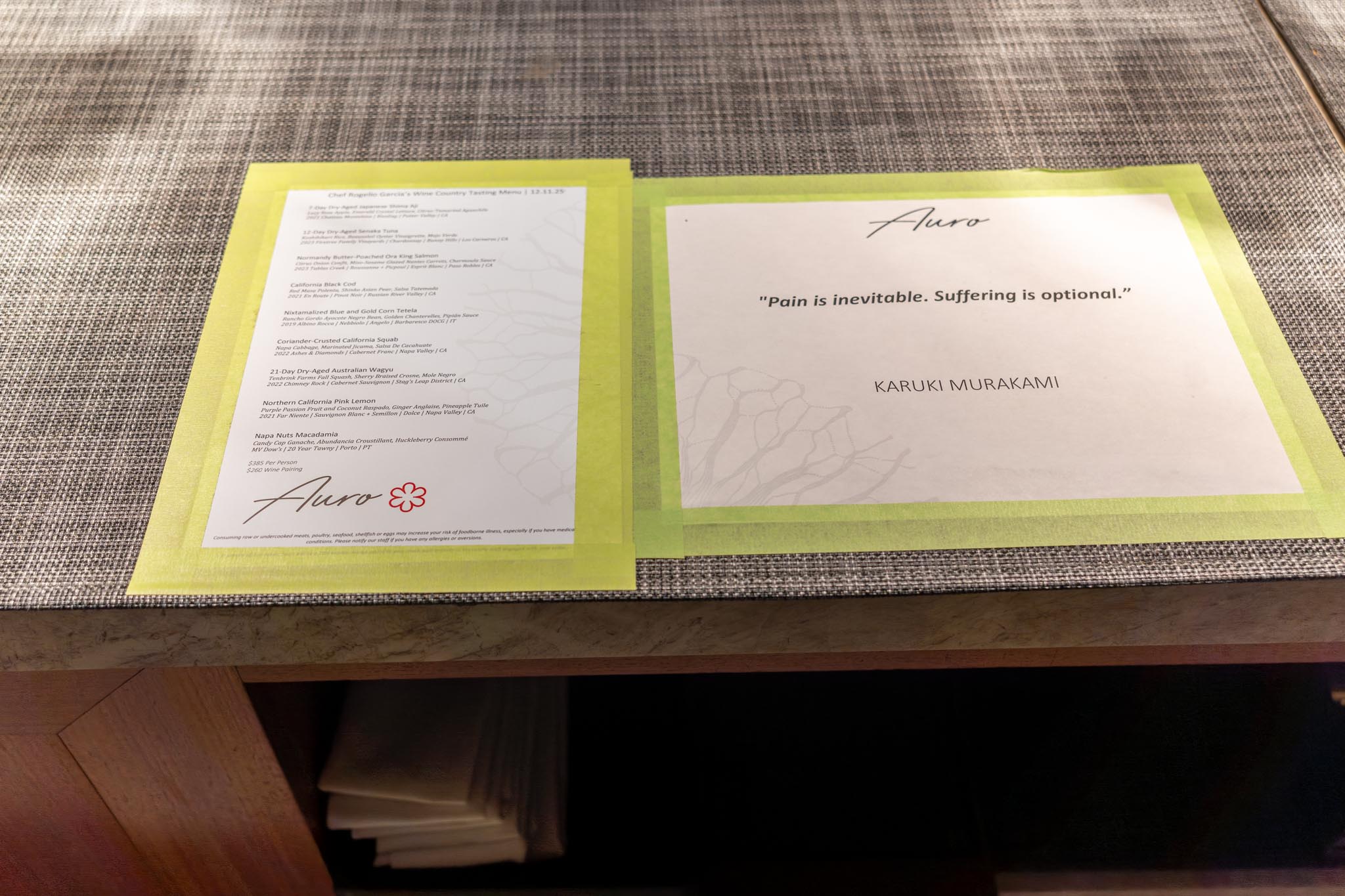
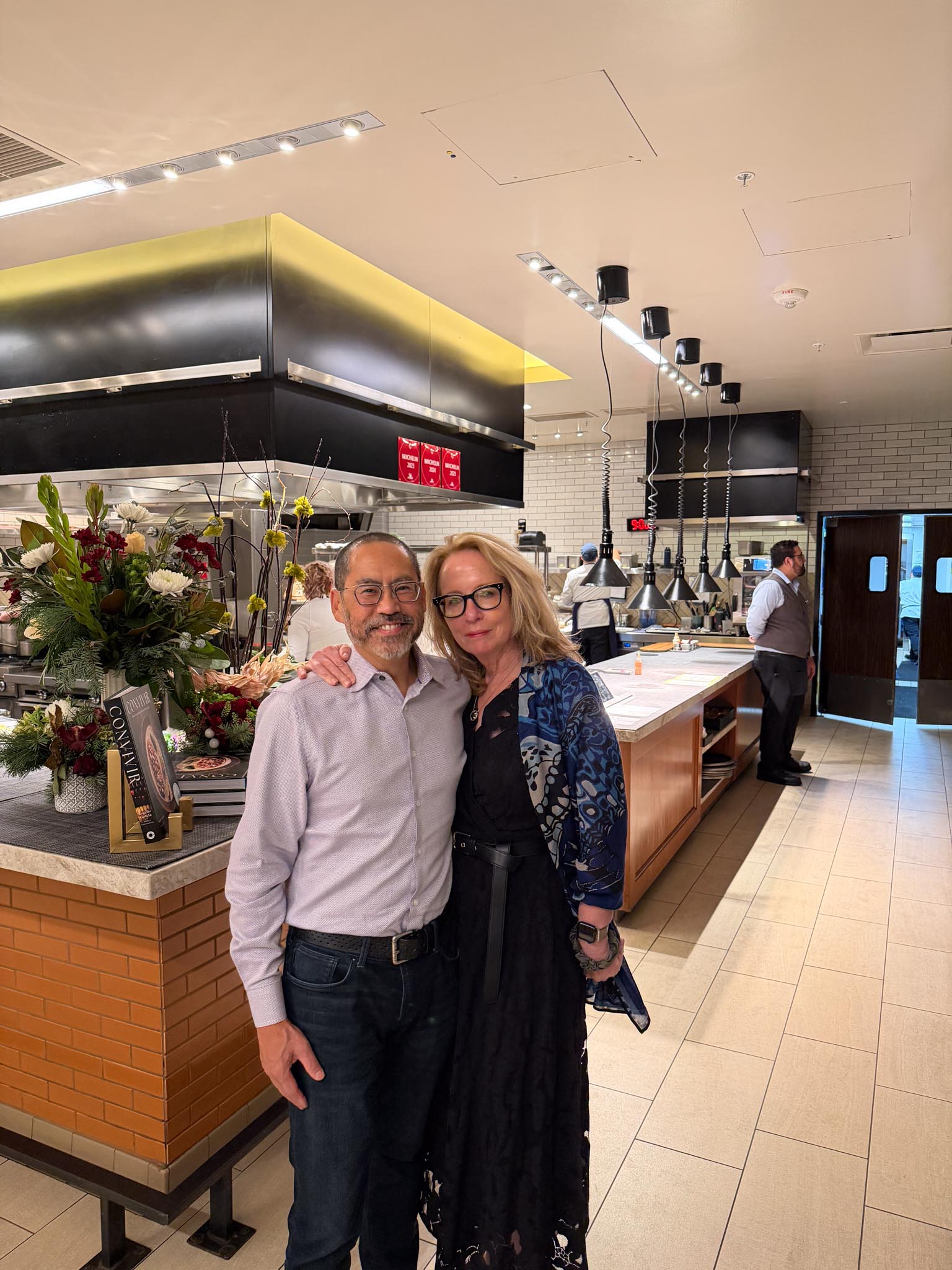
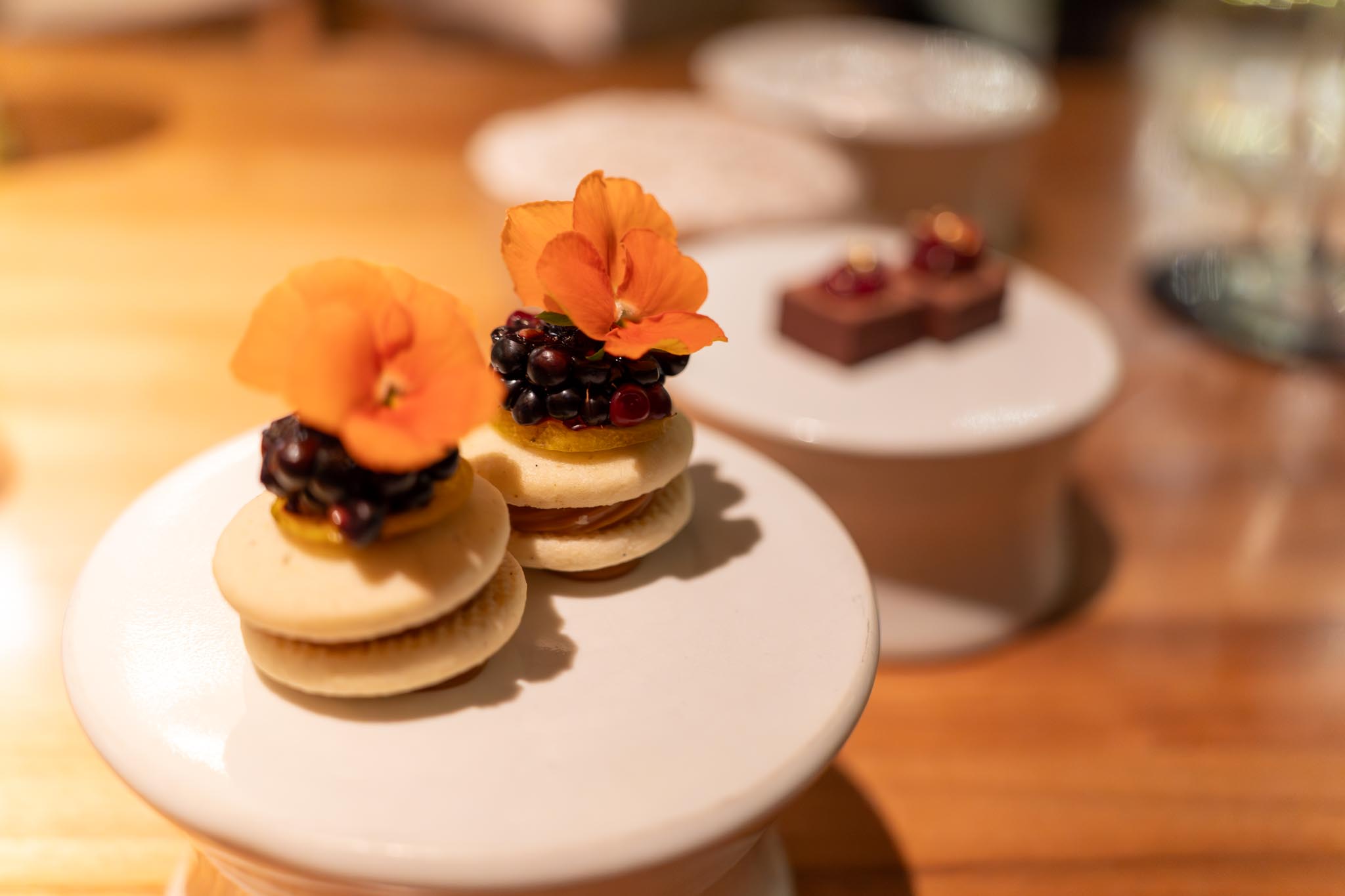
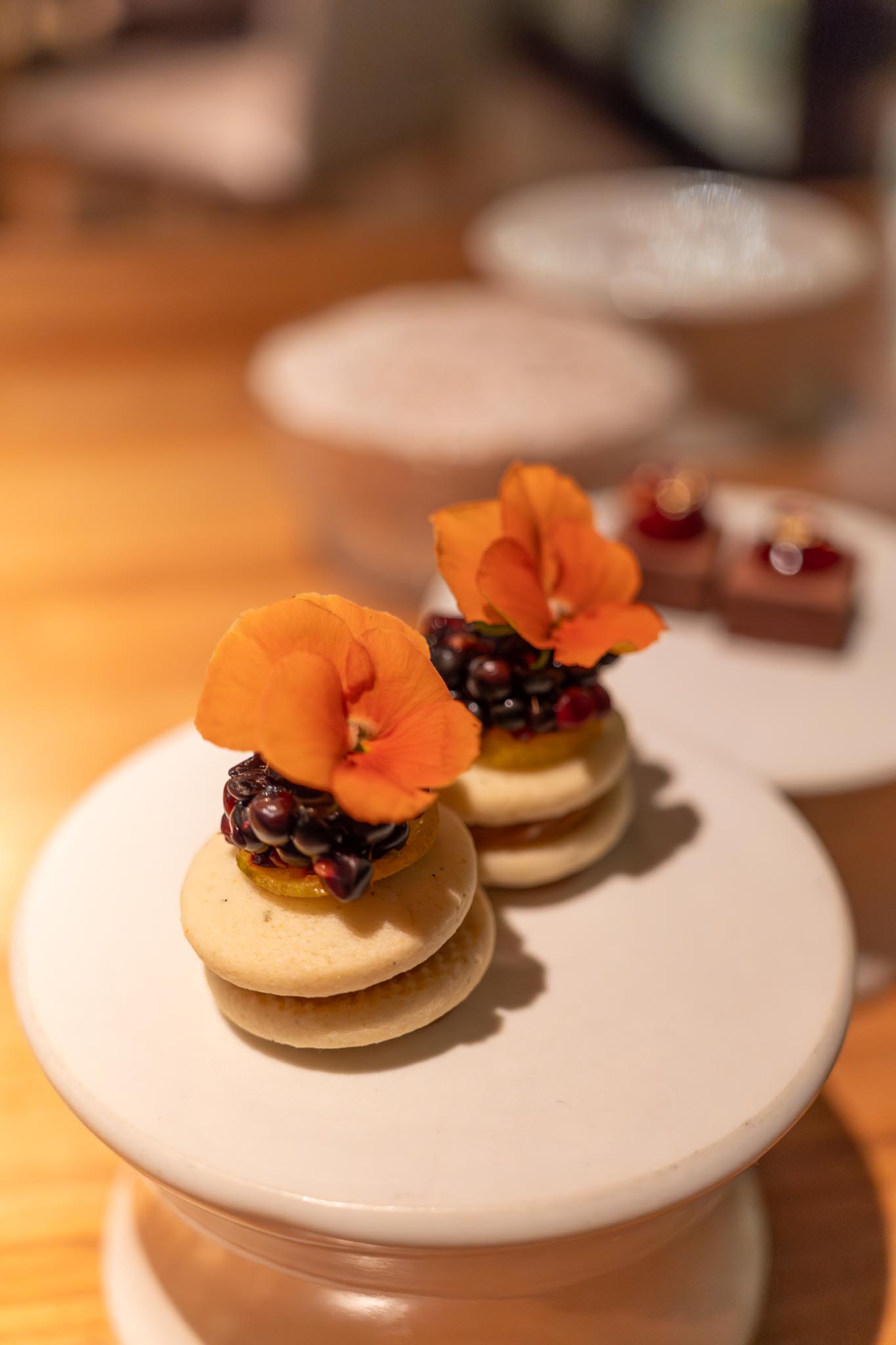
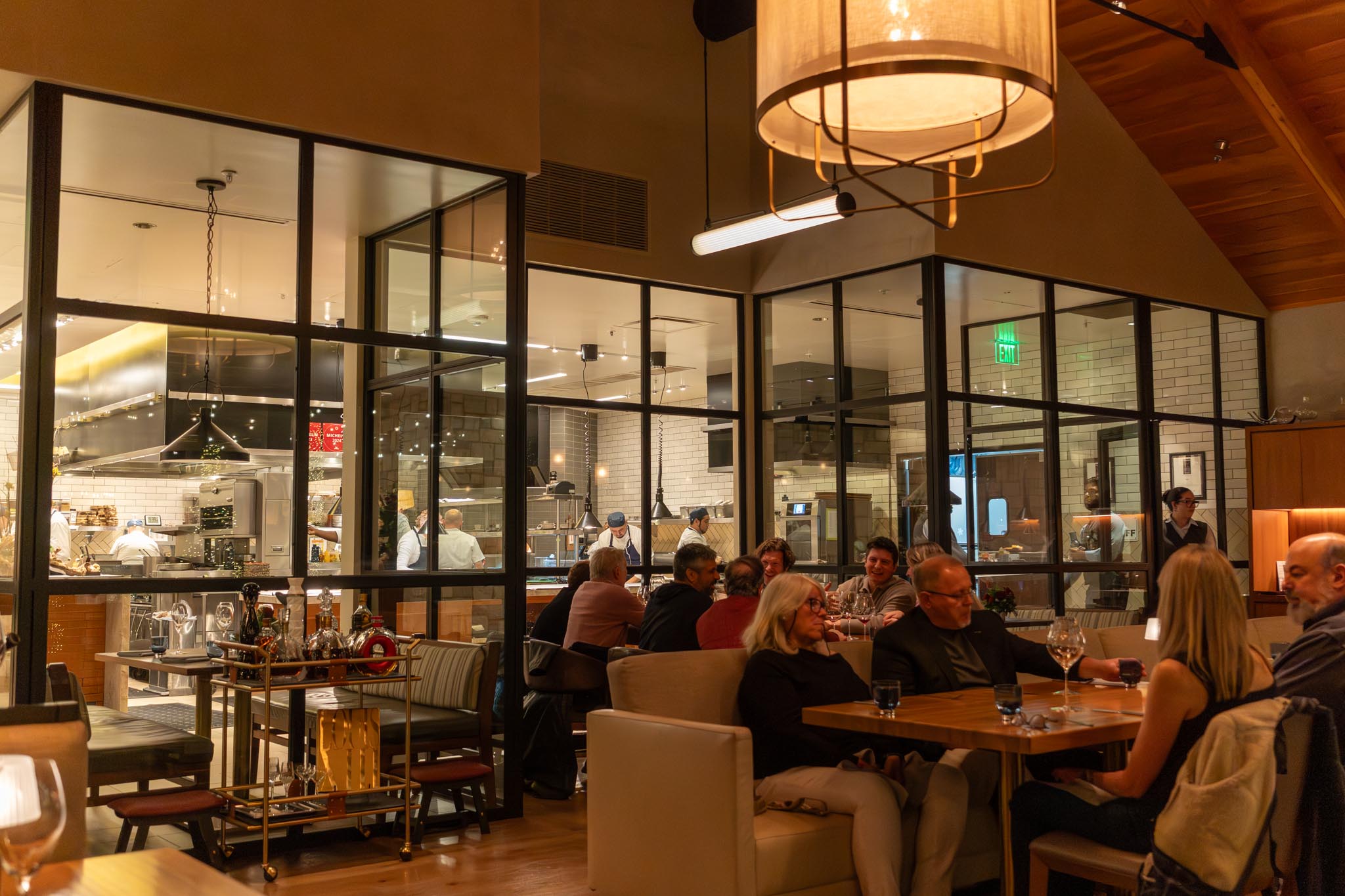
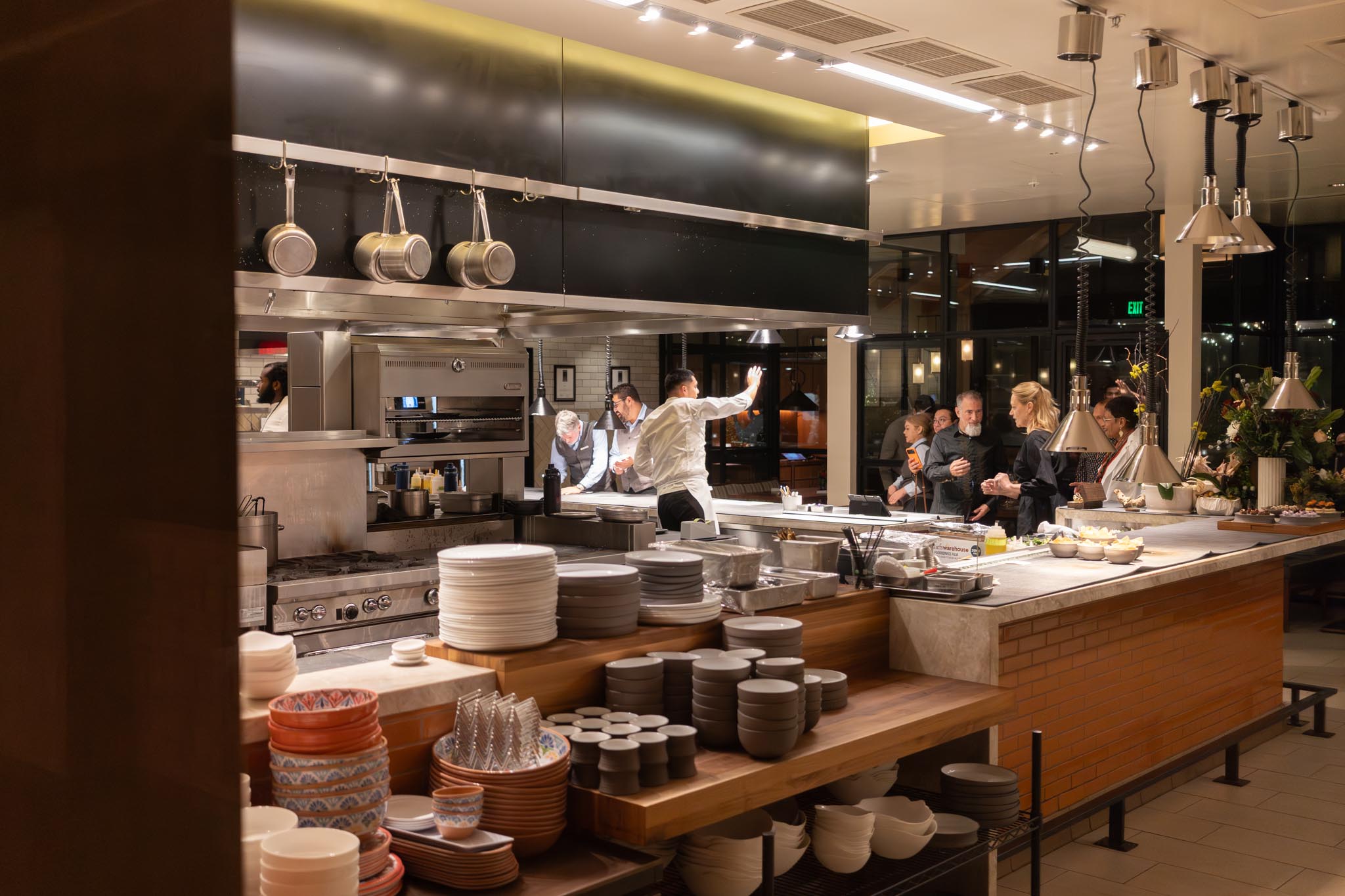
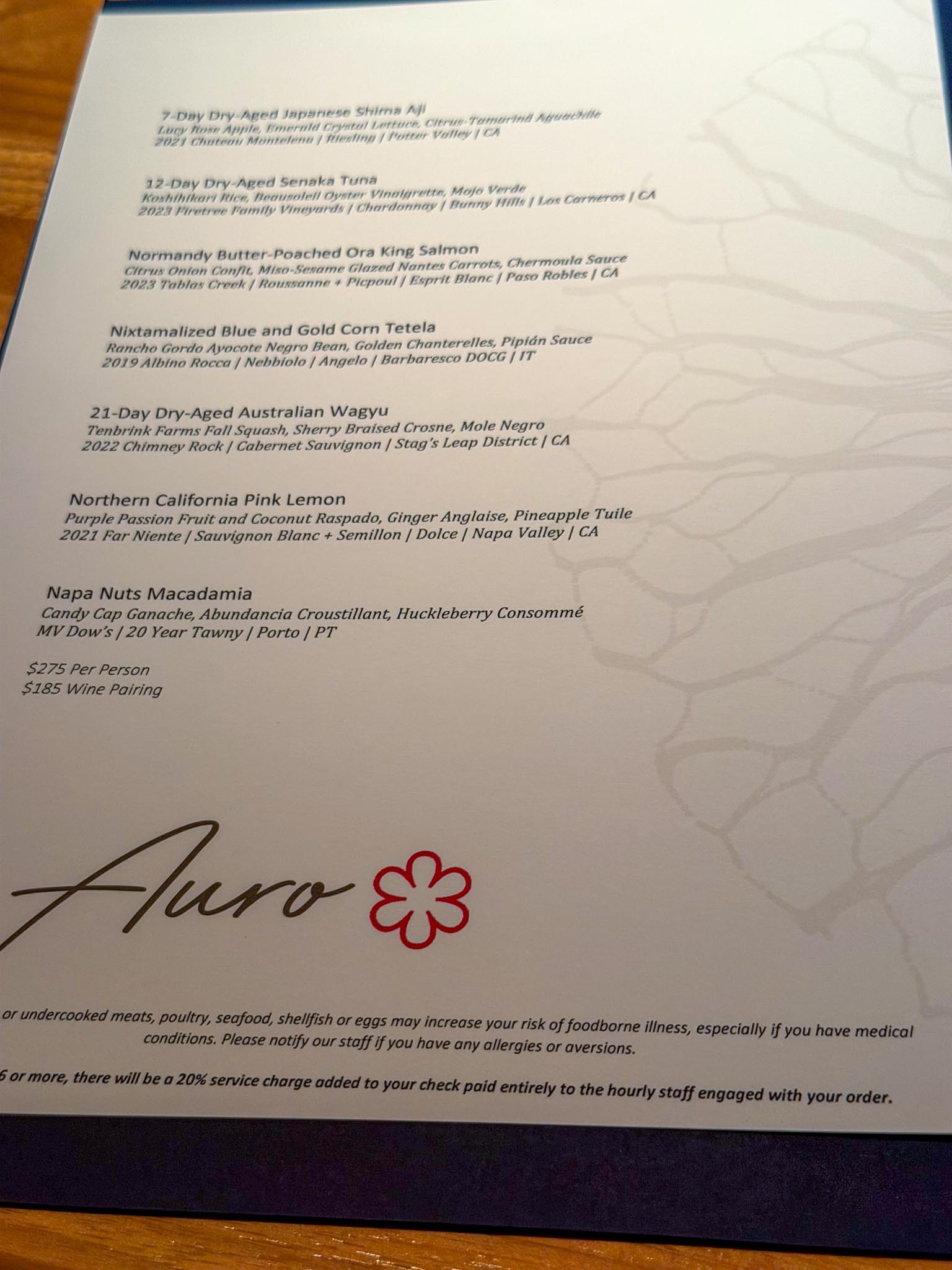
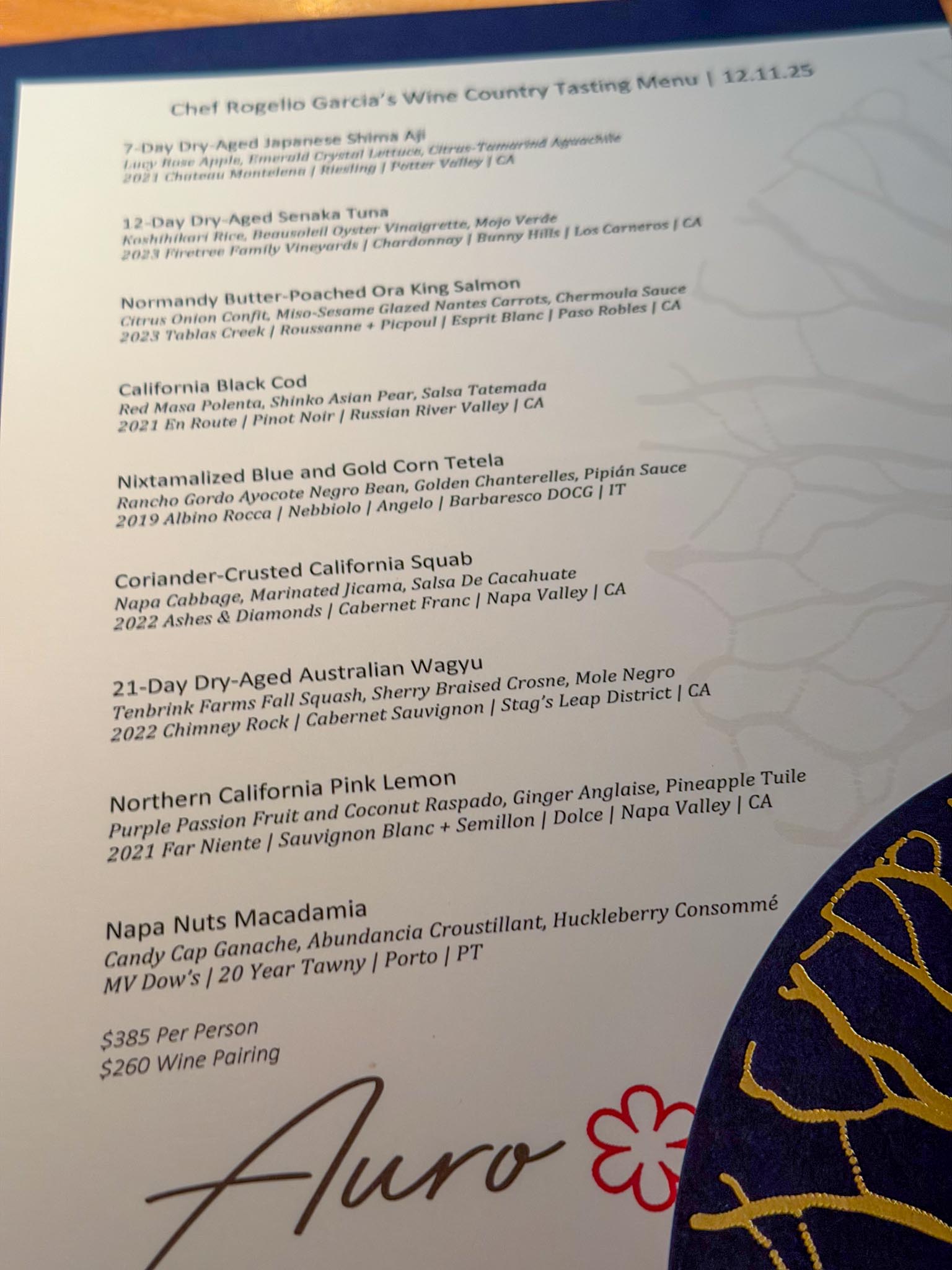
This place hadn’t been on my radar, but it was one the last remaining stars from wine country to San Francisco (and east bay) to the peninsula at which i had not yet eaten. It’s somewhat Californios meets Cyrus since he is from Mexico City and worked at Cyrus (as well as Spruce and TFL). Enjoyable meal, good flavors, balanced, layered. Dining room feel less bespoke fine dining than the experiences at either Cyrus or Californios (didn’t help that there was super loud group and there is a lot of glass walls reflecting sound. White truffle was completely a bust. Nice presentation and good looking white truffles from Alba ($140 upcharge), but they kept them in a wooden box and when I saw them in the kitchen, the were displayed that way with the box open so the truffles were a bit dried out and the dish we had it with (wagyu) didn’t have much sauce and the wagyu was dry aged Australian wagyu so not as rich and fatty as A5 which would have also worked better. They did though upgrade us from the standard 7-course to the 9-course tasting menu ($275 vs. $385) and pairing ($185 vs $260).
(AI Placeholder below)
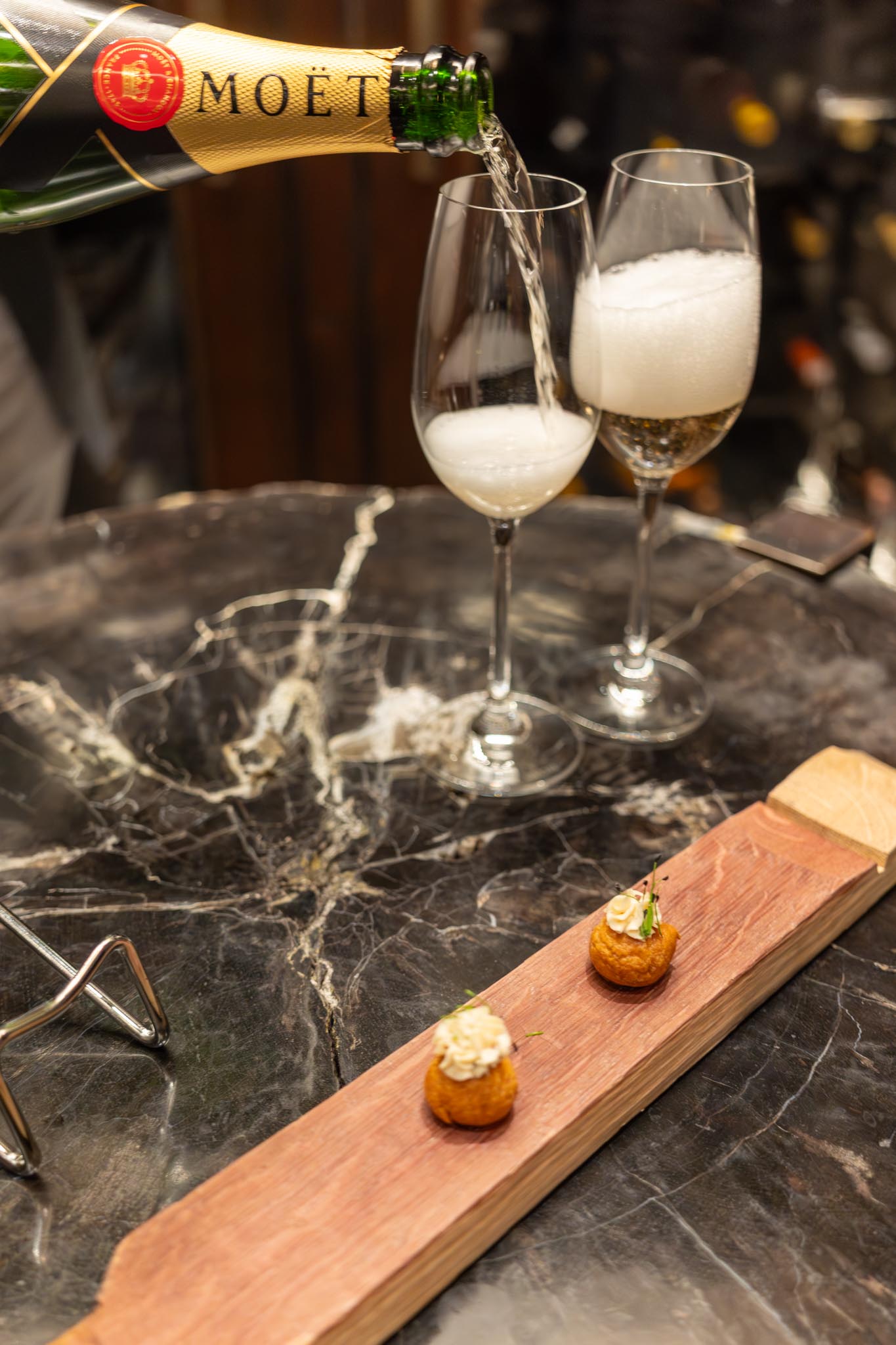
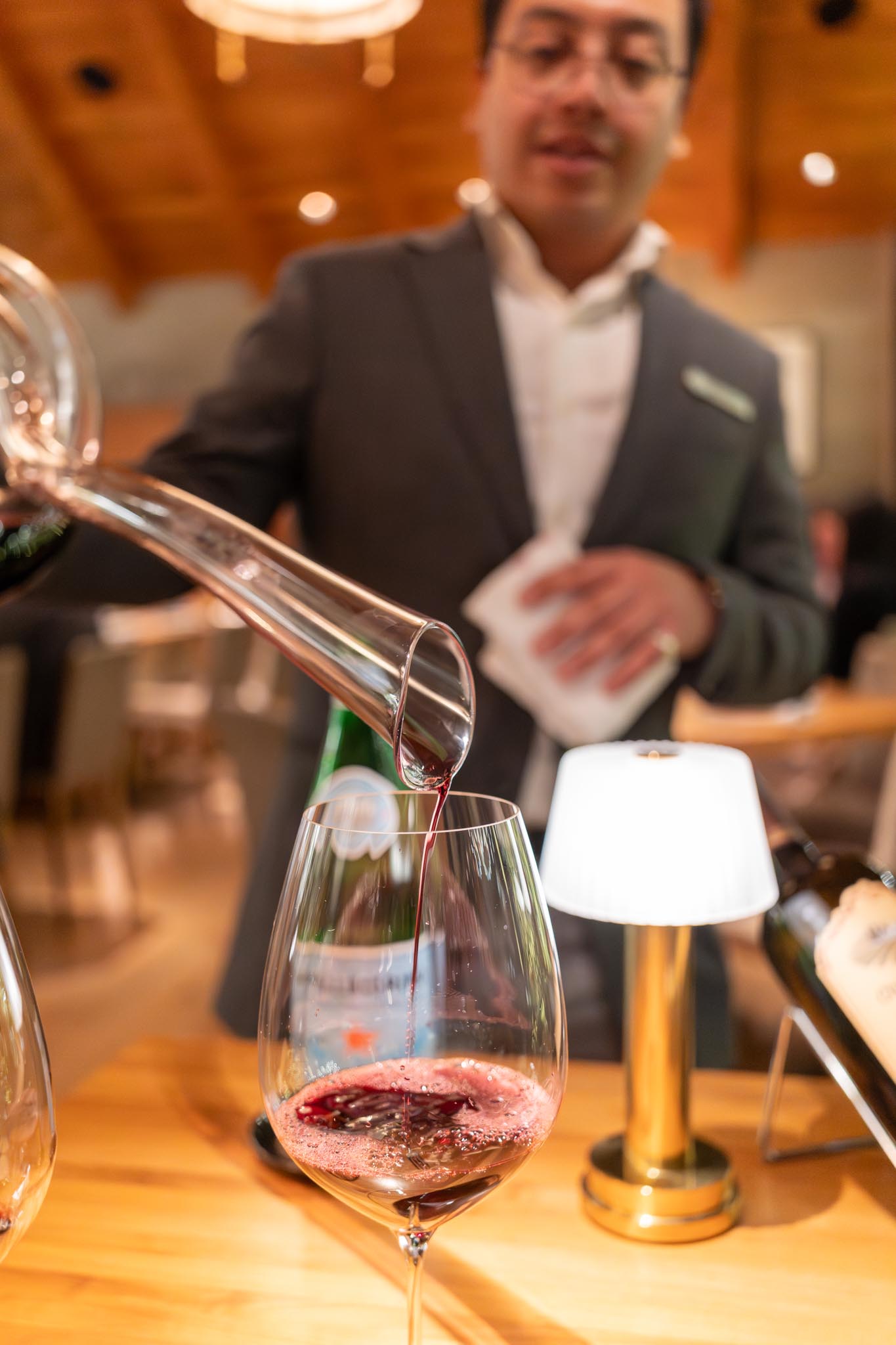
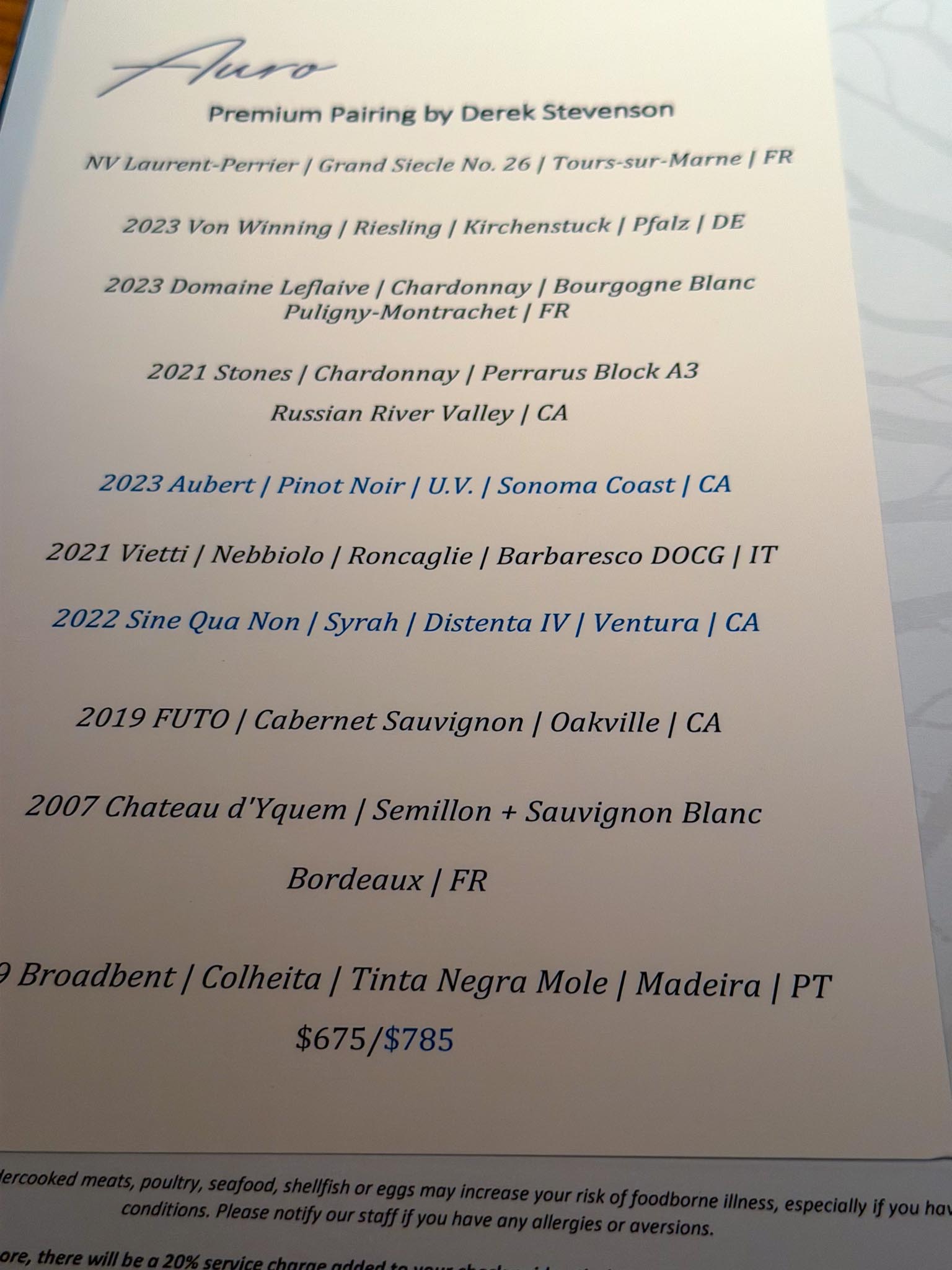
We ended up here for a special-occasion kind of night, the sort where a tasting menu feels justified and we’re mentally prepared to be fed for a while. This was Chef Rogelio Garcia’s Wine Country Tasting Menu, which immediately signals California luxury filtered through a very specific, Mexican-influenced lens. Andrea was fully on board from the moment she saw multiple dry-aged fish courses (same), and we opted to go all-in on the tasting with pairings so we could just settle in and let the menu unfold.
Opening Courses
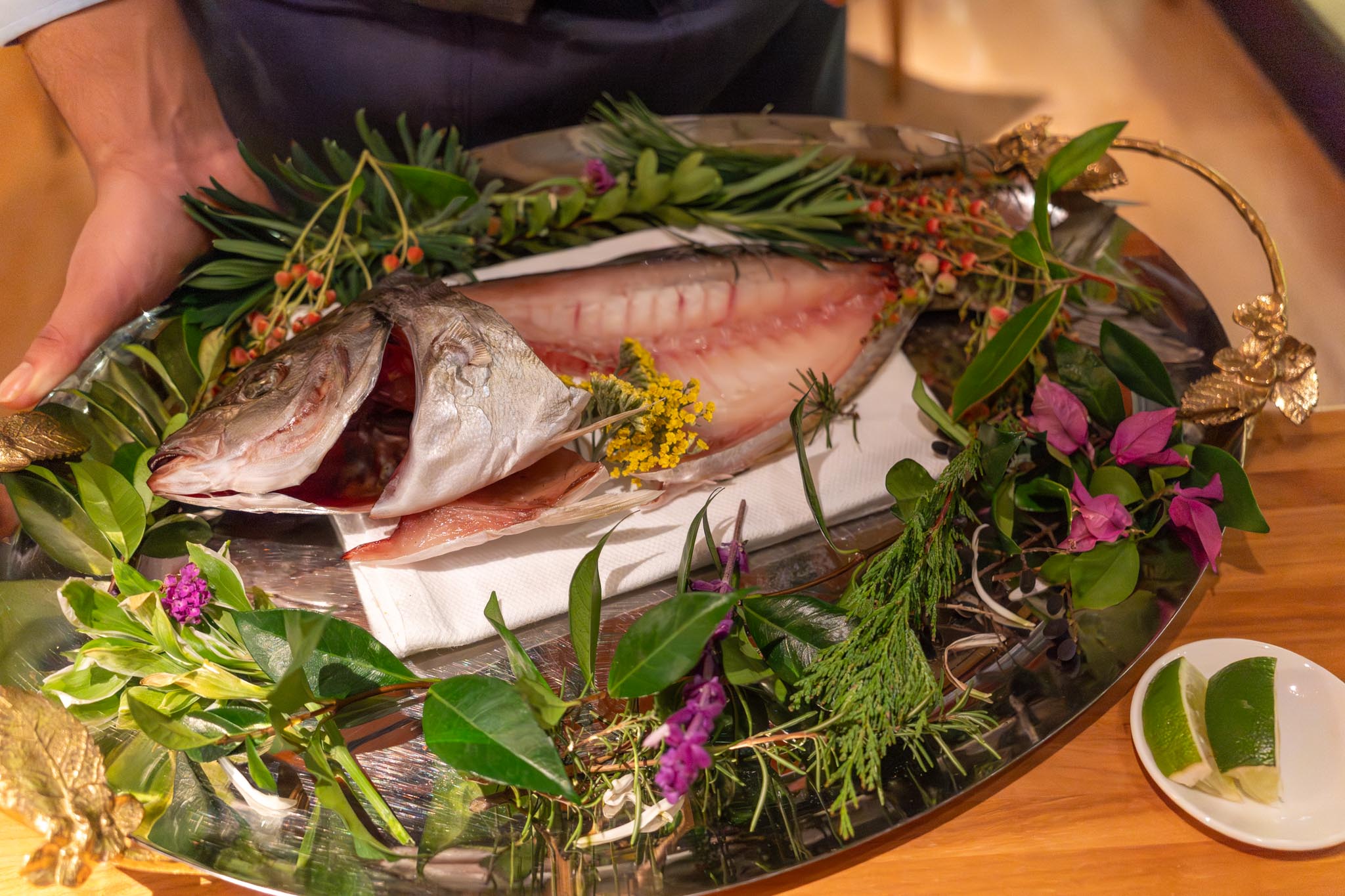
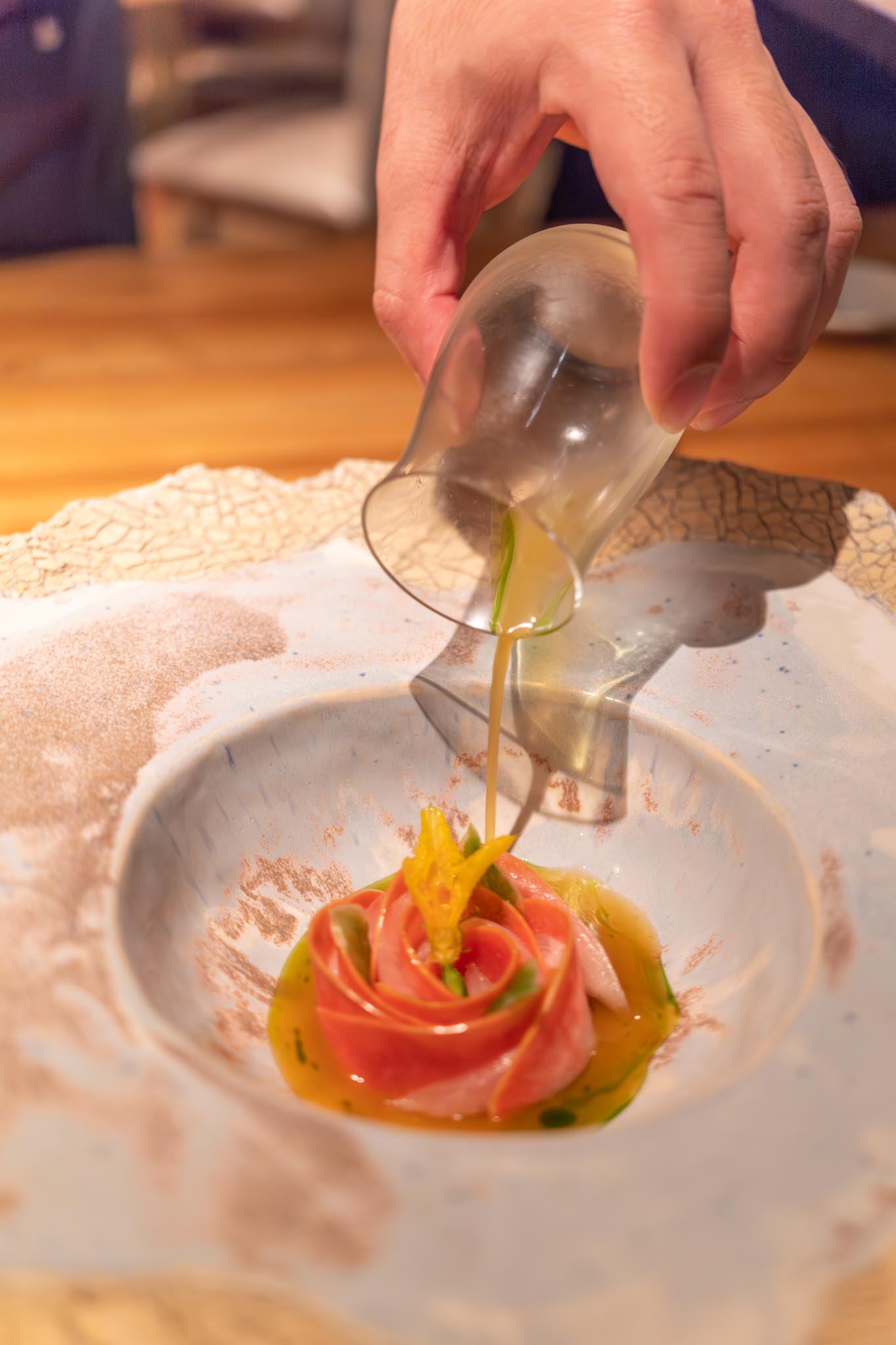
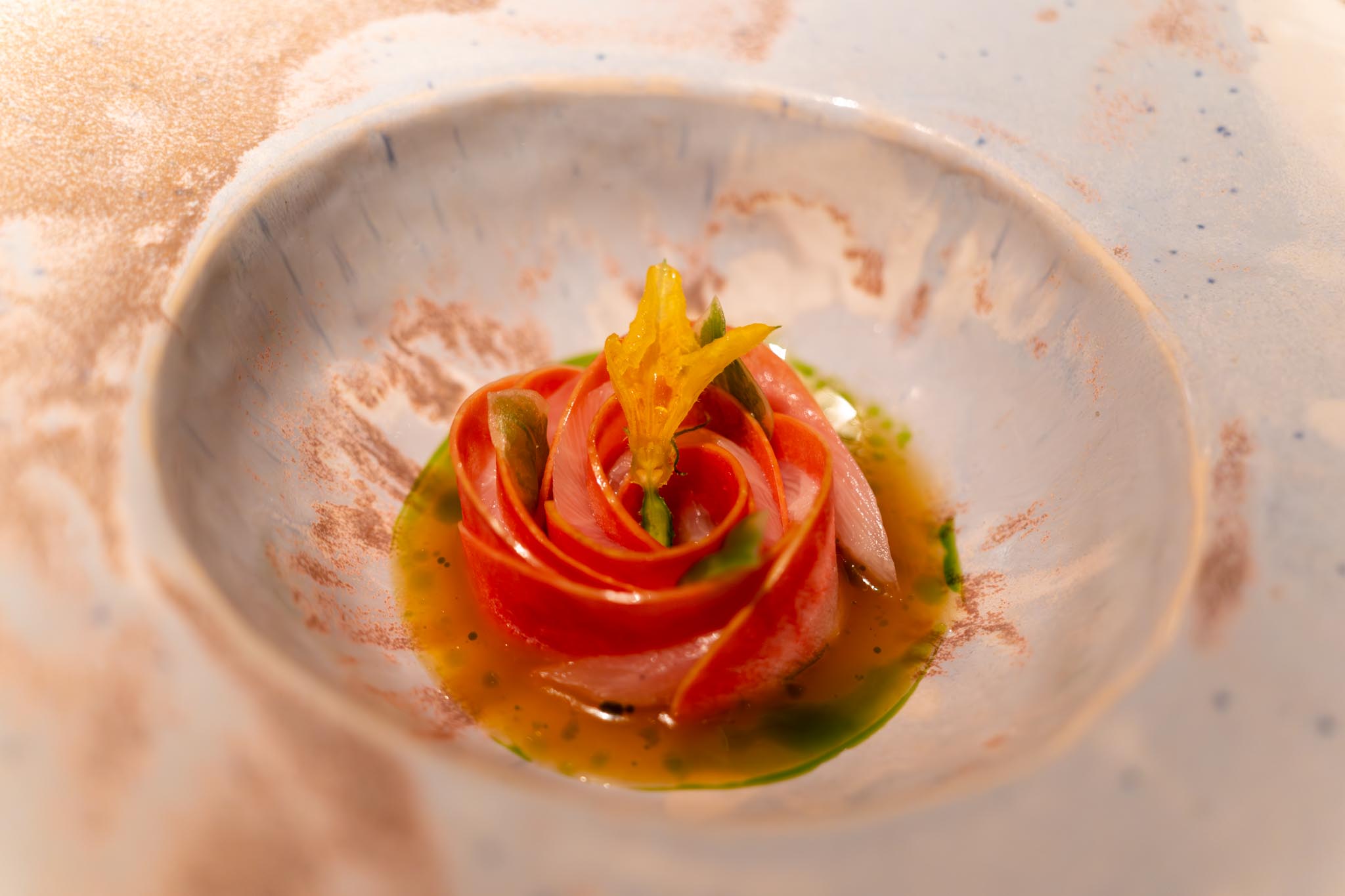
The menu starts delicately with 7-day dry-aged Japanese Shima Aji, paired with koshihikari rice, fresno crystal lettuce, and a citrus-forward aguachile. Even on paper, this reads clean and precise—lean fish, gentle aging, bright acidity. It feels like a table-setter course meant to wake everything up without being aggressive. Andrea immediately liked that this wasn’t trying to be flashy; just good fish, treated carefully, with a restrained but clearly intentional sauce.
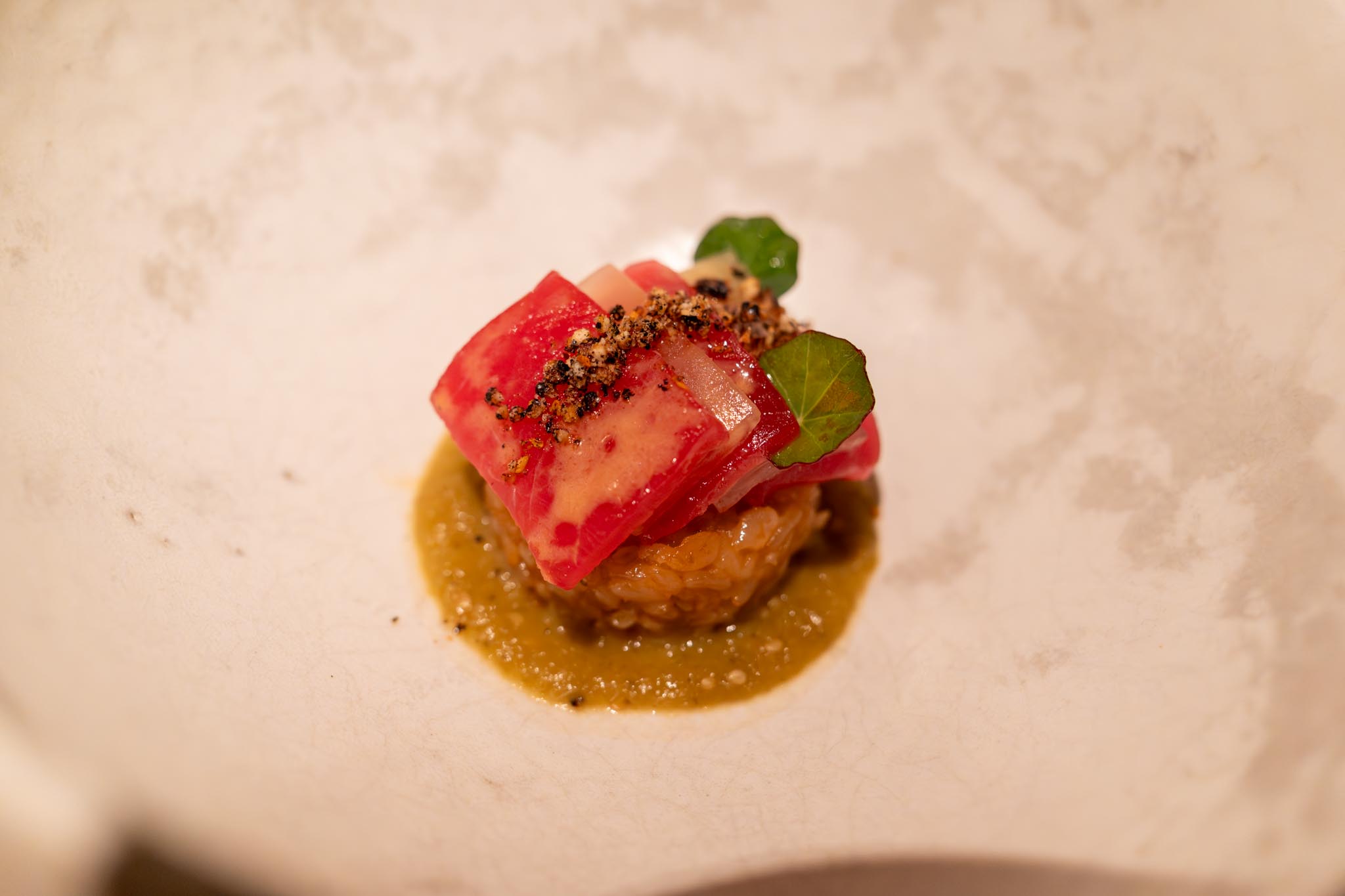
Next was 12-day dry-aged Senaka tuna, again paired with koshihikari rice, but this time layered with sunflower oyster vinaigrette and mojo verde. The longer aging suggests more depth and umami compared to the opener, and the sunflower oyster vinaigrette hints at salinity without heaviness. Mojo verde adds herbal freshness, which should keep the dish from tipping too rich this early in the menu. On paper, this felt like a logical progression rather than a dramatic shift—which we generally appreciate.
Seafood Progression
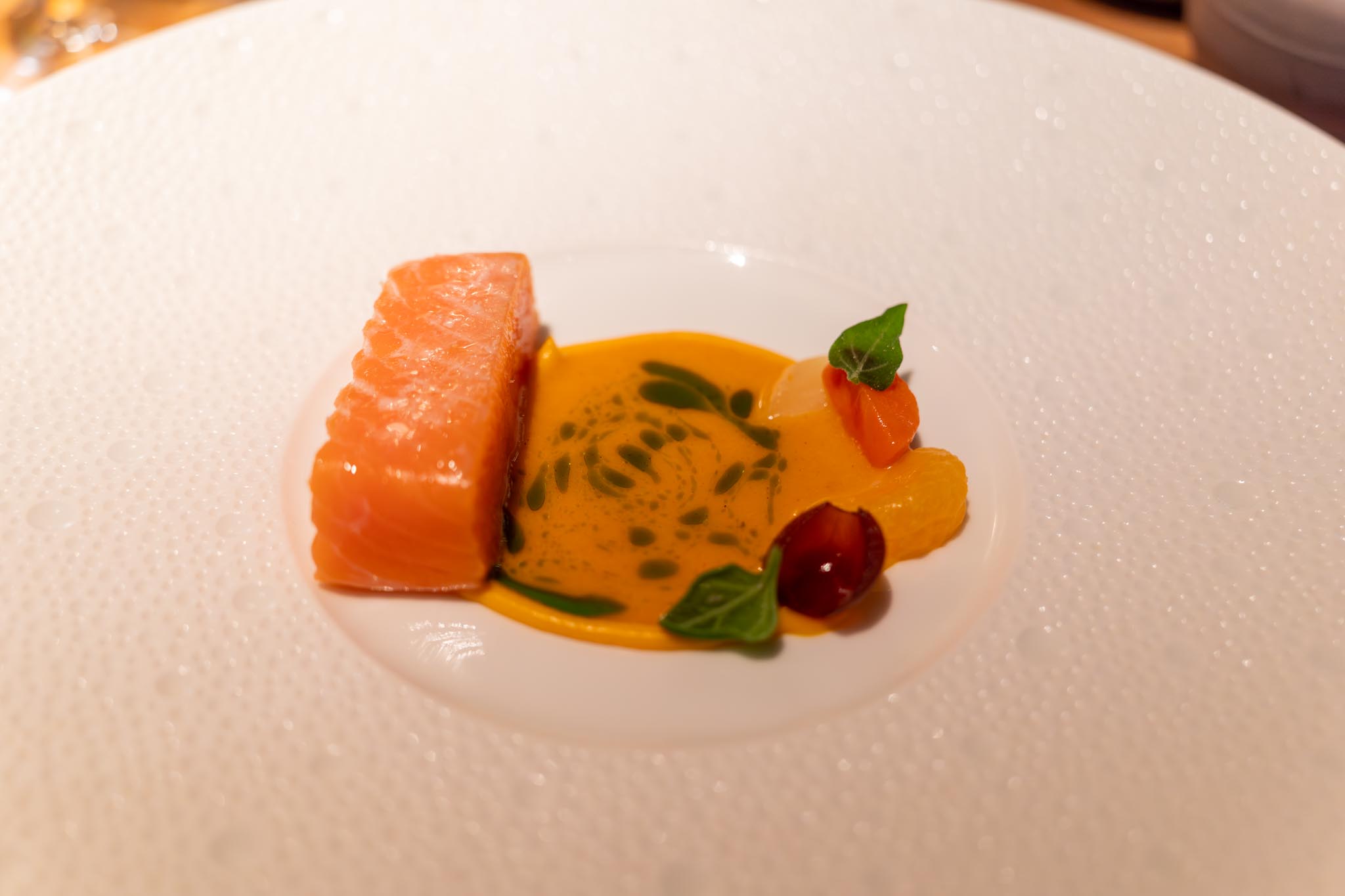
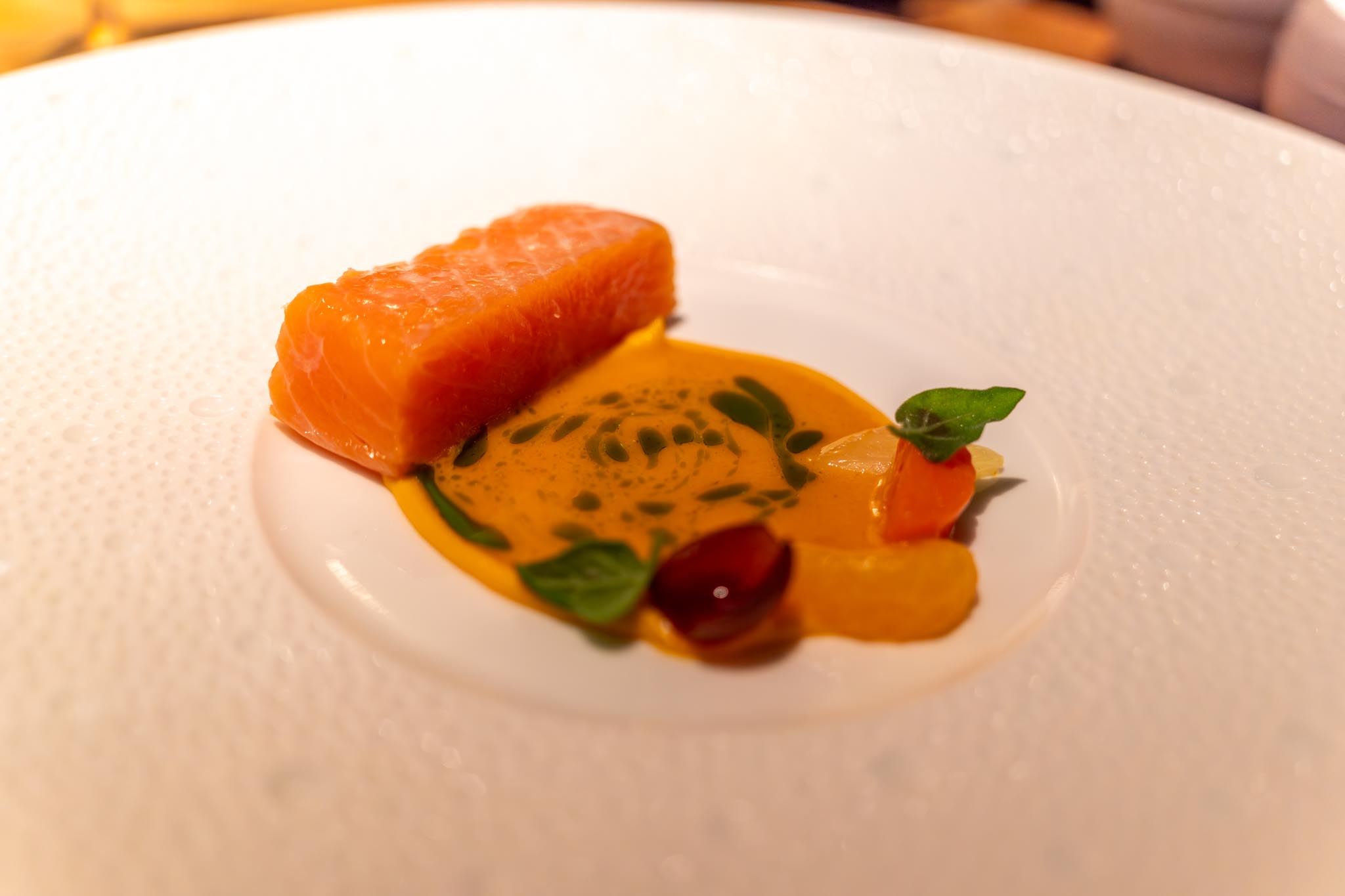
Things warmed up with Normandy butter–poached Ora King salmon, served with citrus onion confit, miso-sesame glazed Nantes carrots, and chermoula sauce. Butter-poached salmon can sometimes feel predictable, but the supporting cast here suggests balance: sweetness from the carrots, umami from the miso, acidity from the citrus, and herbal spice from the chermoula. Andrea flagged this as one of the more comforting courses conceptually (i.e., this is the one you sink into your chair for).
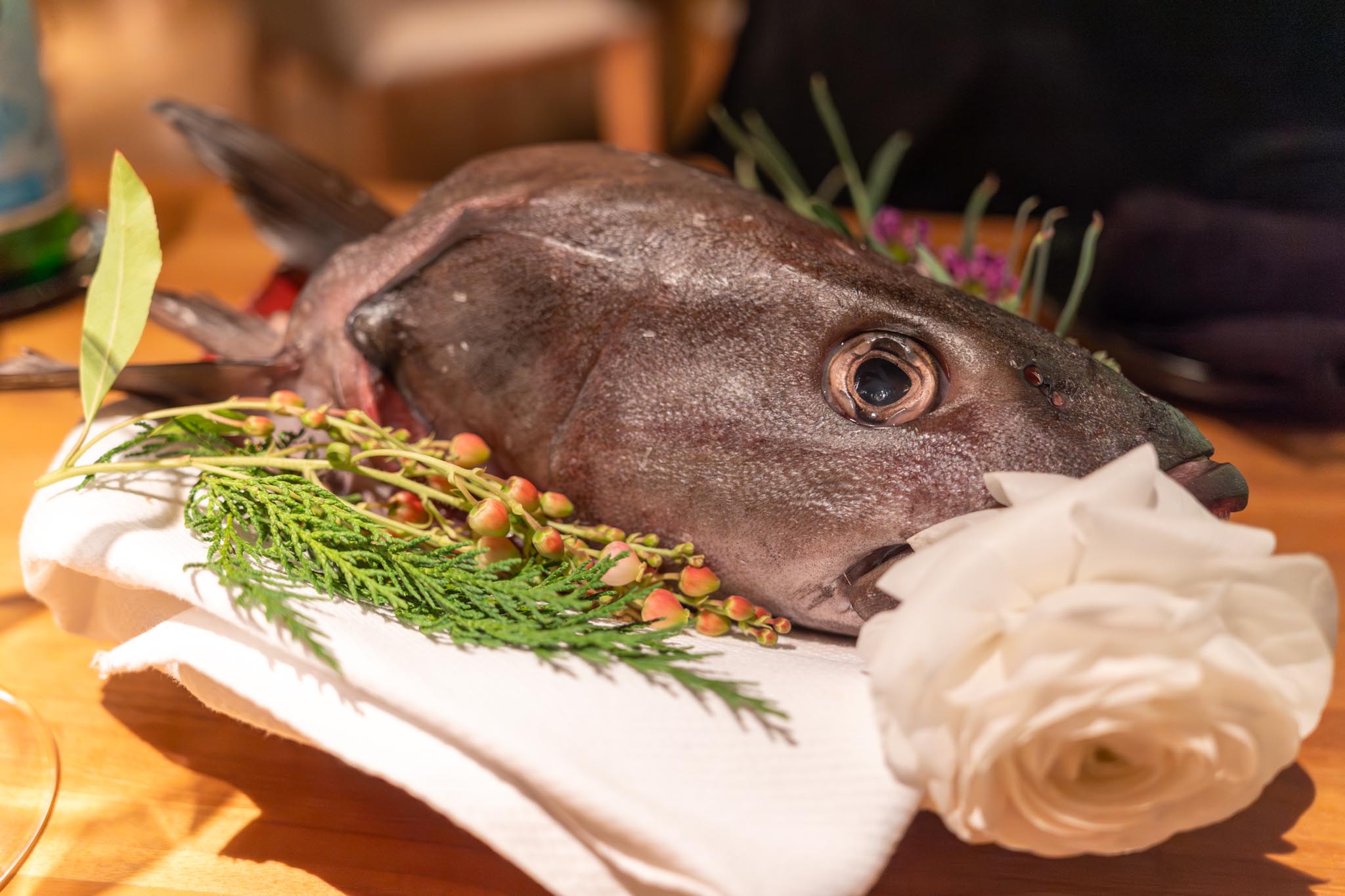
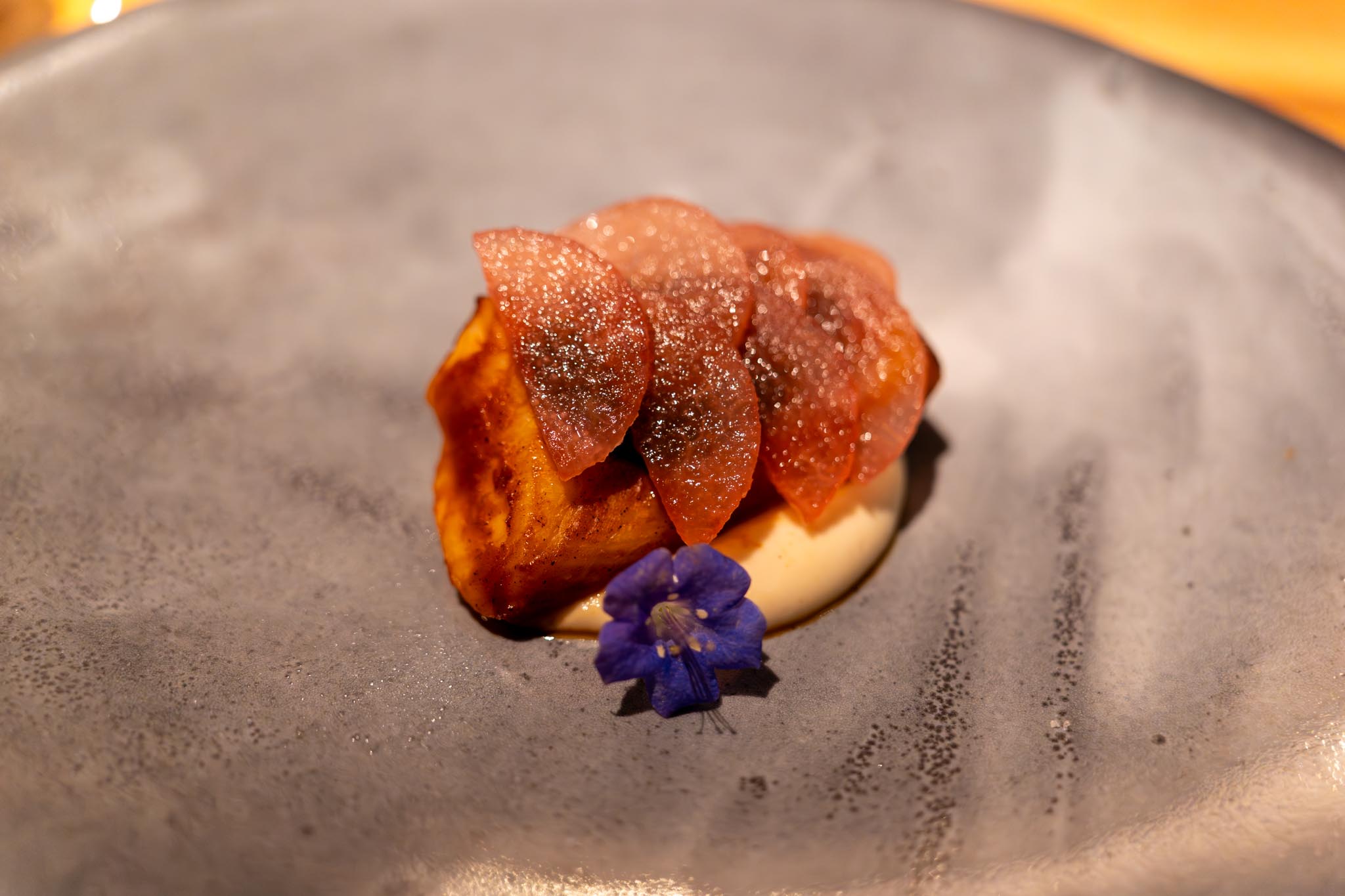
That comfort is followed by California black cod, paired with red masa polenta, shinko Asian pear, and salsa tatemada. This is where the menu really leans into cross-cultural confidence—masa with a classic California fish, pear for freshness, and a roasted, smoky salsa anchoring it all. It reads bold but not chaotic, and probably one of the more savory, grounding courses in the lineup.
Corn as a Main Character
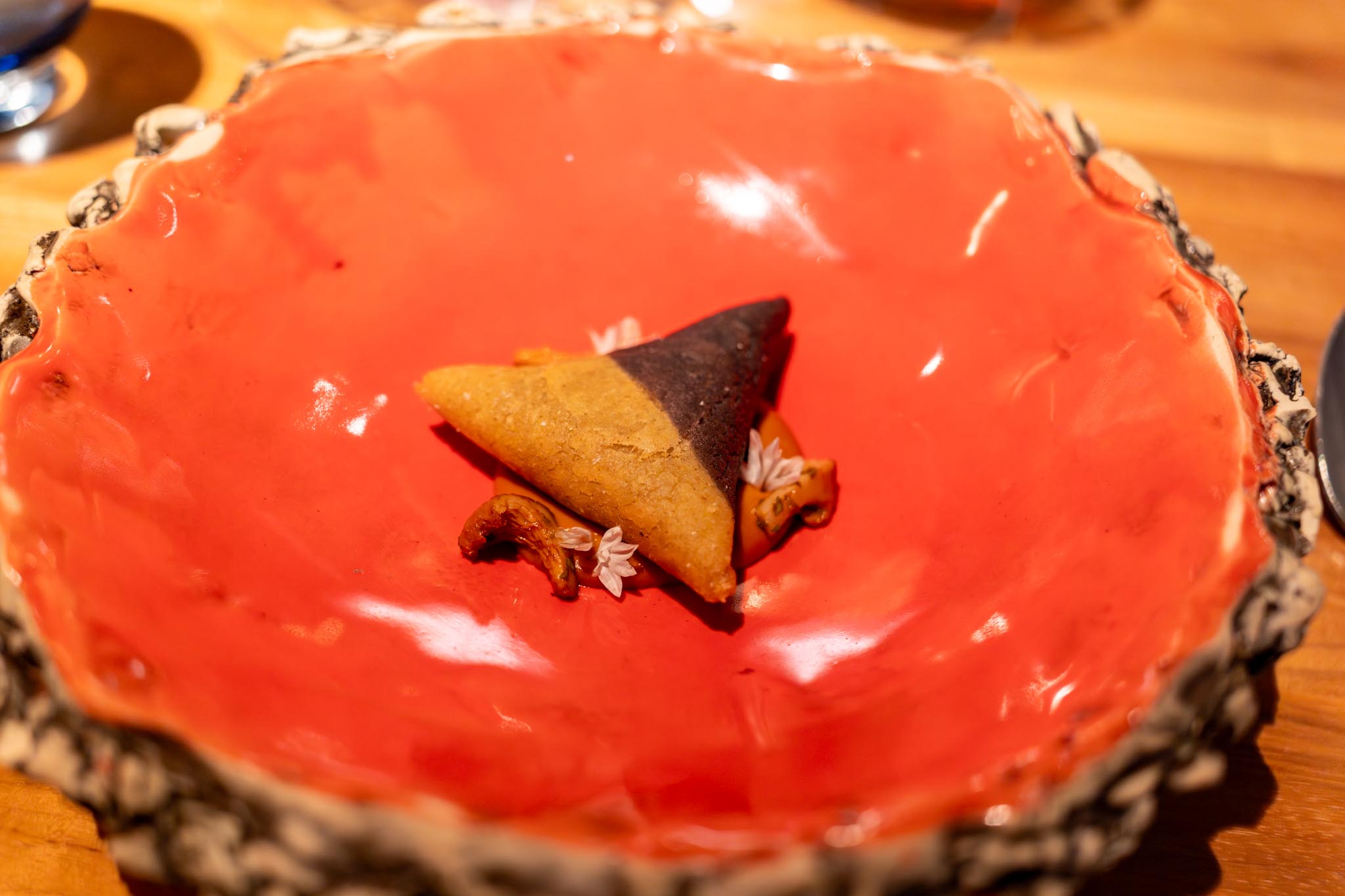
The nixtamalized blue and gold corn tetela felt like the philosophical center of the menu. Stuffed with Rancho Gordo ayocote negro beans, golden chanterelles, and finished with pipián sauce, this is a dish that’s clearly about technique and heritage more than luxury ingredients. On paper, it’s deeply earthy, textural, and likely one of the most satisfying plates despite being meatless. Andrea immediately clocked this as something she’d probably love more than expected (which usually means she loves it).
Poultry & Meat Courses
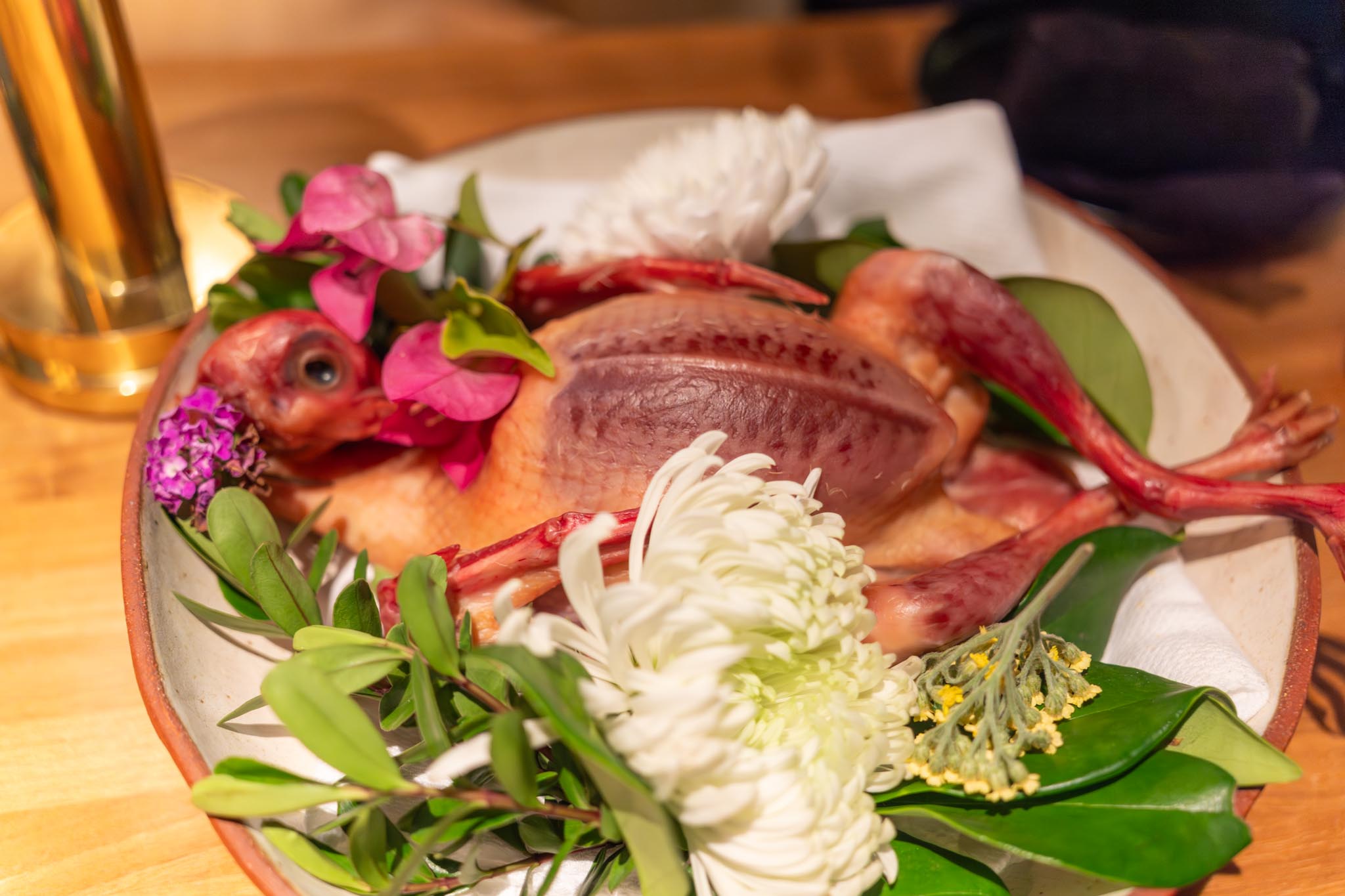
From there, the menu moves into protein-forward territory with coriander-crusted California squab, accompanied by napa cabbage, marinated jicama, and salsa de cacahuate. Squab always signals seriousness, and the coriander crust suggests aromatic warmth rather than aggressive spice. The jicama likely brings crunch and freshness, keeping the dish from feeling too dense.
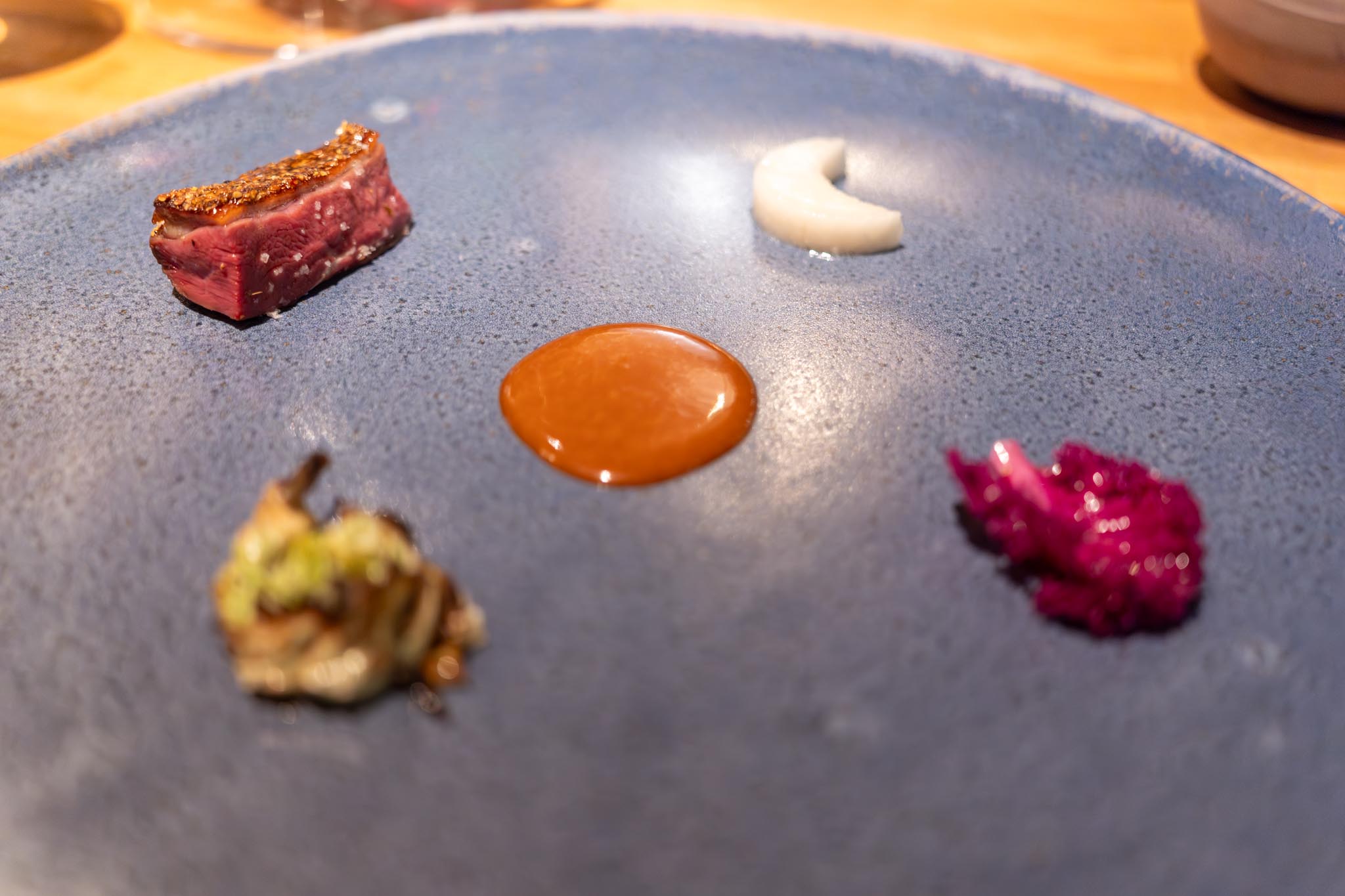
The most overtly luxurious savory course is the 21-day dry-aged Australian wagyu, paired with Tenbrink Farms fall squash, sherry-braised crosne, and mole negro. Dry-aged wagyu is a bold choice (easy to overdo), but the sides read thoughtful and grounding. Mole negro is doing a lot of heavy lifting here—deep, bitter, complex flavors meant to stand up to rich beef rather than disappear underneath it. This feels like the peak of the savory arc.
Desserts
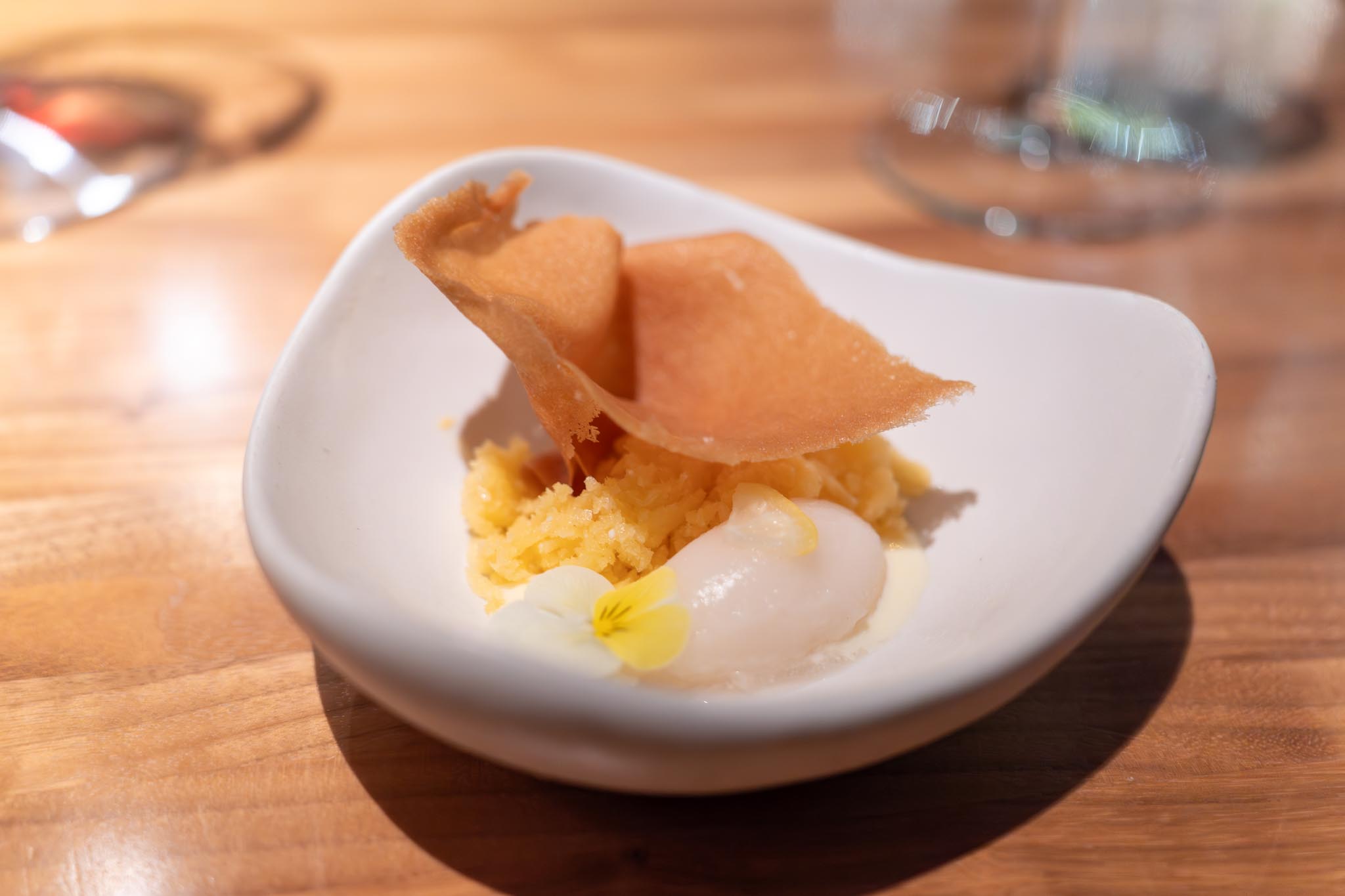
Dessert starts bright with Northern California pink lemon, paired with purple passion fruit and coconut raspado, ginger anglaise, and pineapple tuile. This reads refreshing and palate-cleansing, with layered acidity and gentle spice rather than straight sweetness. Andrea appreciated that this didn’t jump straight into chocolate territory.
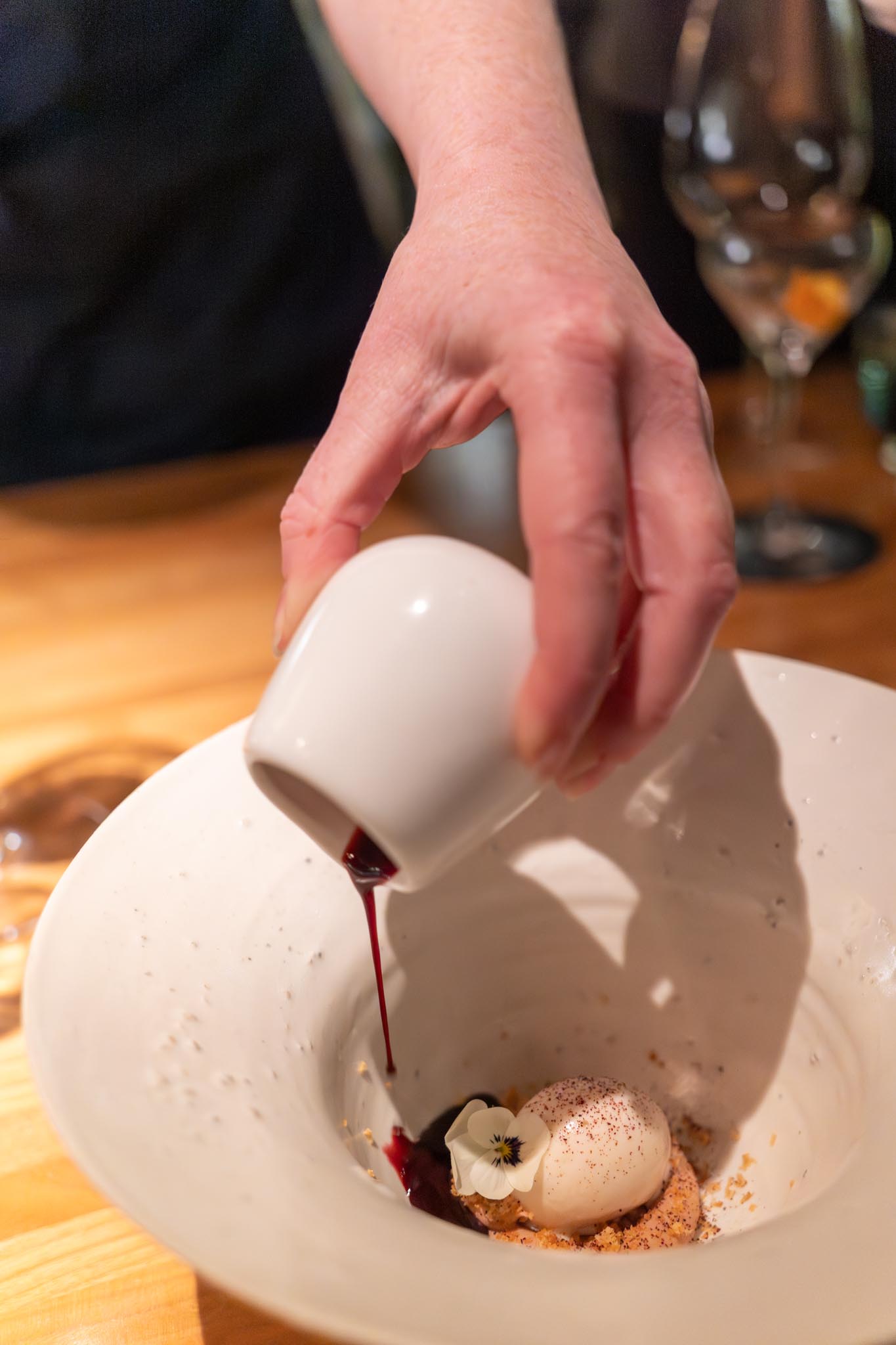
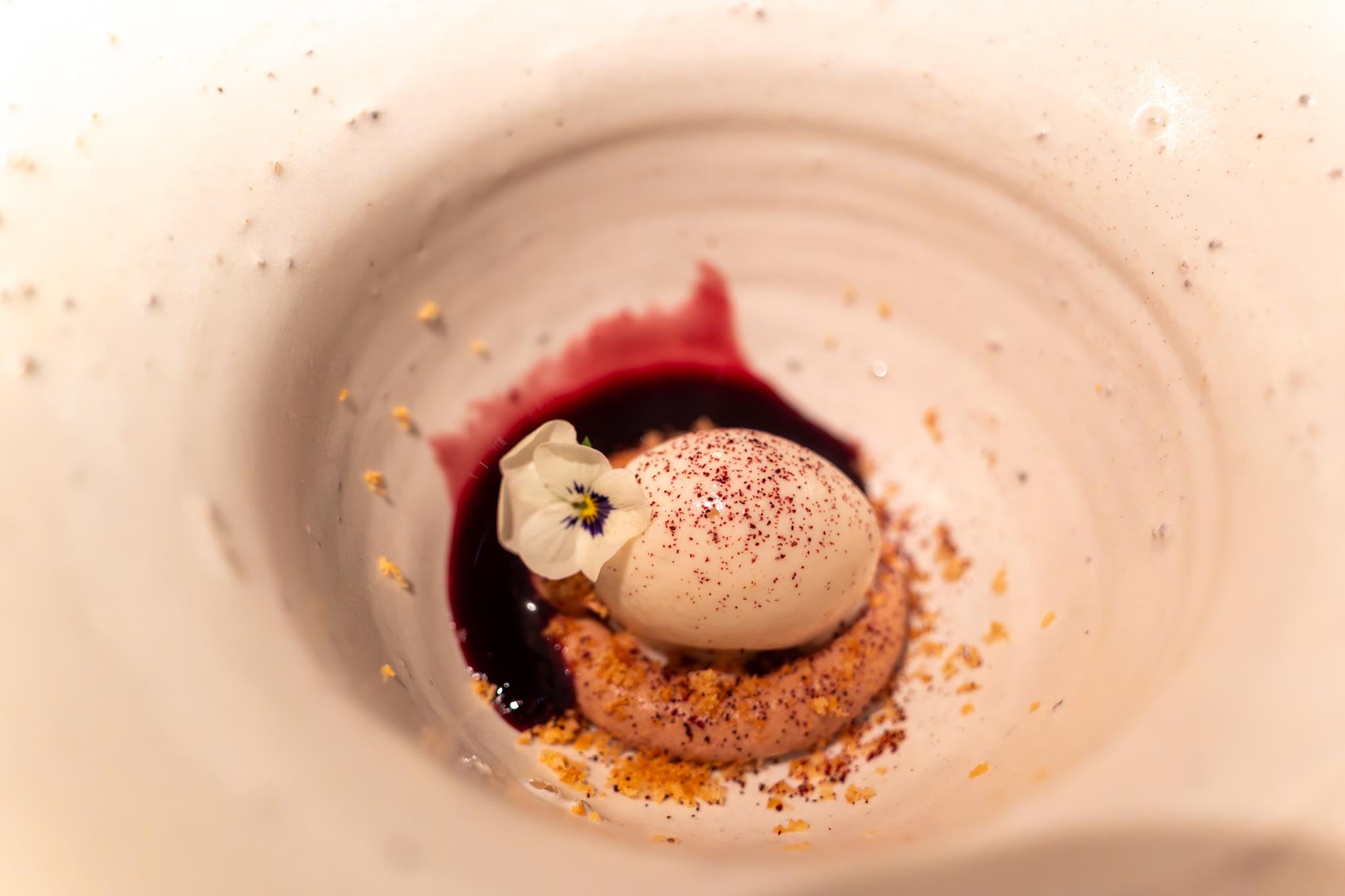
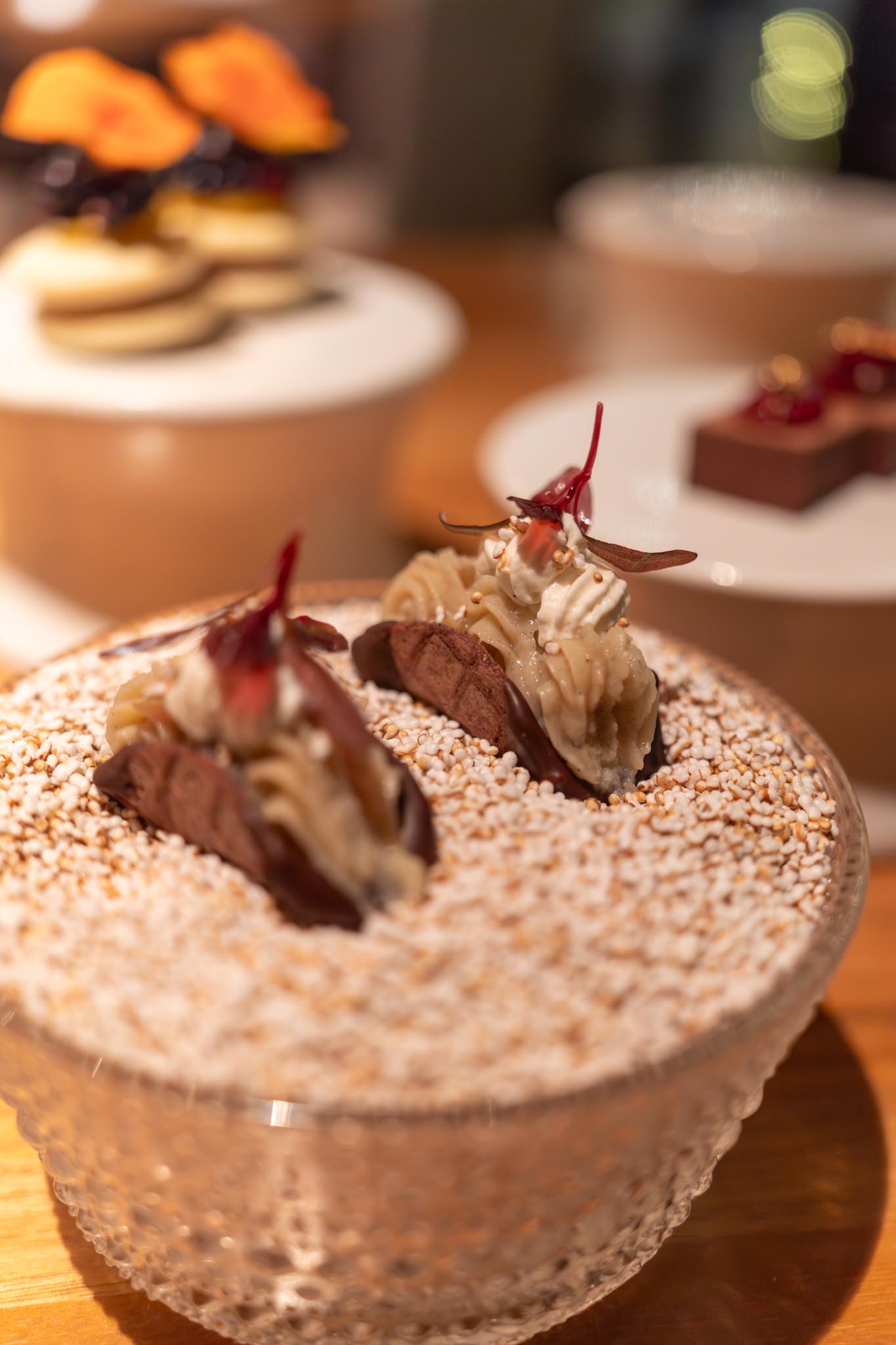
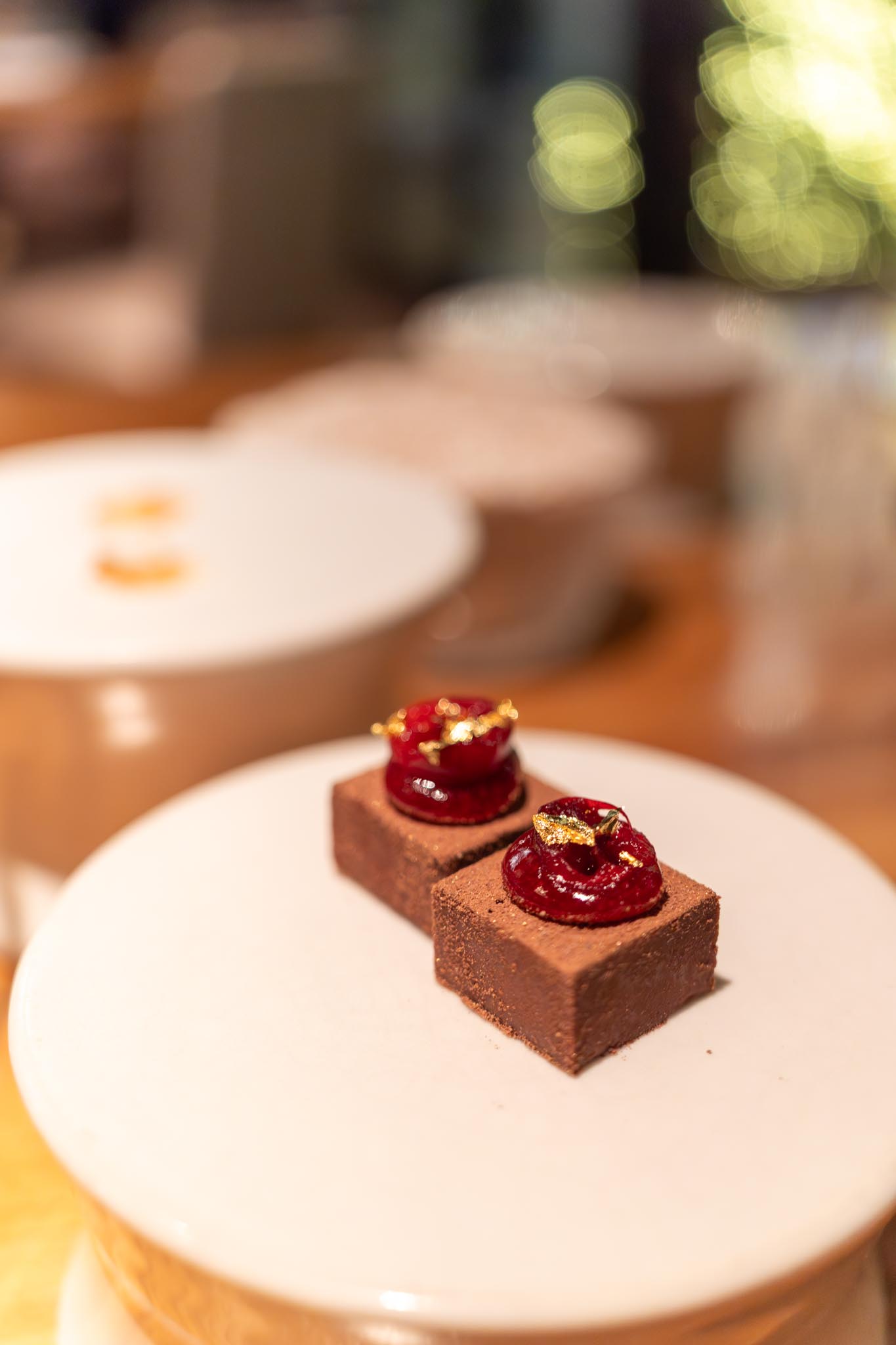
The final course, Napa nuts macadamia, leans richer: candy cap ganache, abundancia croustillant, and huckleberry consommé. Candy cap mushrooms are a fun, nerdy touch (maple-adjacent without being literal), and the consommé suggests restraint—sweet, but not cloying. A composed, thoughtful way to land the meal.


Leave a Reply