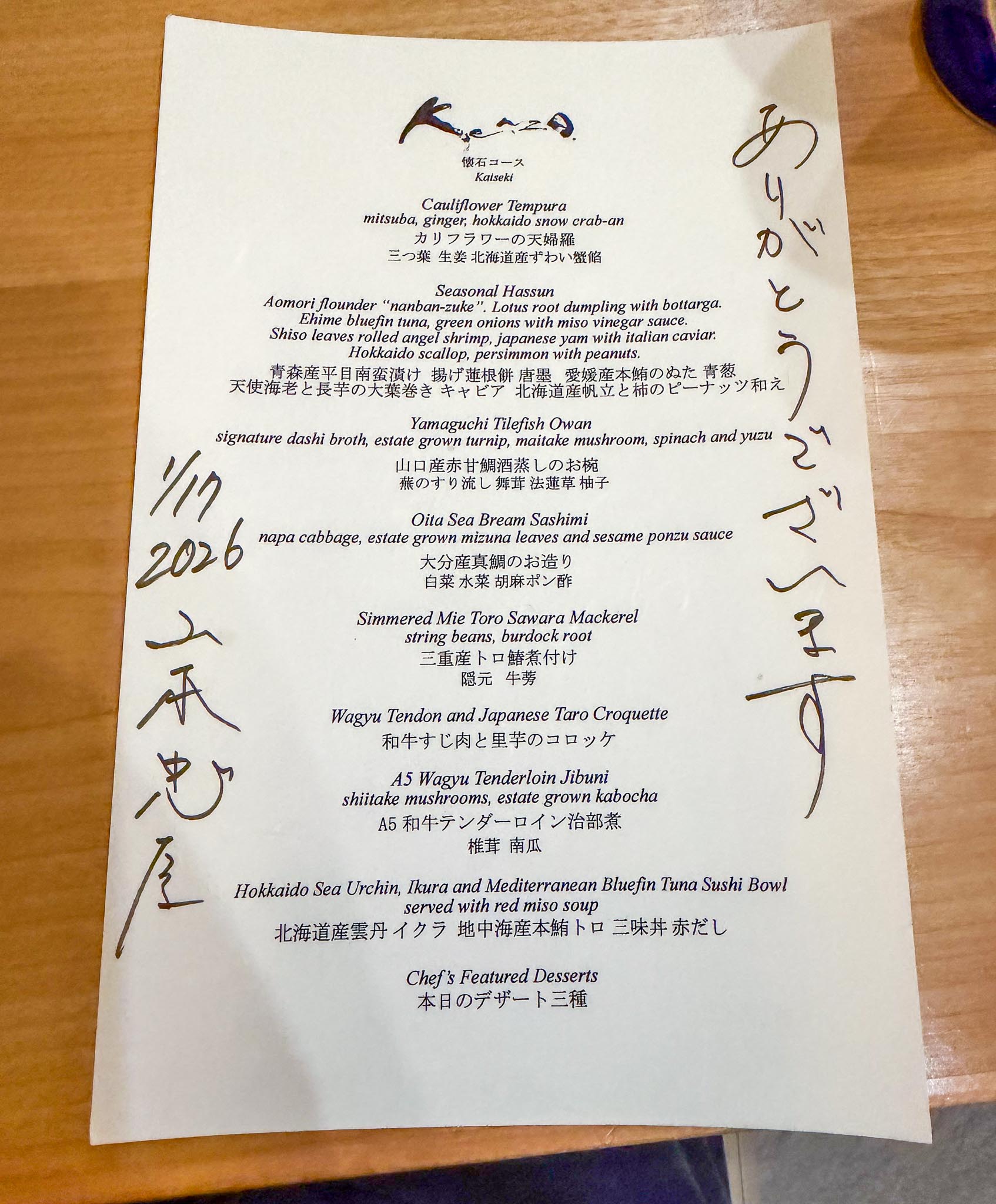
(this is AI generated just from the menu, haha. Using as a placeholder until I have a chance to write it up)
We were up here for the Napa Truffle Festival and so I booked us for dinner here. This is the last Michelin-starred restaurant at which I hadn’t yet dined between Napa/Sonoma through SF and the East Bay and down through the peninsula and South Bay (yeah, I’m a completionist that way). Restaurant is off to the side in downtown Napa area. Where the restaurant is located is very quiet, so we were surprised that parking seemed to be a little difficult even with a large parking structure nearby. As we would later find out, things were very lively in downtown Napa along the water and there was a lights festival, which we were also planning on checking out after dinner.
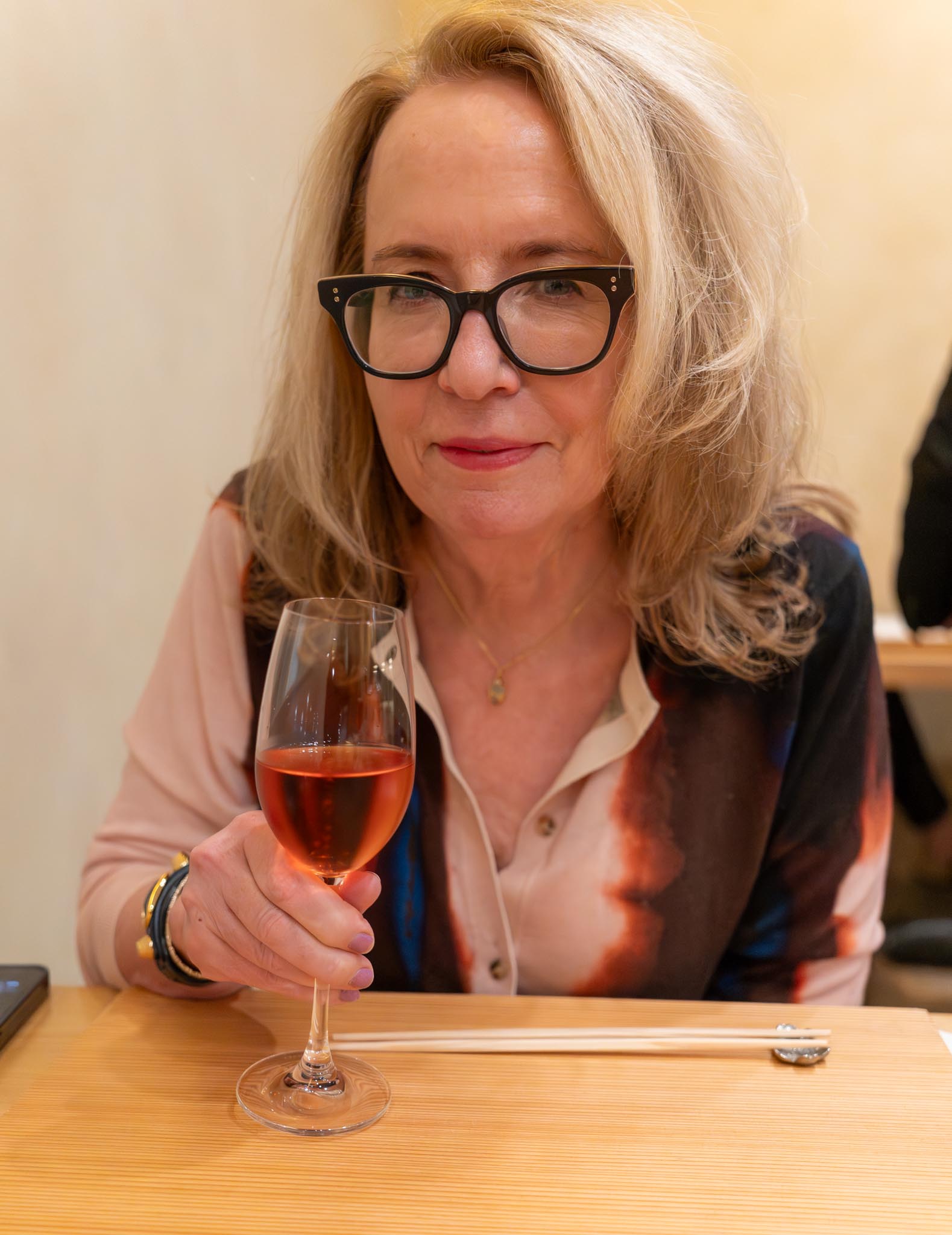
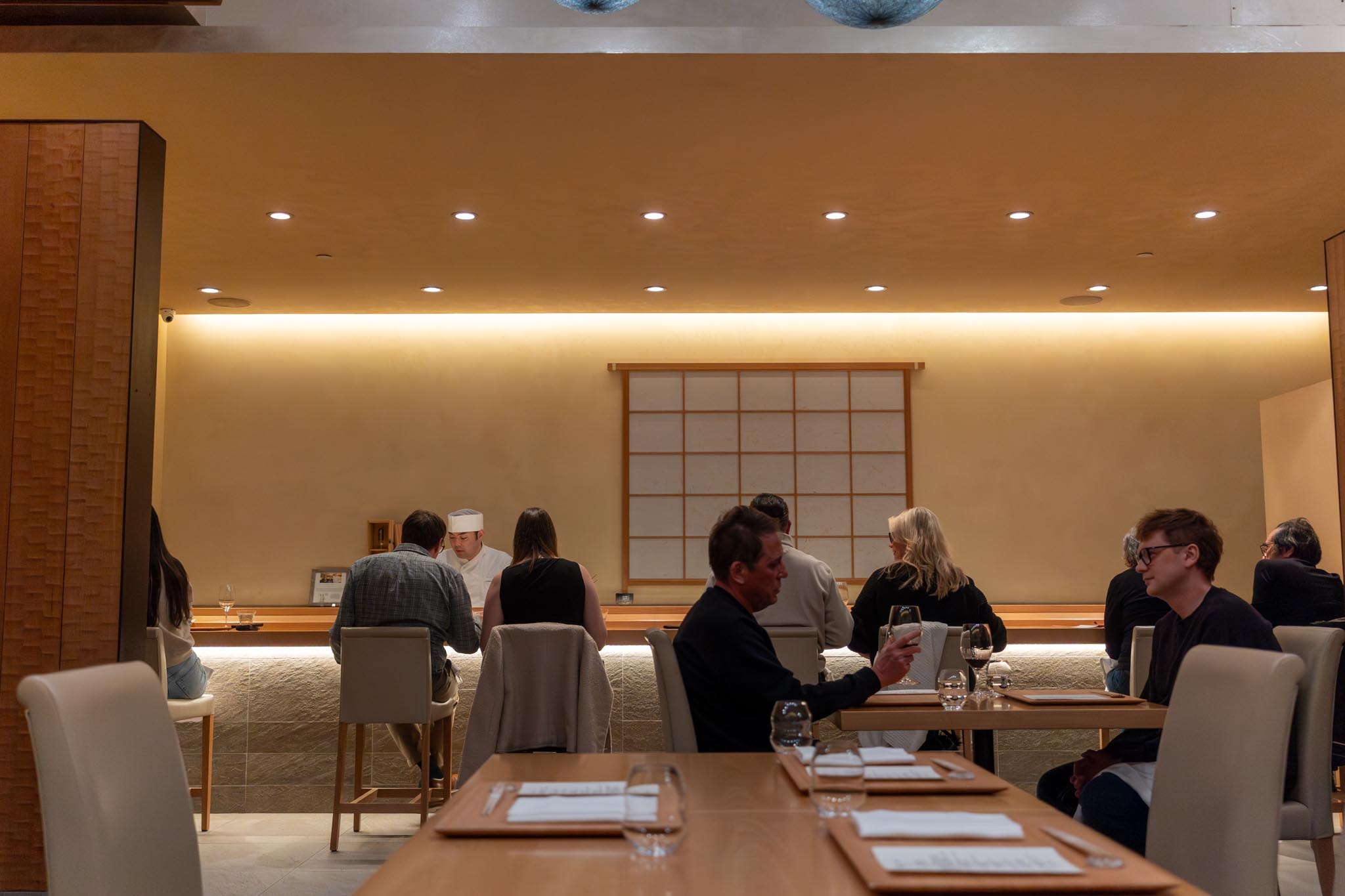
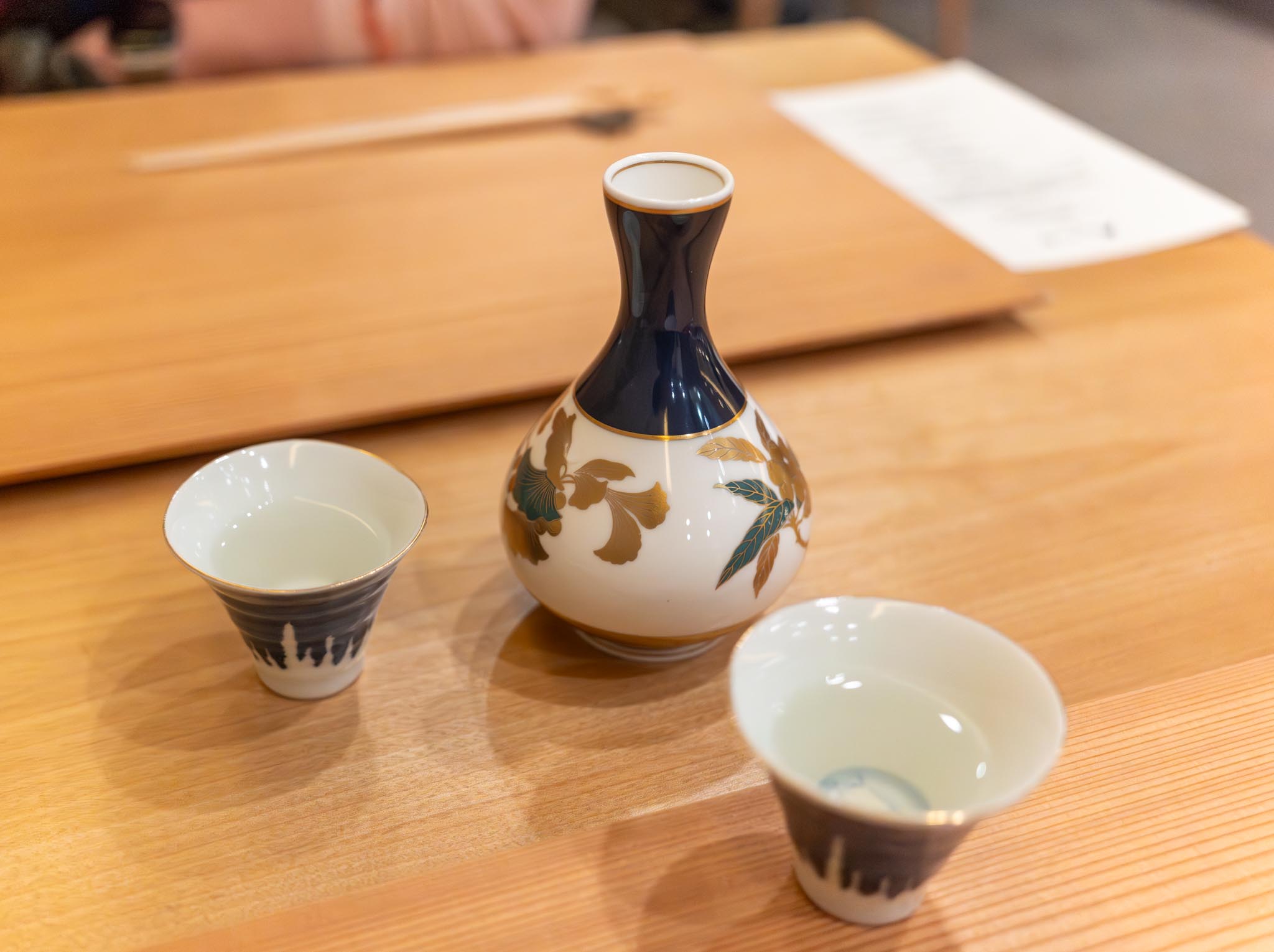
We were seated at a table since the counter wasn’t an option when I booked the reservation, but i had just a touch of FOMO. Pretty casual crowd for the most part. We also opted for the beverage pairing since we were interested in trying more of the Kenzo wines since we had first heard about them when we dined at Showa.
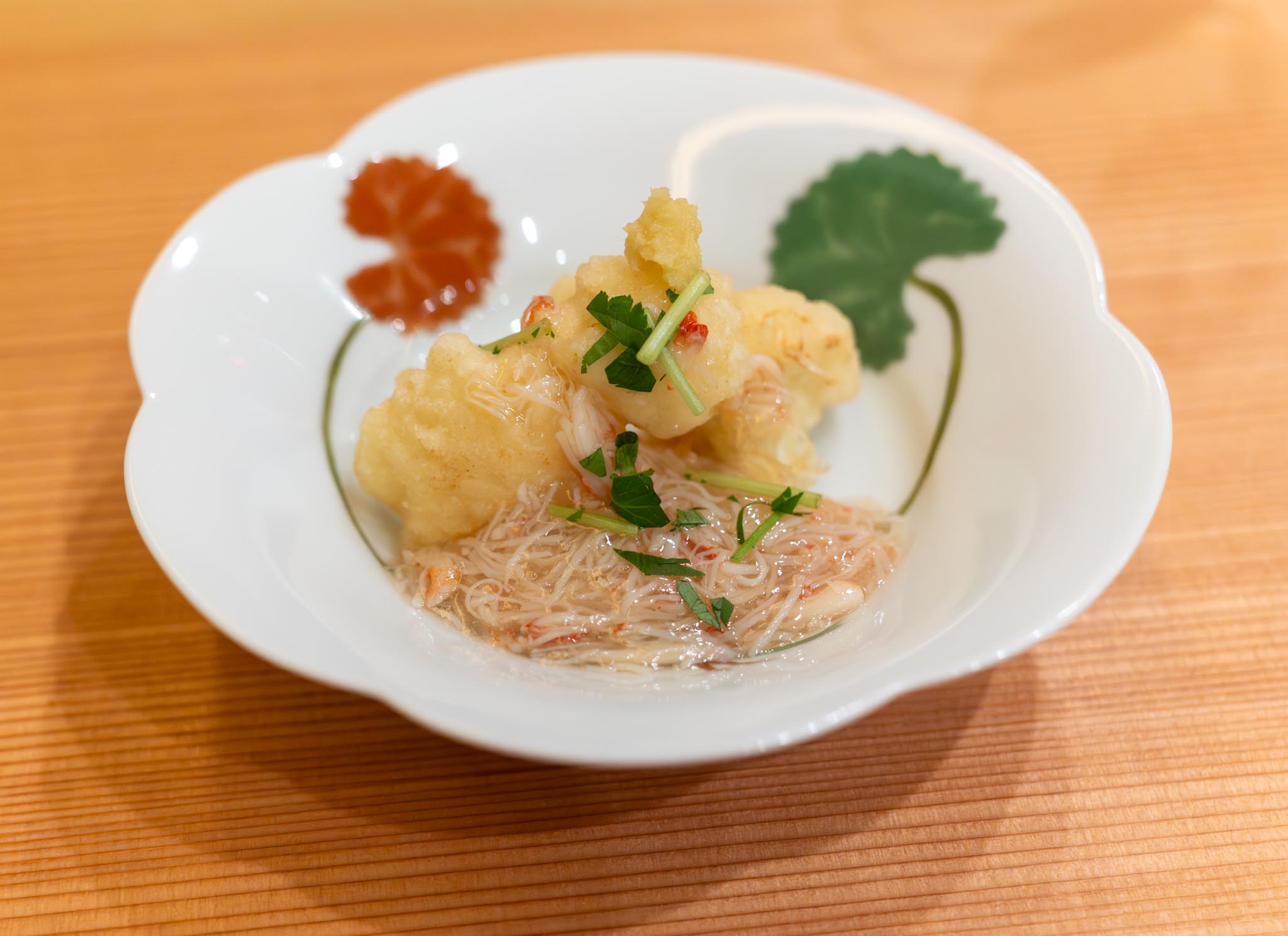
First up was the Cauliflower Tempura. Just based on the menu description Andrea was looking forward to this since it had the tempura, Hokkaido snow crab, and ginger – all ingredients she loves. It was a light starter dish with subtle flavors, but also no particularly exciting.
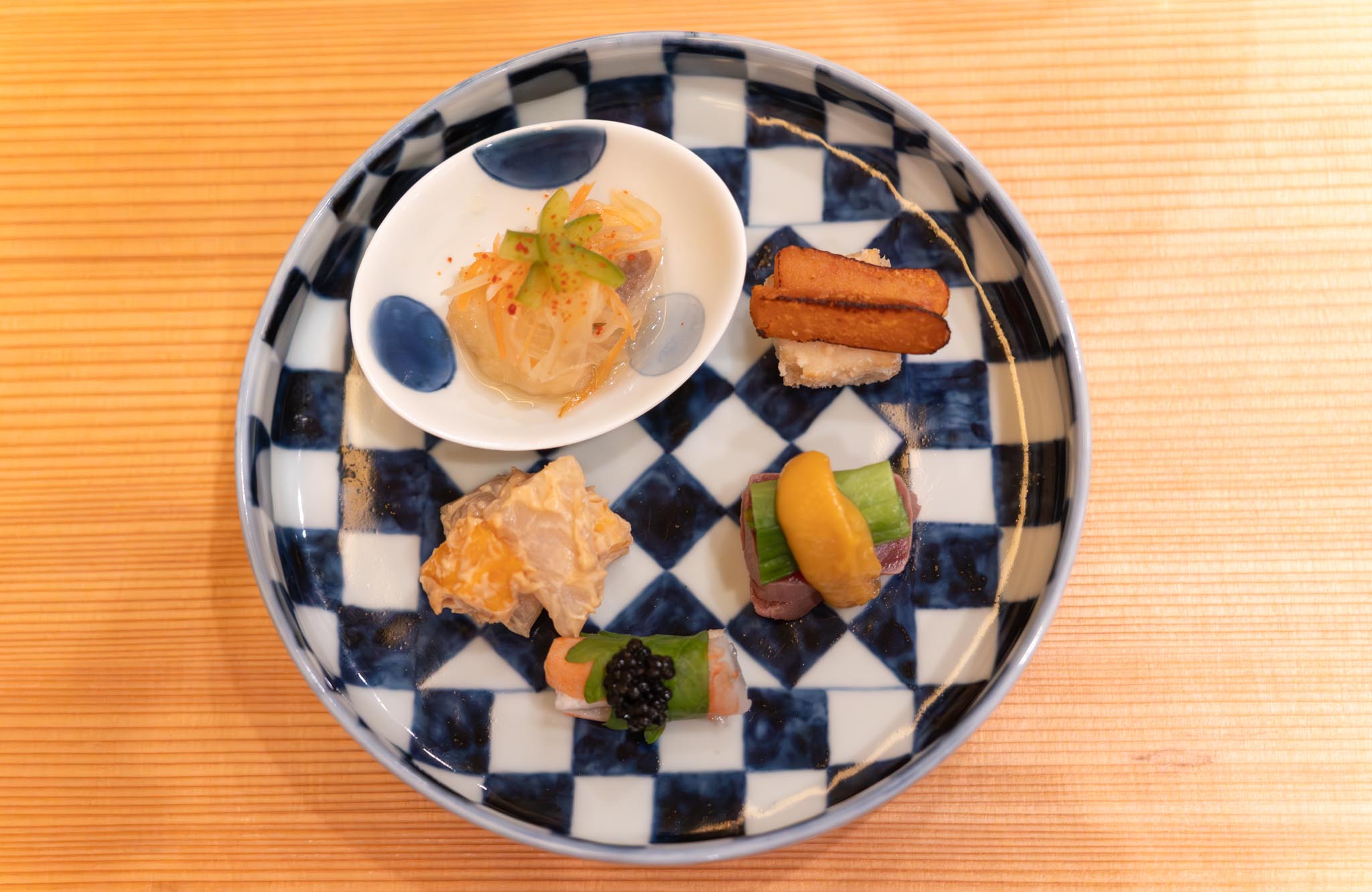
Then came the Seasonal Hassun which featured 5 small seasonal bites. First up was the Amouri Flounder served naban-zuke which is like a pickled escabèche. Second bite was the Lotus root dumpling with bottarga. I always think of lotus root being served as a chip so this was different as was the bottarga which I usually think of as being shaved on a pasta dish, but this was a slice of it that had the distinct fish roe flavor. For me, this reminded me of fish sacs that my dad would fry up from fish he had caught in our lake.
Lastly was the the Hokkaido scallop with persimmon and peanuts. This was an interesting dish because I love persimmons and don’t have them very often and the peanuts added a savory element to it. Next was the
——
Next was the Seasonal Hassun, a multi-component course featuring Aomori flounder nanban-zuke, lotus root dumpling with bottarga, Ehime bluefin tuna with green onion and miso vinegar sauce, angel shrimp wrapped in shiso, Japanese yam with Italian caviar, and Hokkaido scallop paired with persimmon and peanuts. A classic kaiseki snapshot of seasonality and technique—lots of contrast, lots of small bites, and very composed on paper.
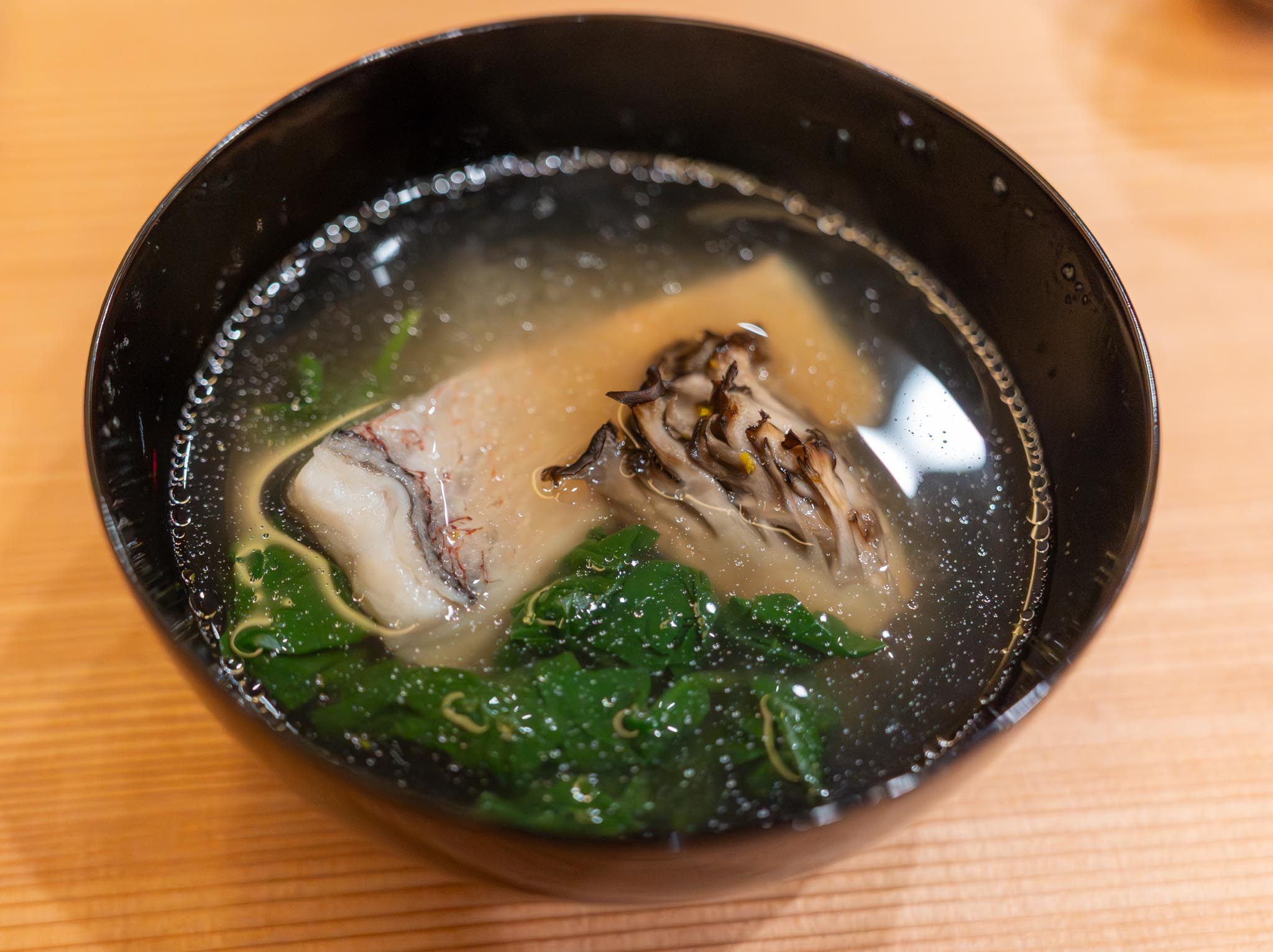
We then moved into soup with the Yamaguchi Tilefish Owan, served in a signature dashi with estate-grown turnip, maitake, spinach, and yuzu. This felt like a quietly important course where everything hinges on the quality of the dashi. Clean, delicate, and very traditional.
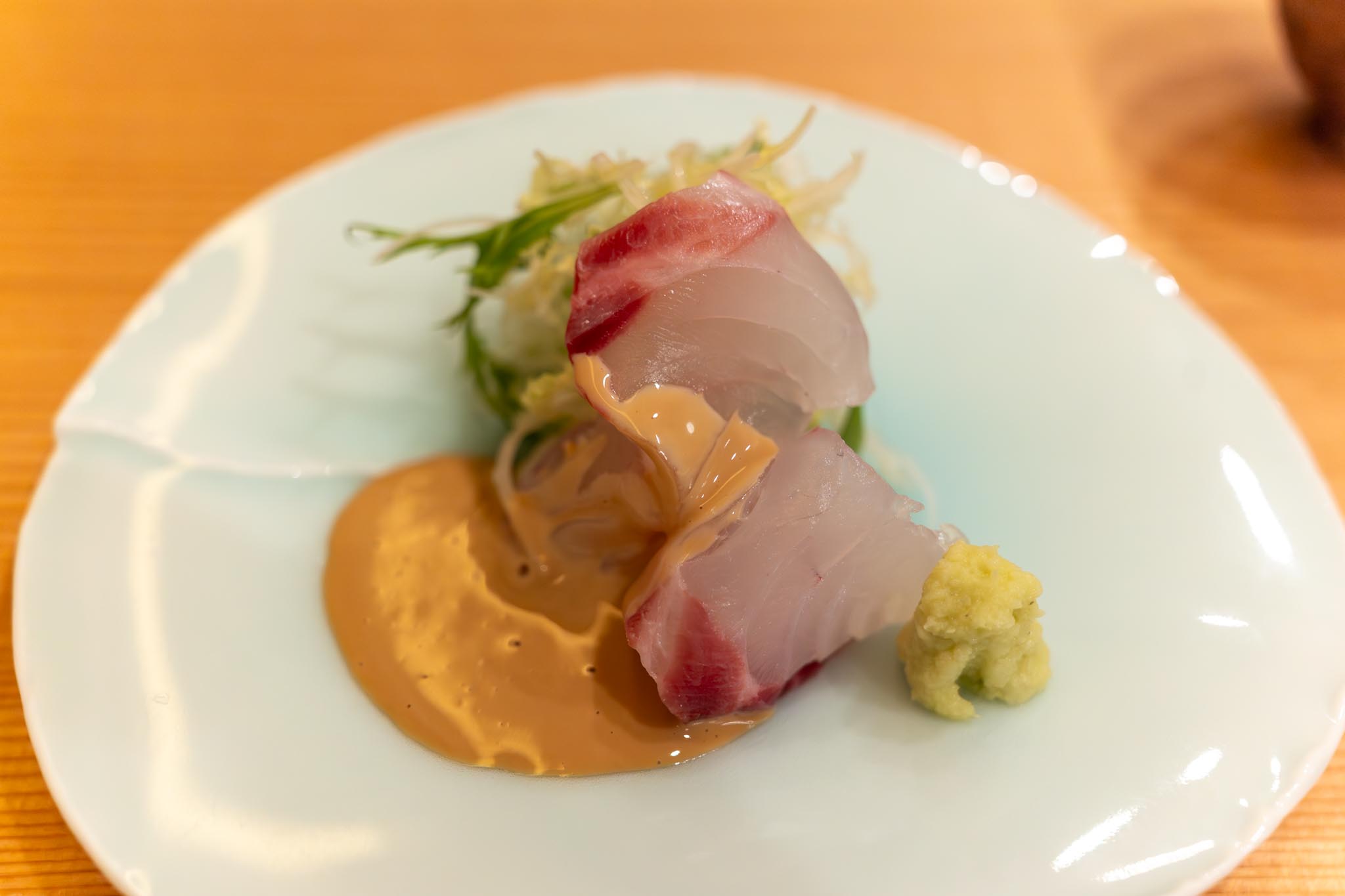
The sashimi course was Oita Sea Bream, paired with napa cabbage, estate-grown mizuna, and sesame ponzu. Subtle fish, lightly dressed, with the sesame ponzu providing most of the impact.
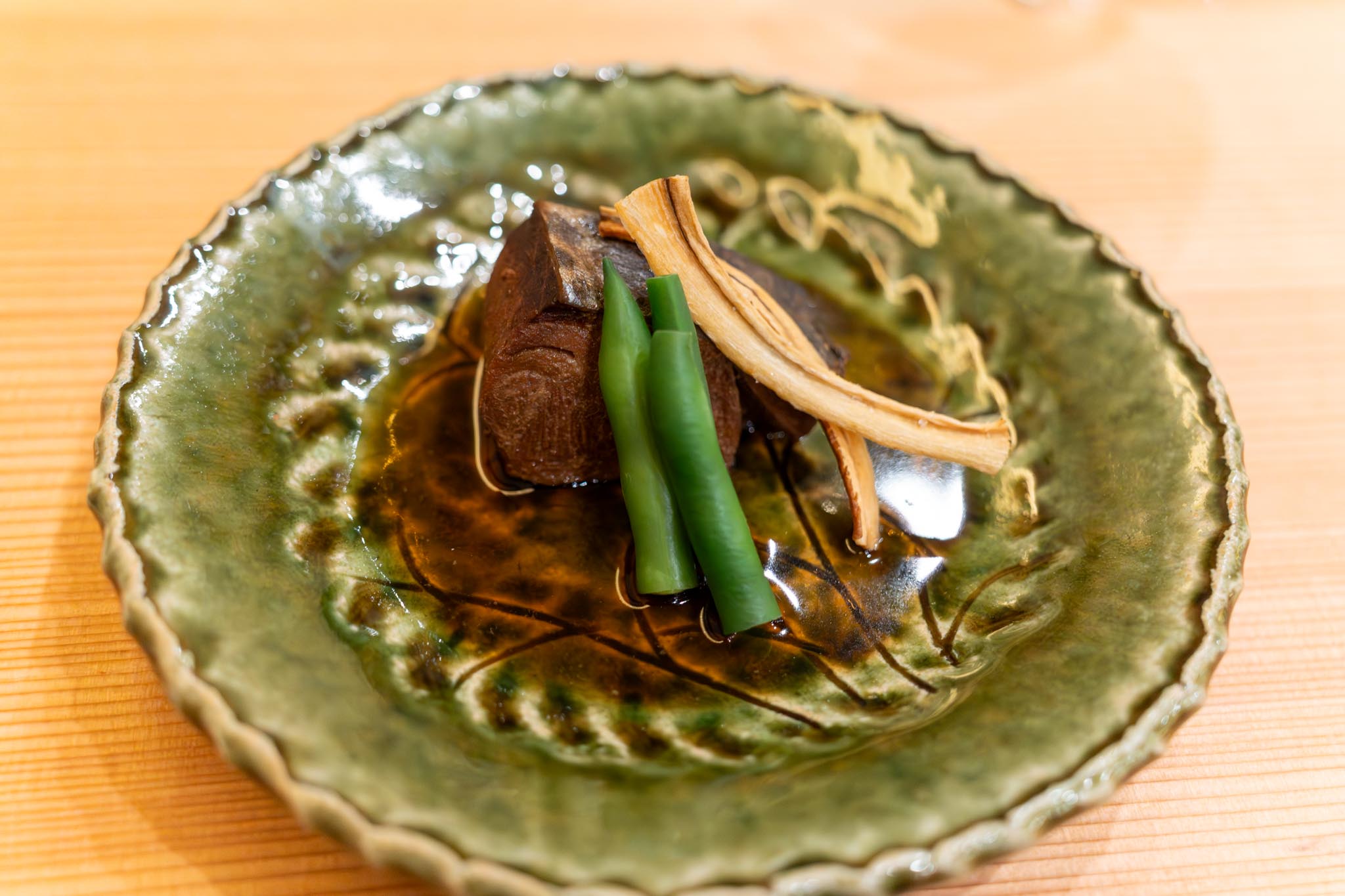
That was followed by Simmered Mie Toro Sawara (Spanish mackerel) with string beans and burdock root—comforting, savory, and very seasonal. Not flashy, but this is a preparation that tends to work well when executed cleanly.
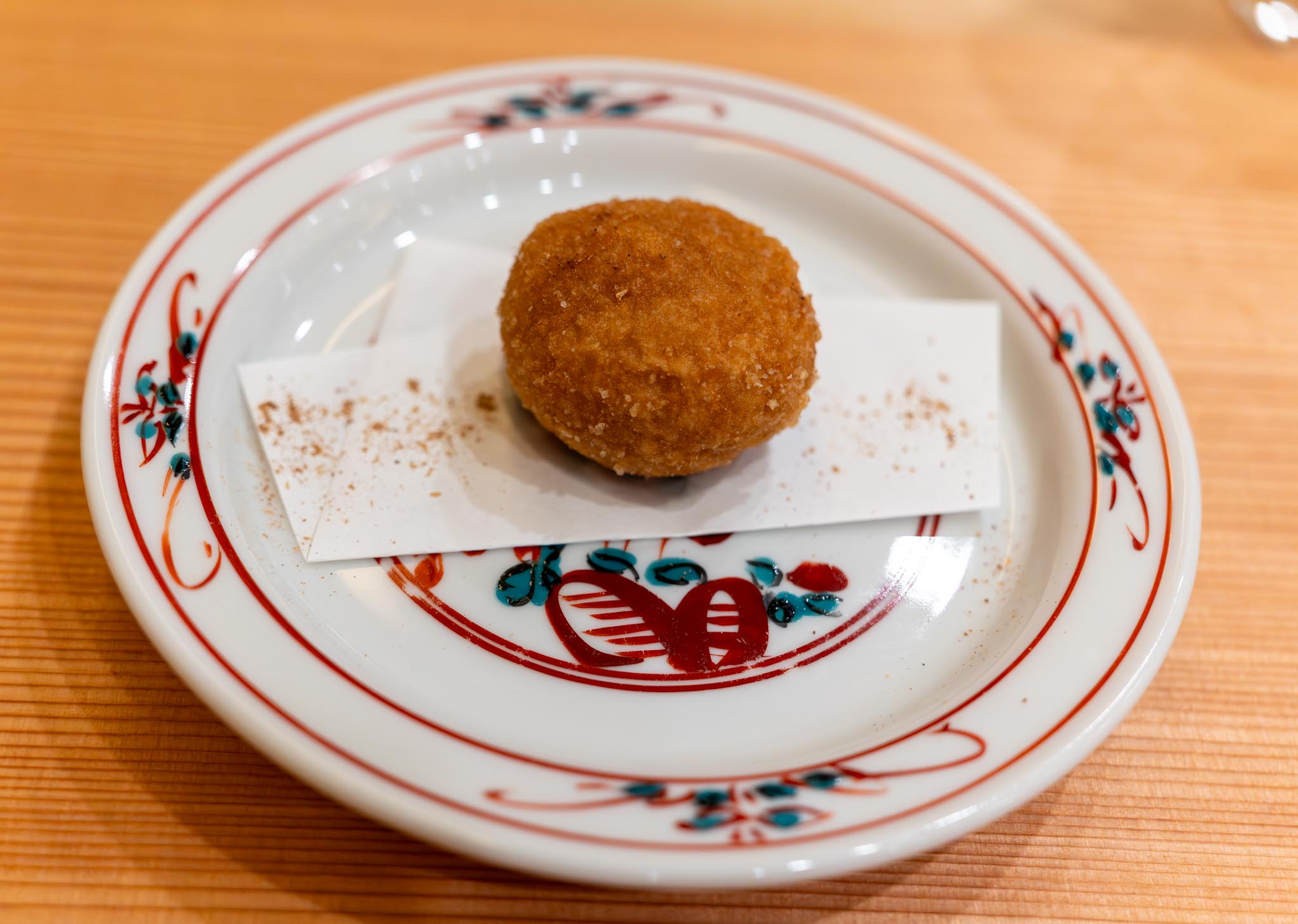
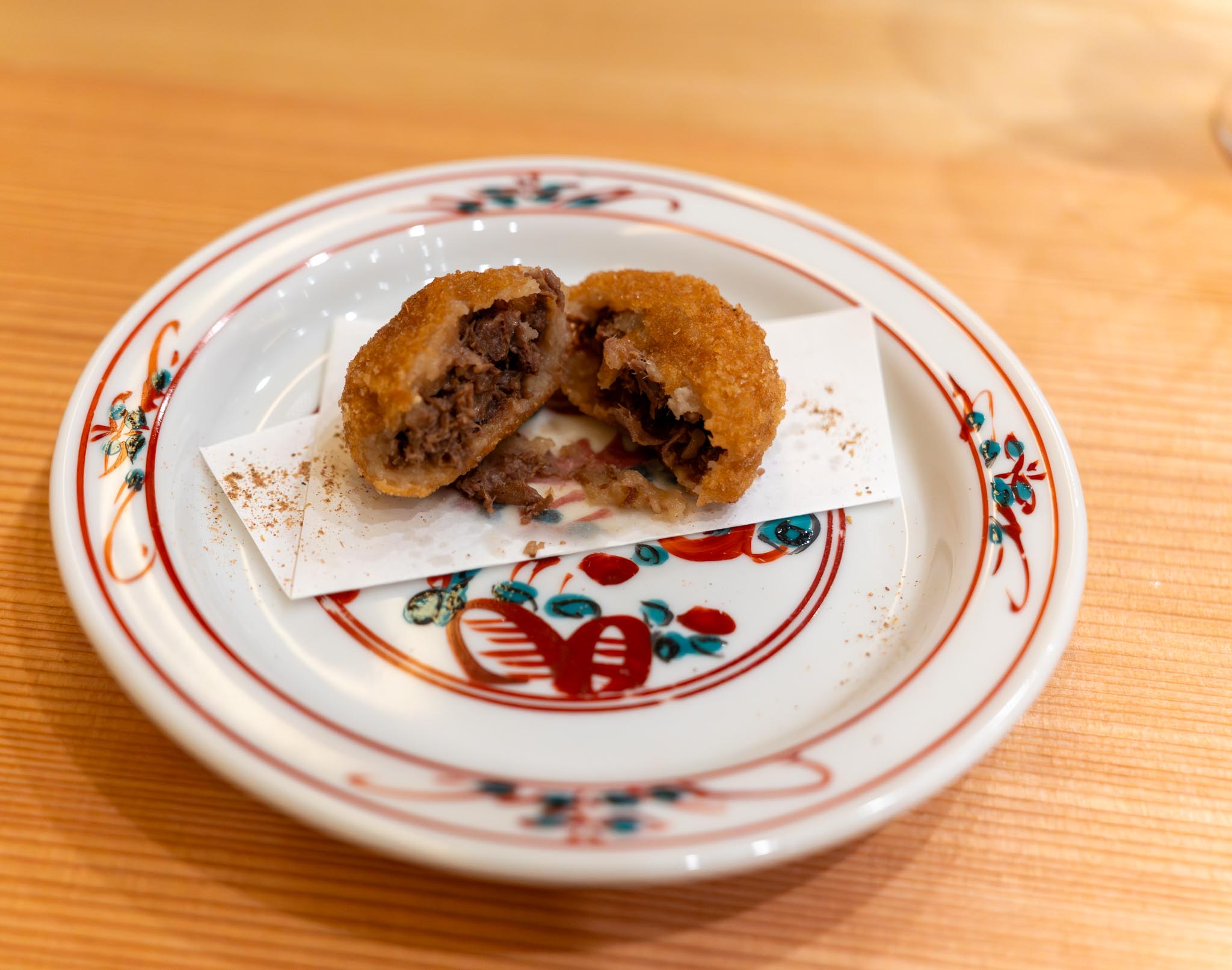
Things turned richer with Wagyu Tendon and Japanese Taro Croquette, which read as a more indulgent transition course. Gelatinous tendon and soft, mild taro is a combination that leans heavily into comfort.
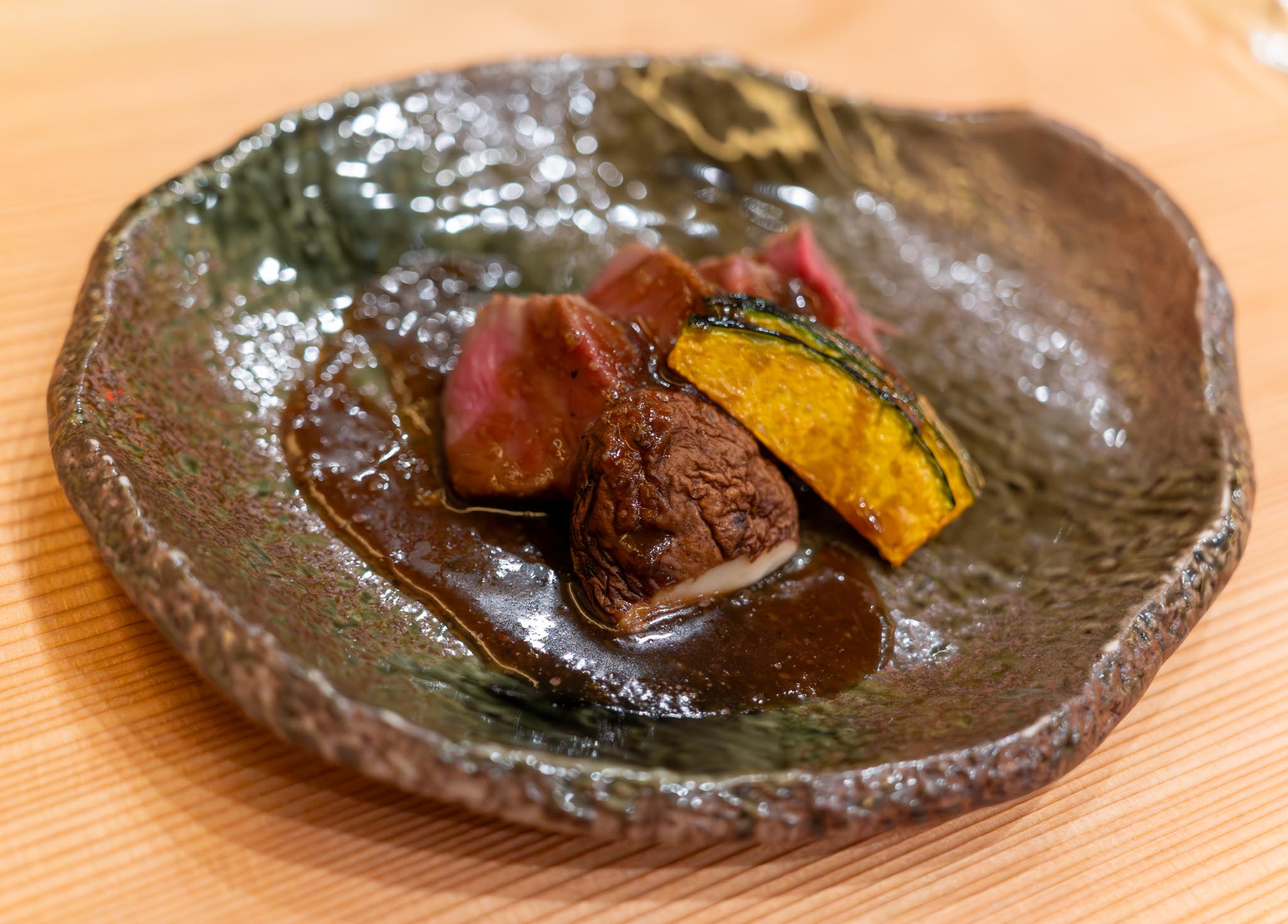
The main meat course was A5 Wagyu Tenderloin Jibuni, gently simmered with shiitake mushrooms and estate-grown kabocha. Rather than going for seared decadence, this leaned into softness and subtlety, which makes sense for A5 at this point in the meal.
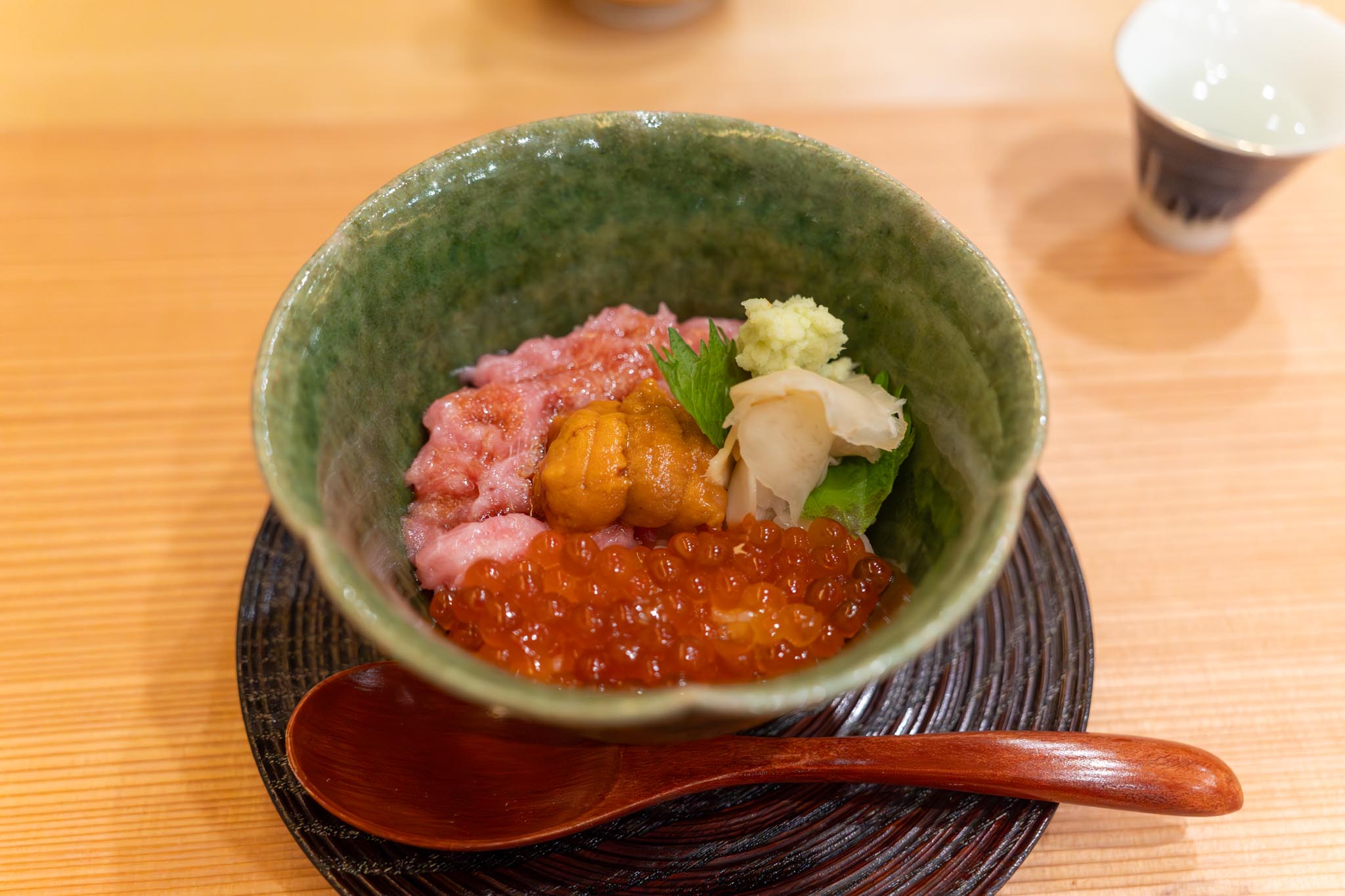
Toward the end, we had a Hokkaido Sea Urchin, Ikura, and Mediterranean Bluefin Tuna Sushi Bowl, served with red miso soup. Uni, ikura, and toro is a hard trio to argue with, and this felt like the most overtly luxurious course on the menu.
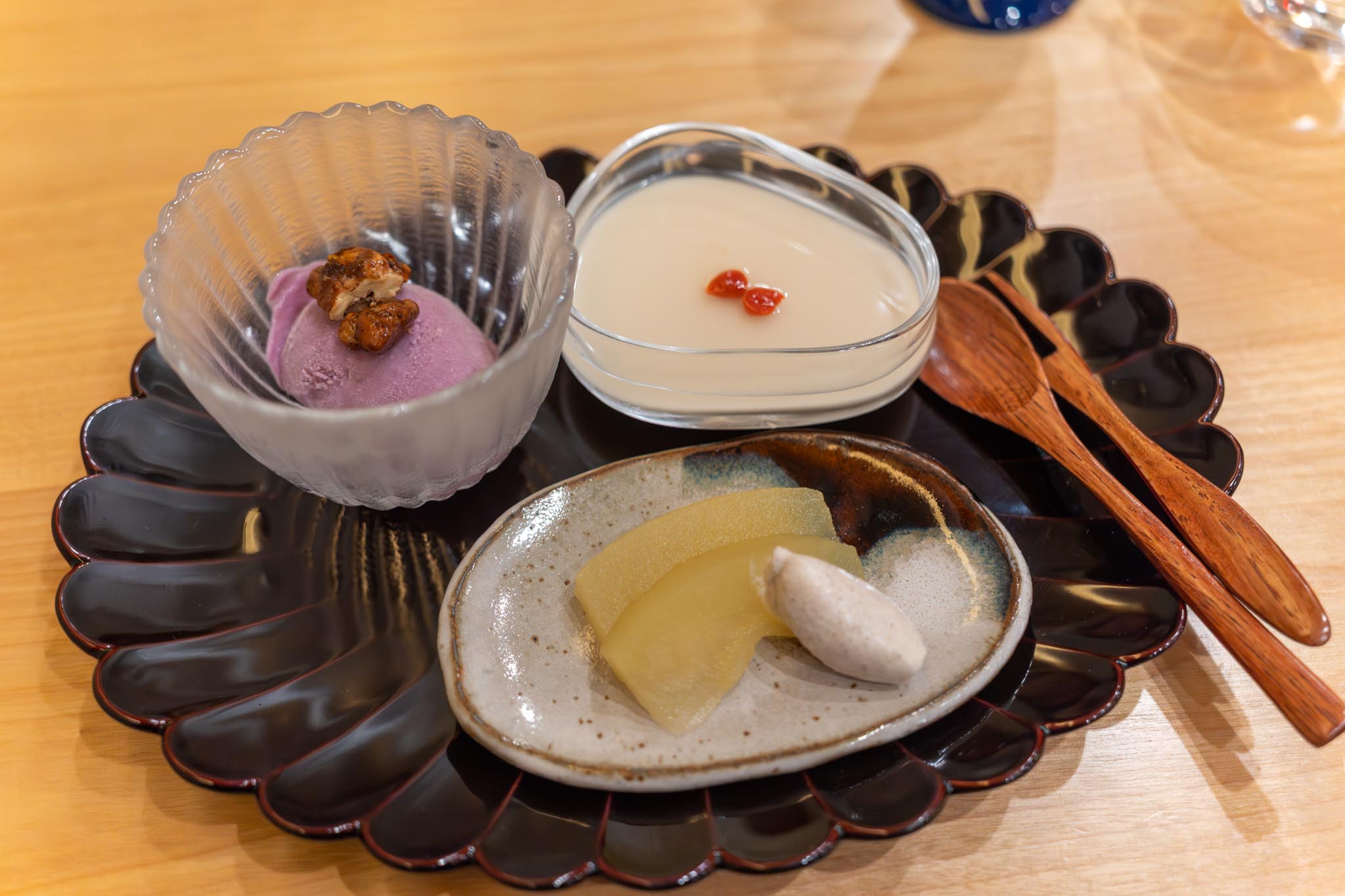
Dessert was served as three small items, which turned out to be a composed trio: a light, milky custard topped with a few red beans, a scoop of purple-hued ice cream finished with candied nuts, and slices of simmered fruit (likely pear or apple) with a small quenelle of nutty ice cream. Not overly sweet, very restrained, and a gentle way to close things out.
Overall, the menu reads as thoughtful, traditional, and seasonal, without trying to be flashy. If execution matched intent, this would be a quietly satisfying kaiseki, paced well and very much in its lane. We’d be curious to see how the menu evolves with the seasons, which is usually where meals like this really shine.
Kaiseki
Cauliflower Tempura
mitsuba, ginger, hokkaido snow crab-an
Seasonal Hassun
Aomori flounder “nanban-zuke”, Lotus root dumpling with bottarga
Ehime bluefin tuna, green onions with miso vinegar sauce
Shiso leaves rolled angel shrimp, japanese yam with italian caviar
Hokkaido scallop, persimmon with peanuts
Yamaguchi Tilefish Owan
signature dashi broth, estate grown turnip, maitake mushroom, spinach and yuzu
Oita Sea Bream Sashimi
napa cabbage, estate grown mizuna leaves and sesame ponzu sauce
Simmered Mie Toro Sawara Mackerel
string beans, burdock root
Wagyu Tendon and Japanese Taro Croquette
A5 Wagyu Tenderloin Jibuni
shiitake mushrooms, estate grown kabocha
Hokkaido Sea Urchin, Ikura and Mediterranean Bluefin Tuna Sushi Bowl
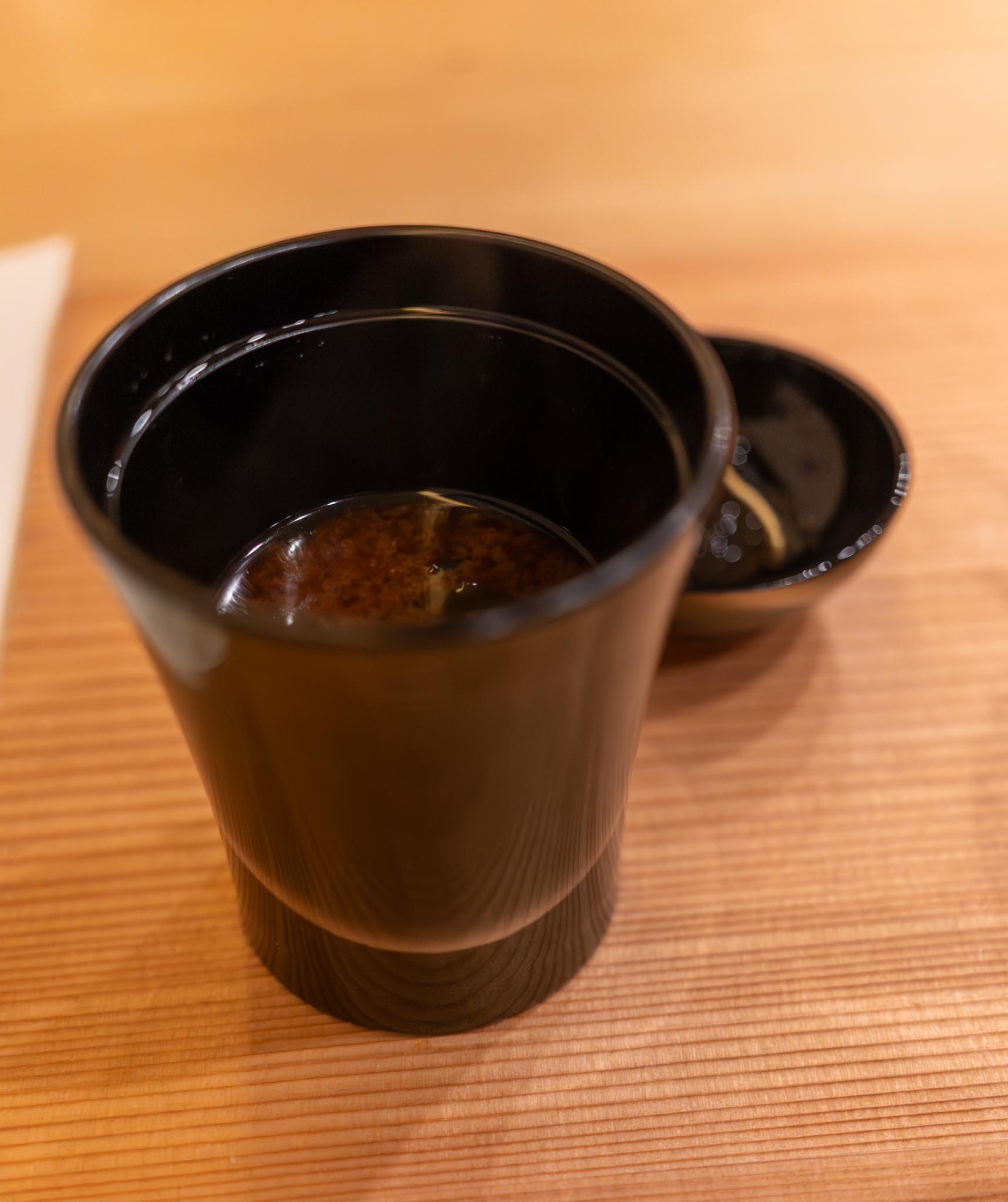
served with red miso soup
Chef’s Featured Desserts
If you want this normalized further (capitalization, punctuation consistency, or formatted for WordPress blocks), I can do that cleanly without changing any content.
Leave a Reply