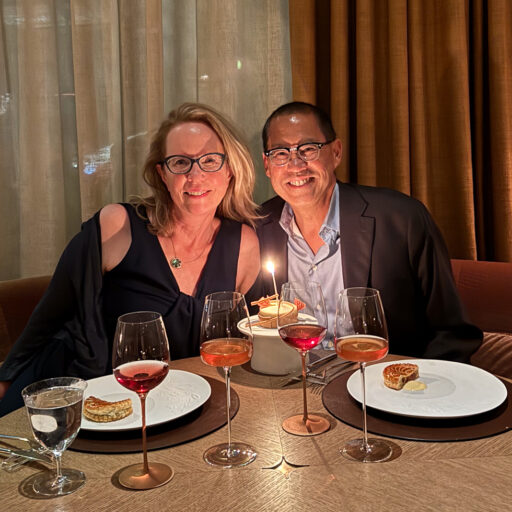
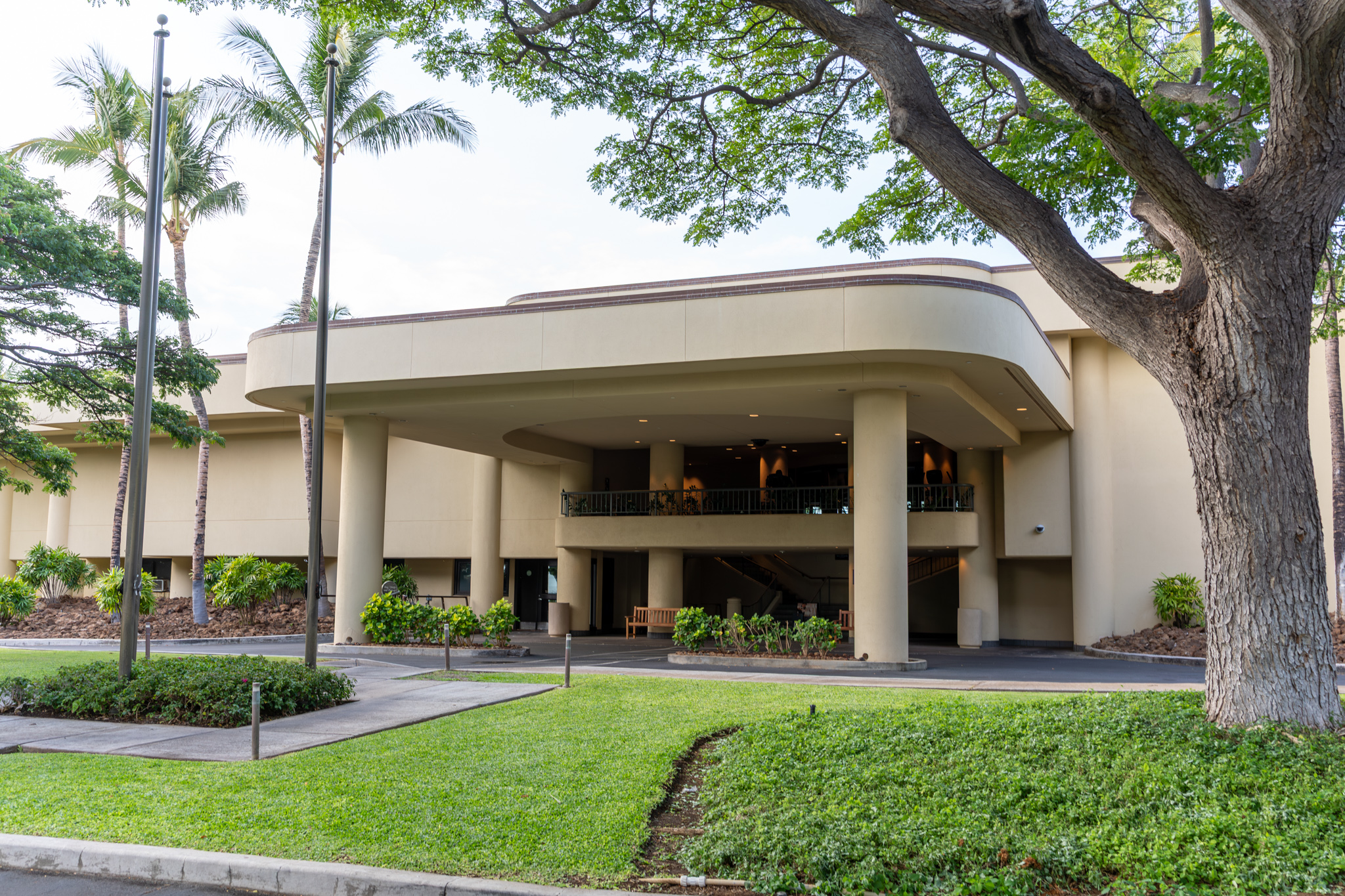
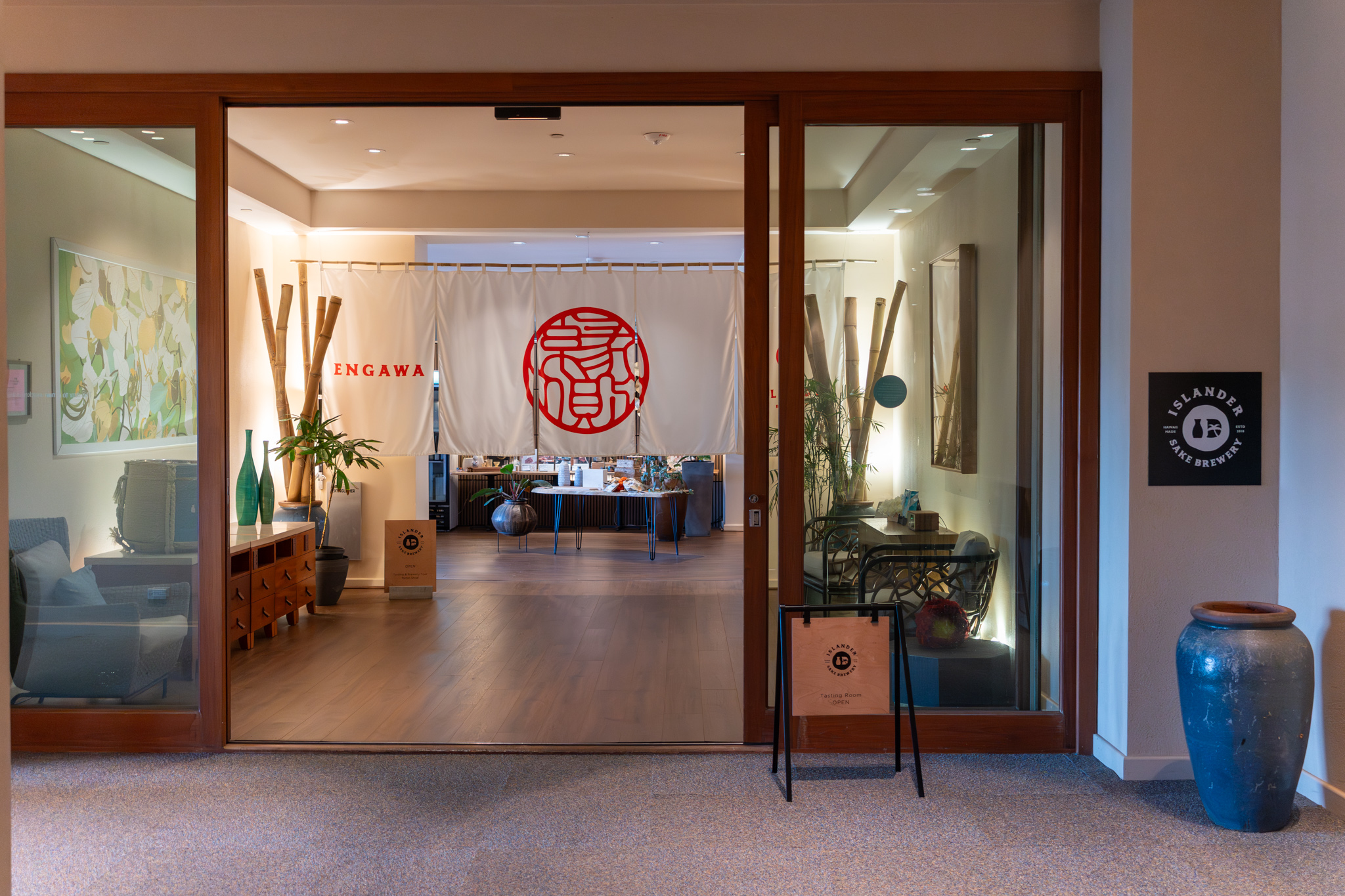
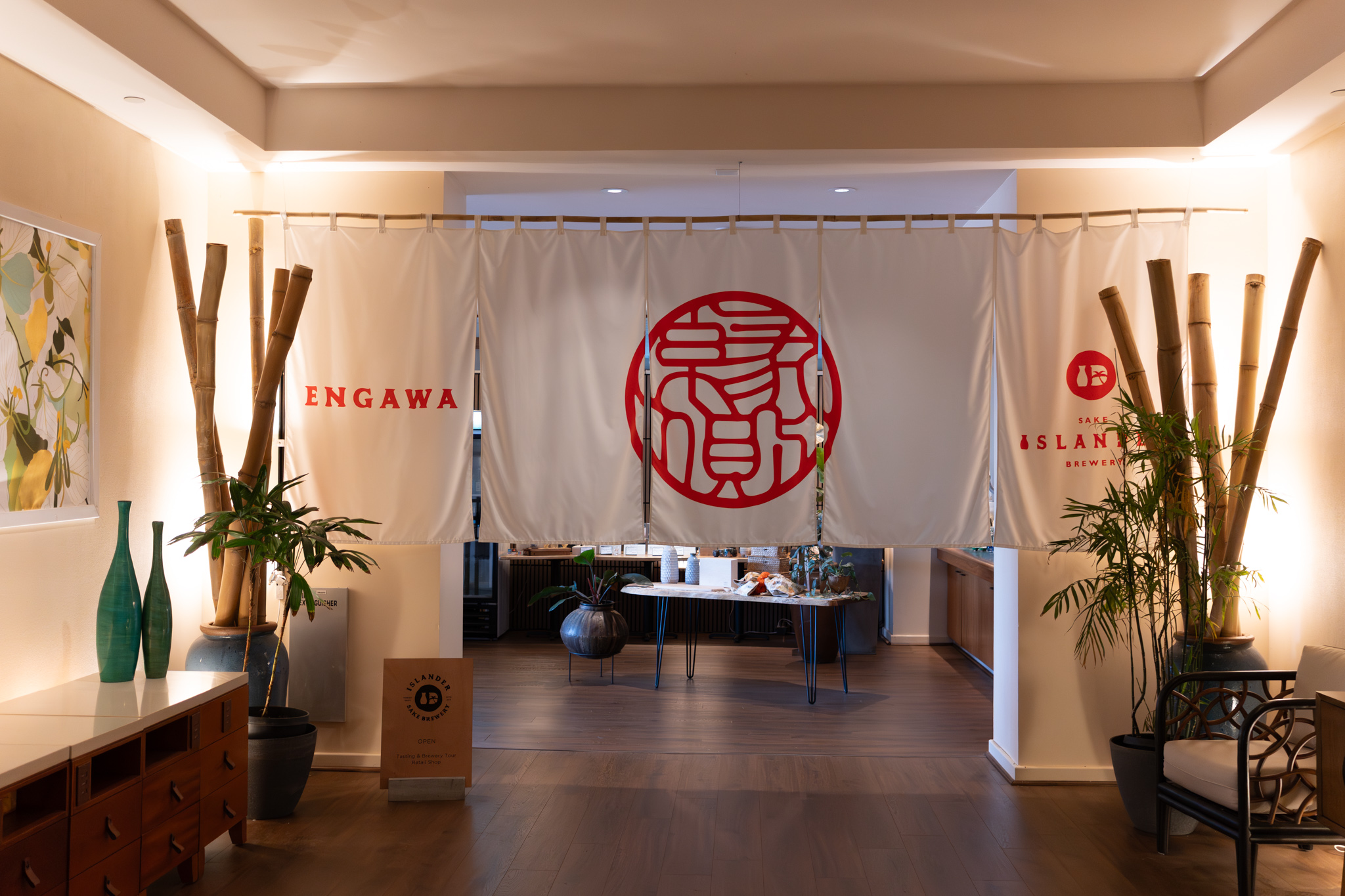
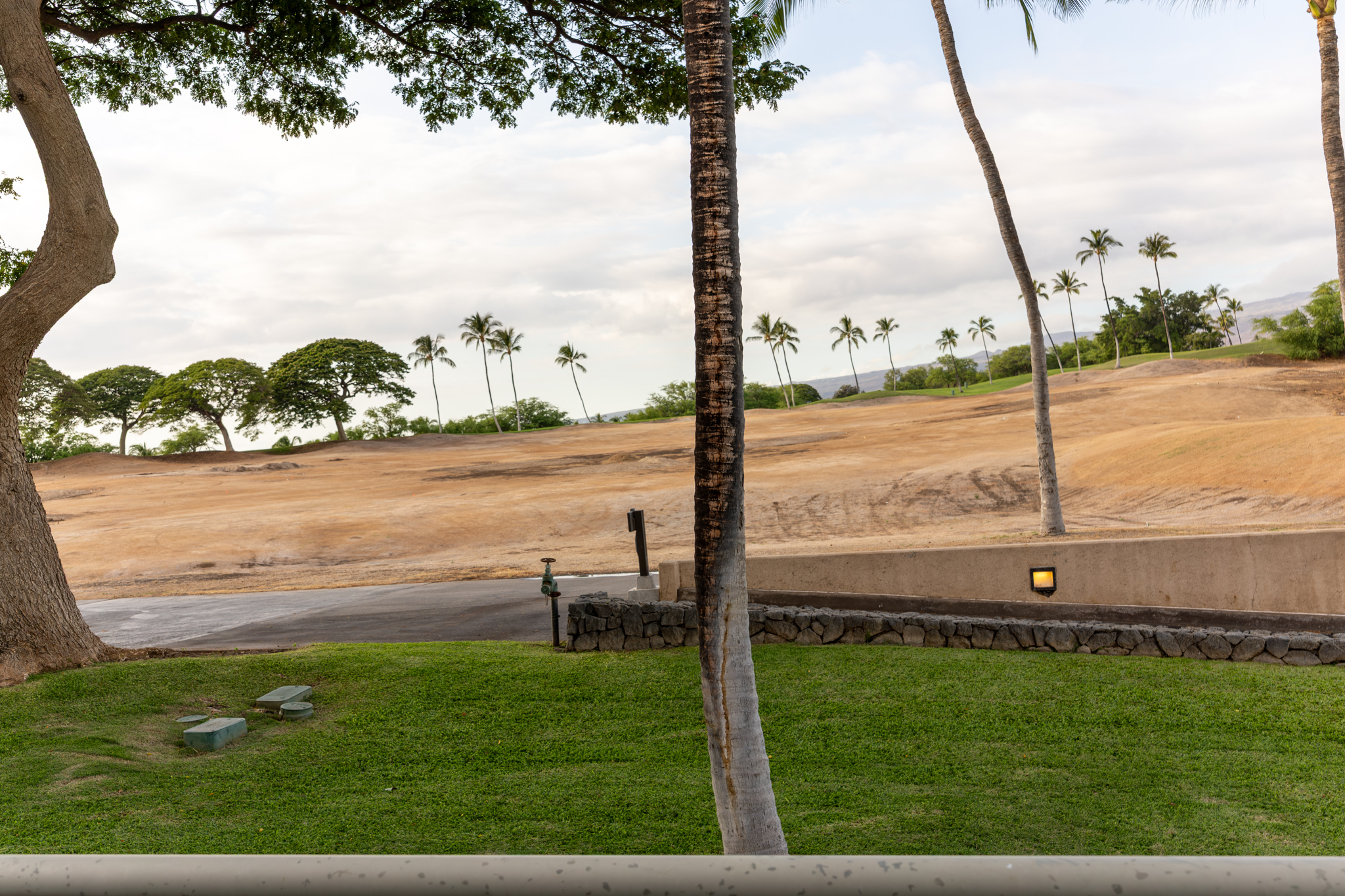
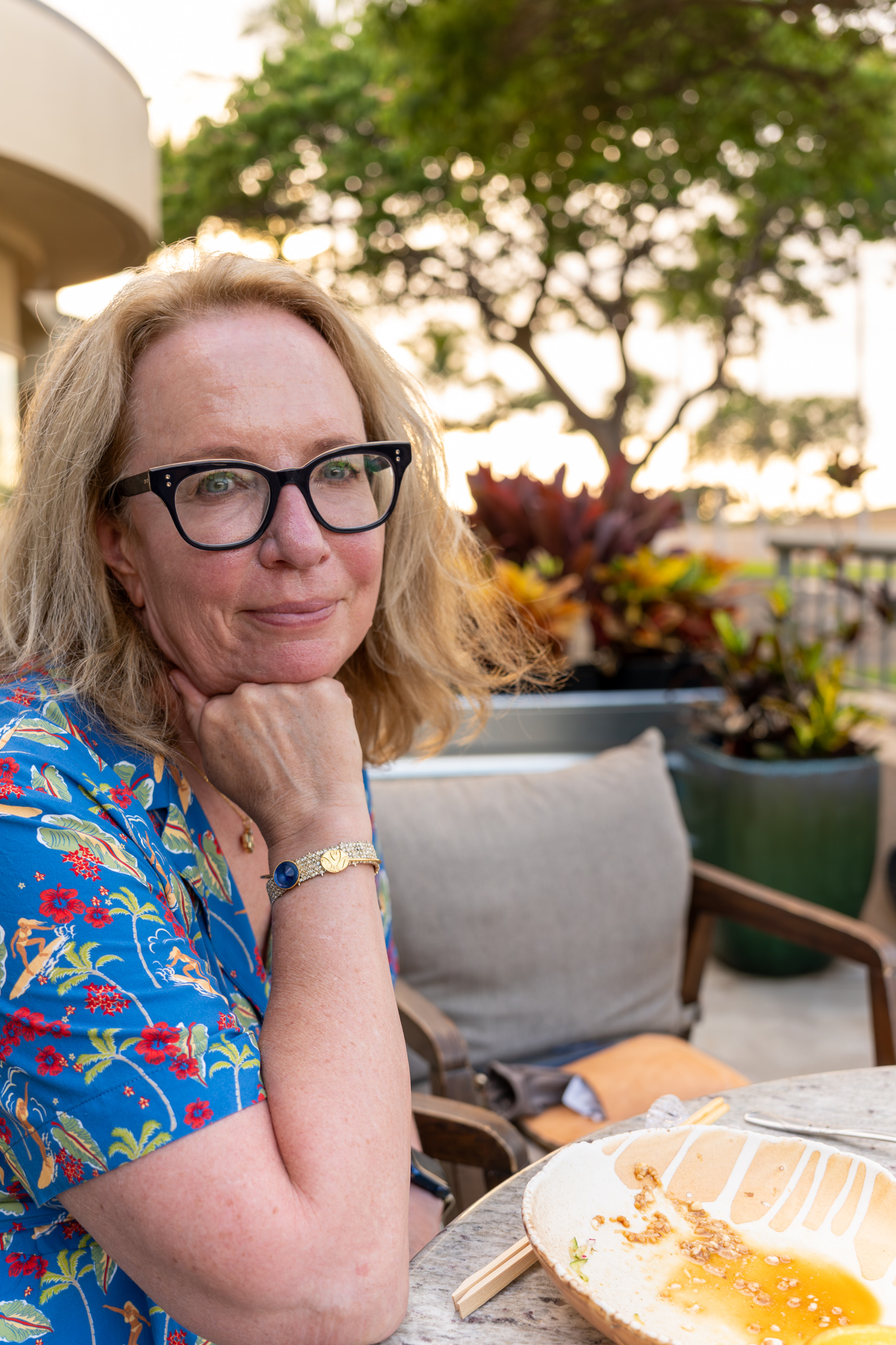
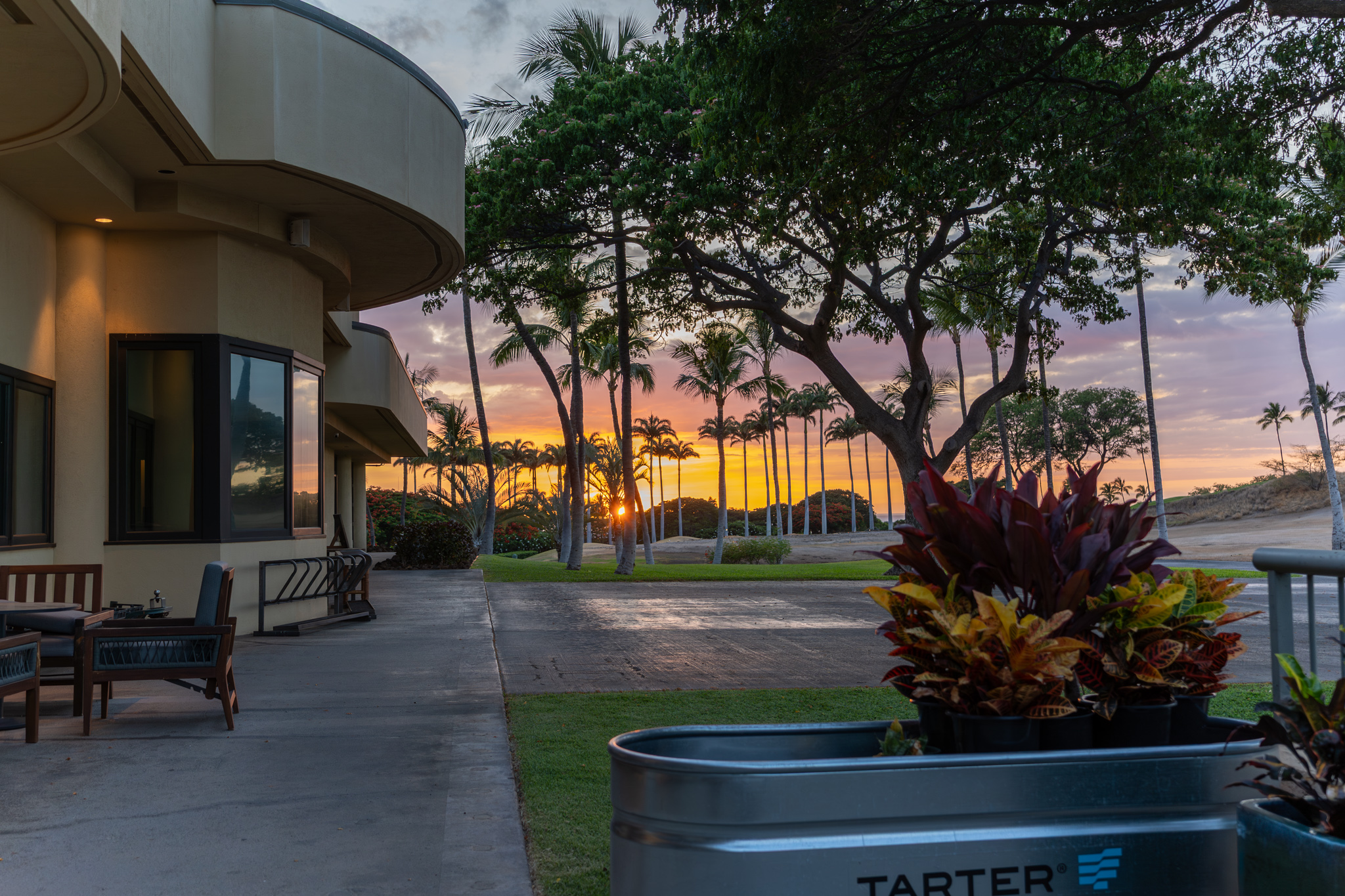
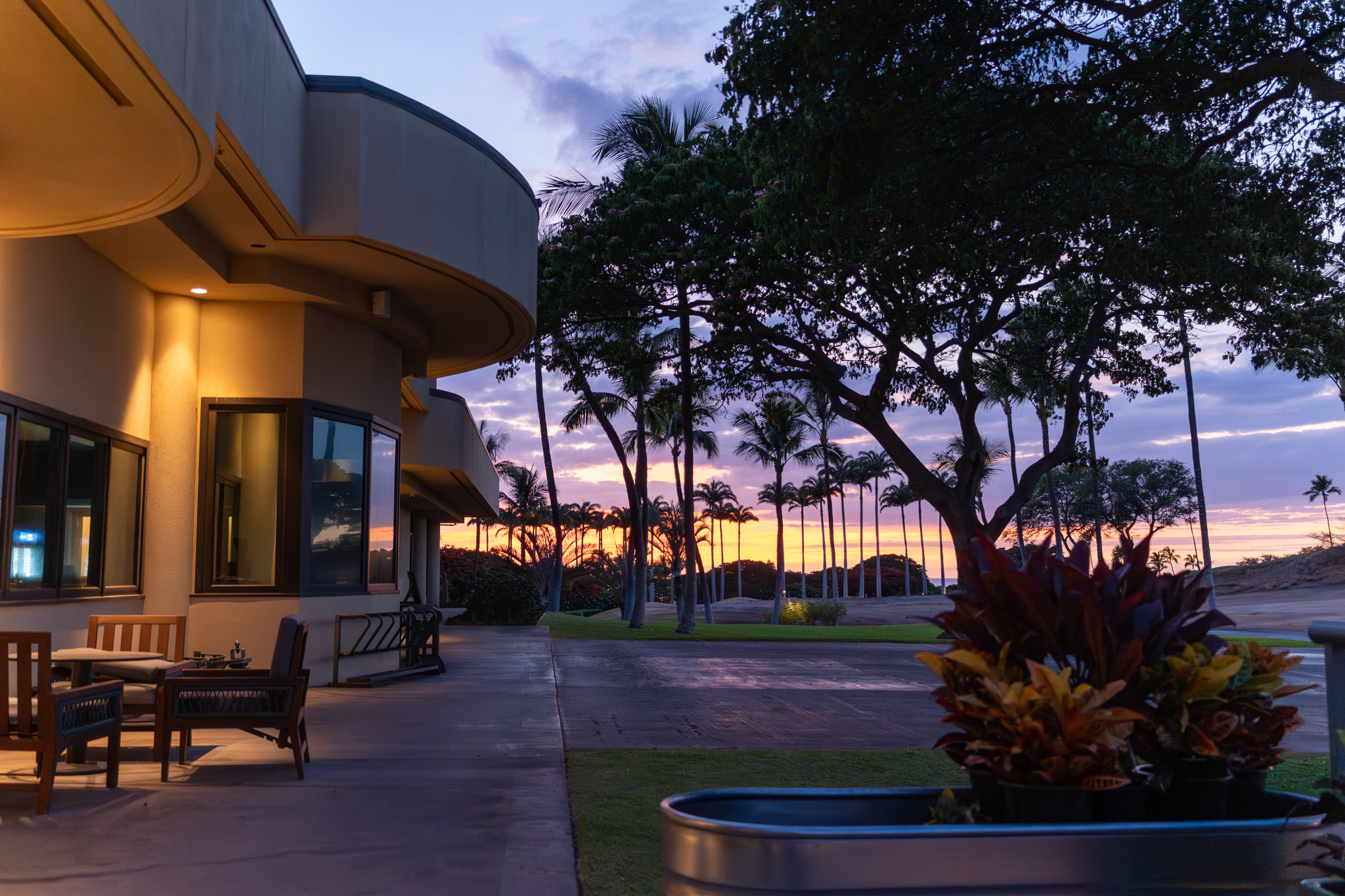
Andrea saw this place listed in Open Table. We love sake and this seemed like a great option. The restaurant is located at what I think was a golf clubhouse, but the course is currently under going renovations, so there wasn’t much activity here at this time other than the restaurant/brewery. To get here, you go past the guardhouse for the Mauna Kea resort and then continue to the clubhouse. There are are two seatings per evening and it sounds like 10 diners maximum per seating. We opted for the earlier 5:30pm seating. Seating was outside where we had a view of the bare ground where the gold course was being renovated, but being outside did of course allow us to see the sunset. There were only two other couples who were dining at the adjacent tables.
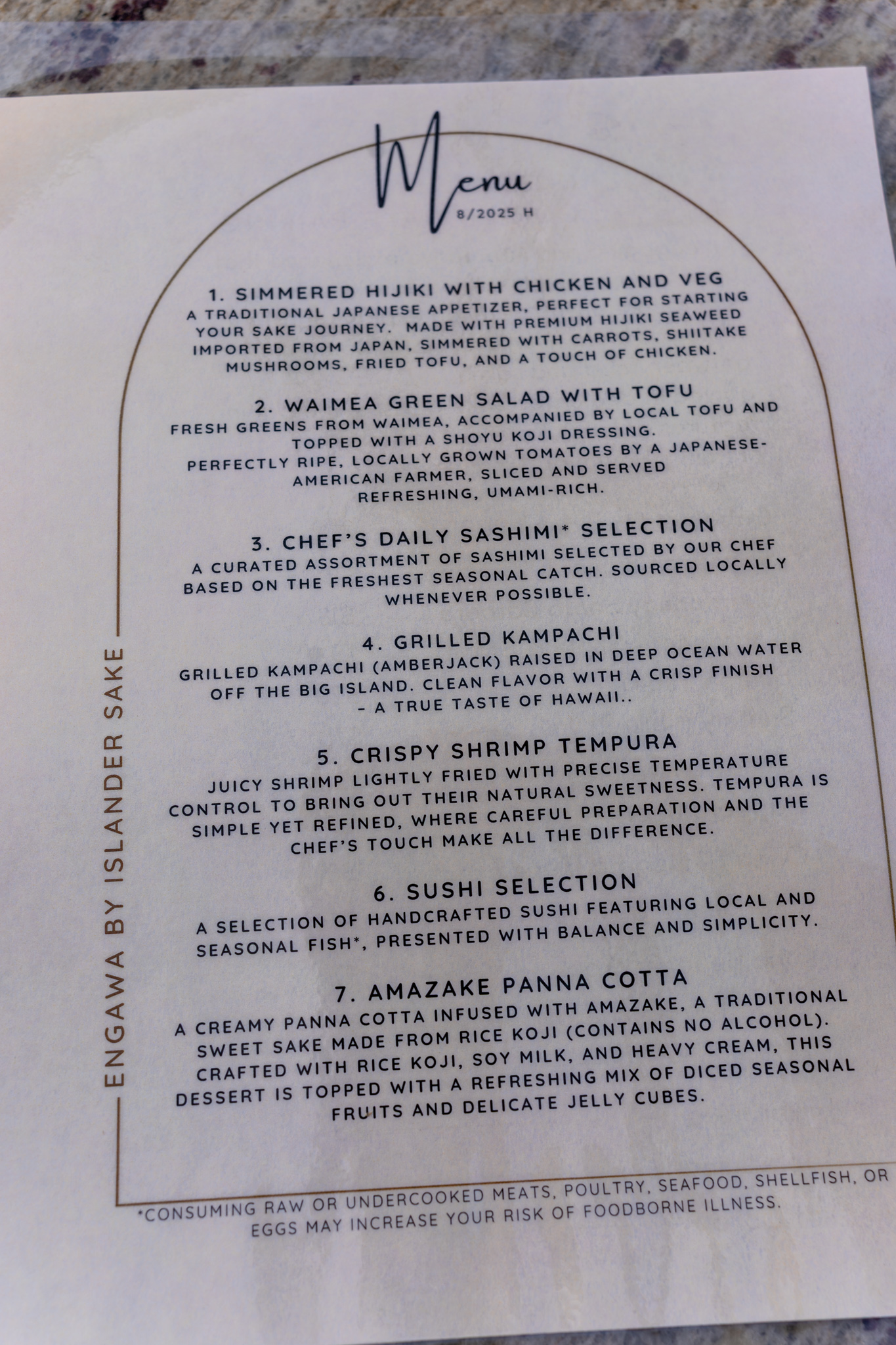
The menu consisted of 7 courses with a variety of preparations. The courses were:
- Simmered Hijiki with Chicken and Veg
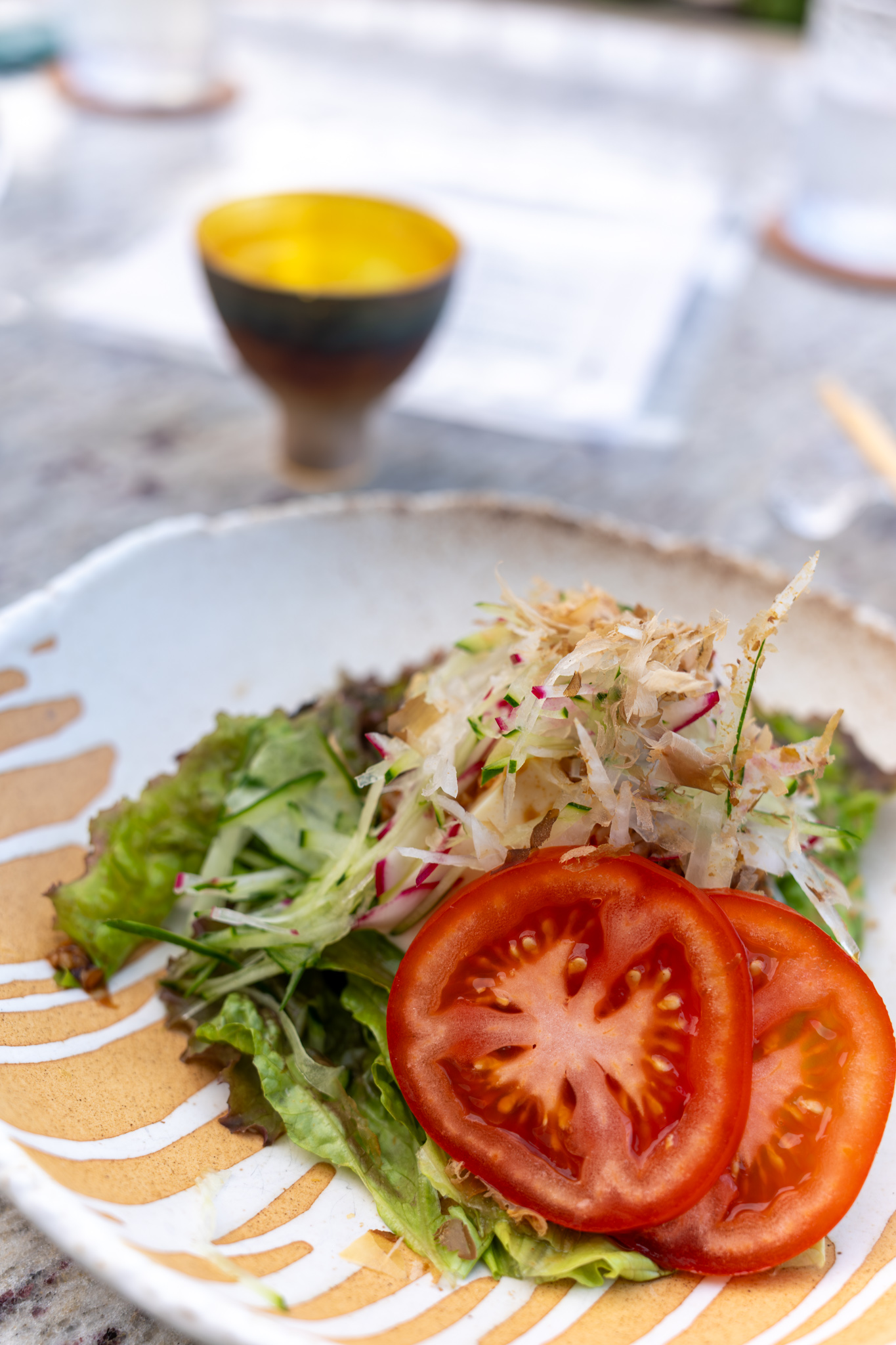
- Waimea Green Salad with Tofu
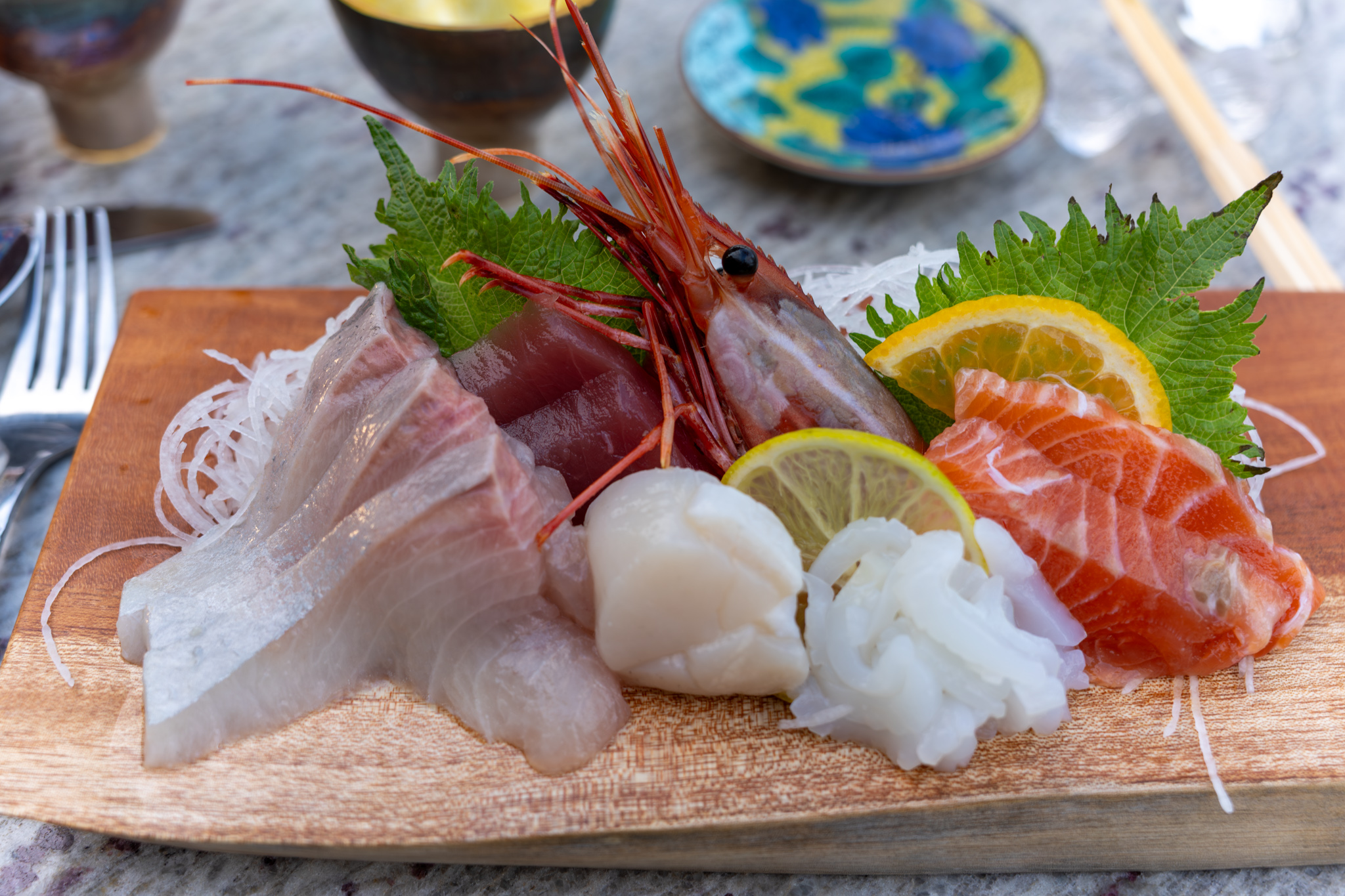
- Chef’s Daily Sashimi Selection
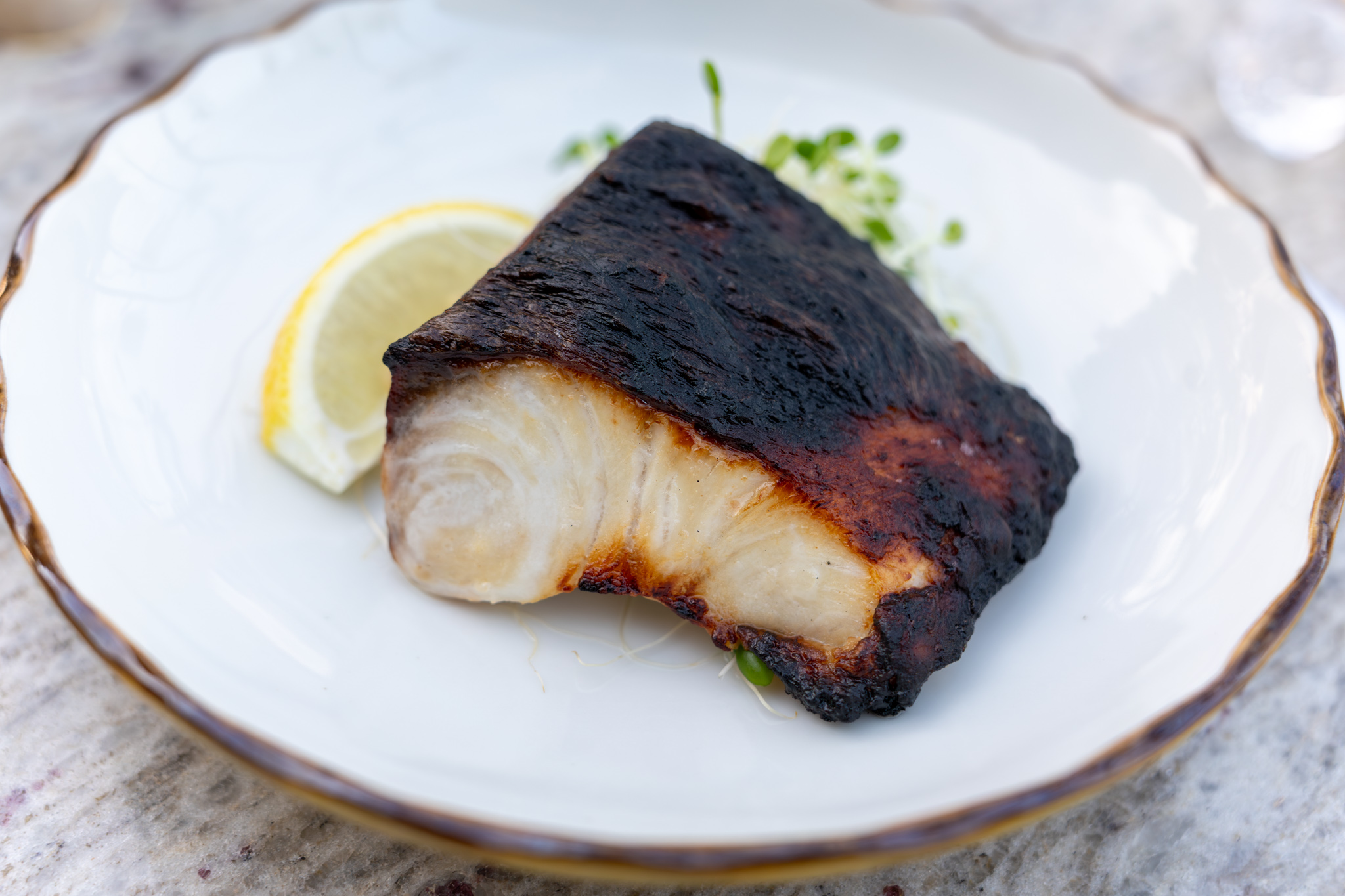
- Grilled Kampachi
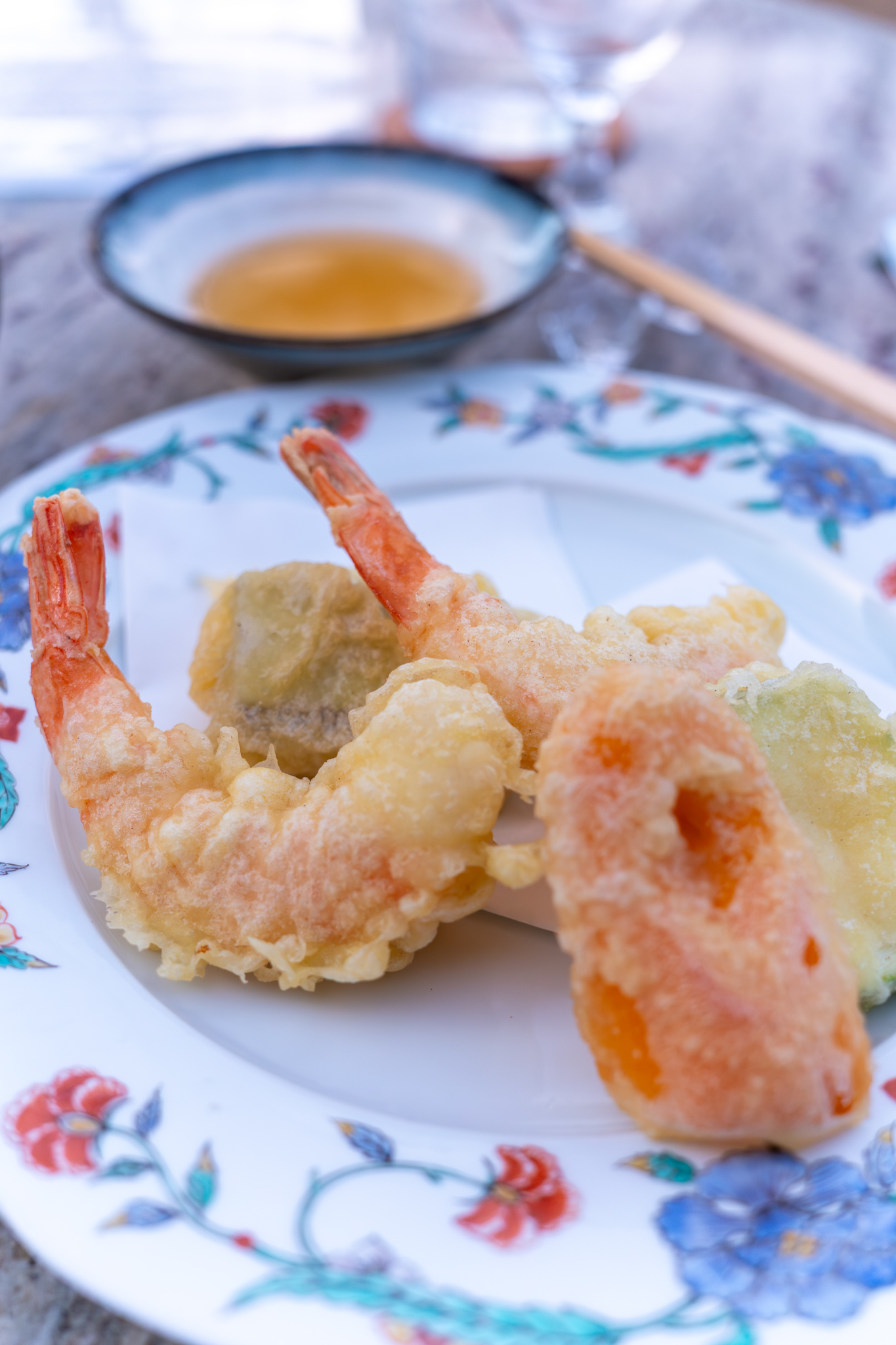
- Crispy Shrimp Tempura
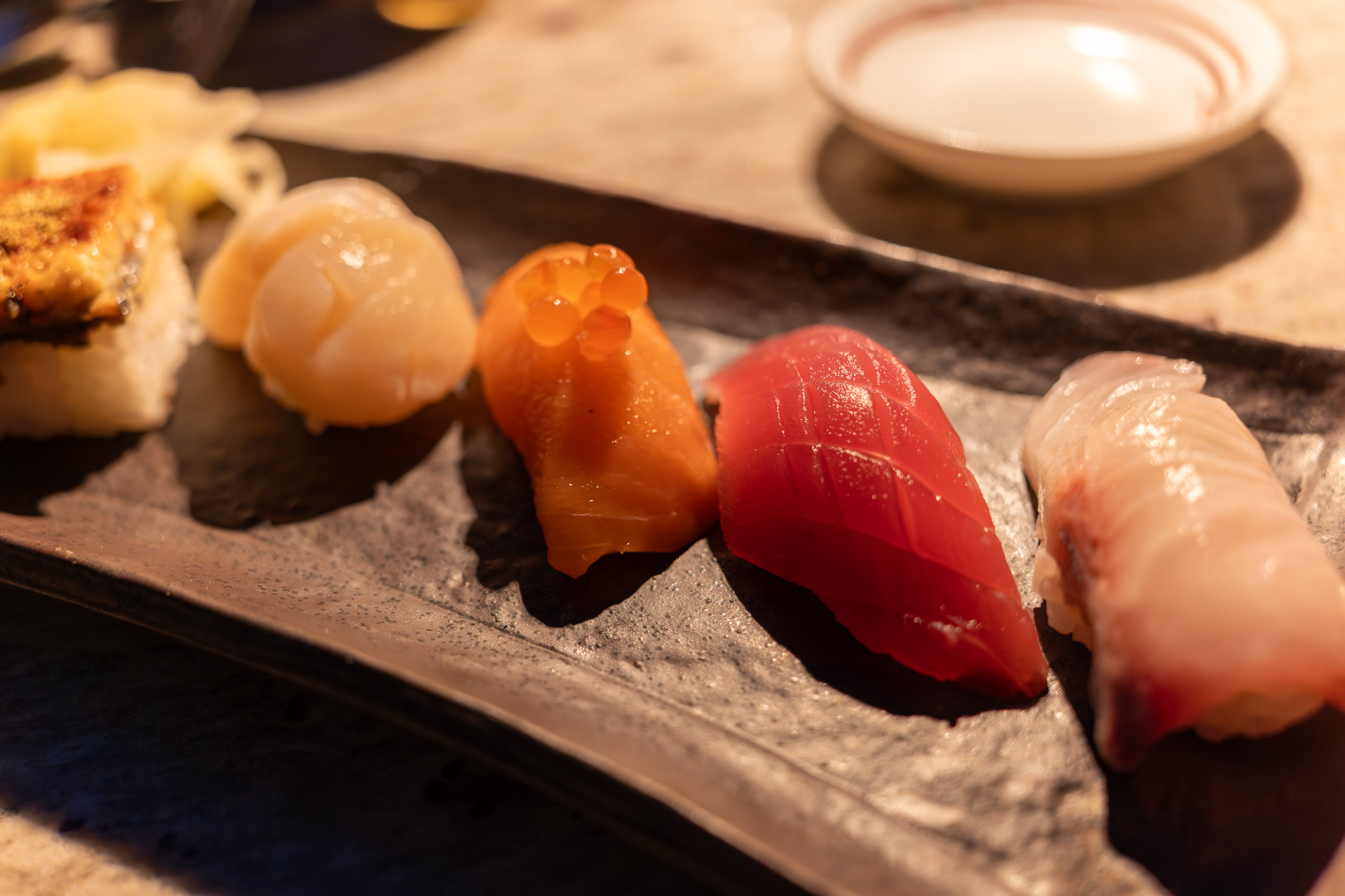
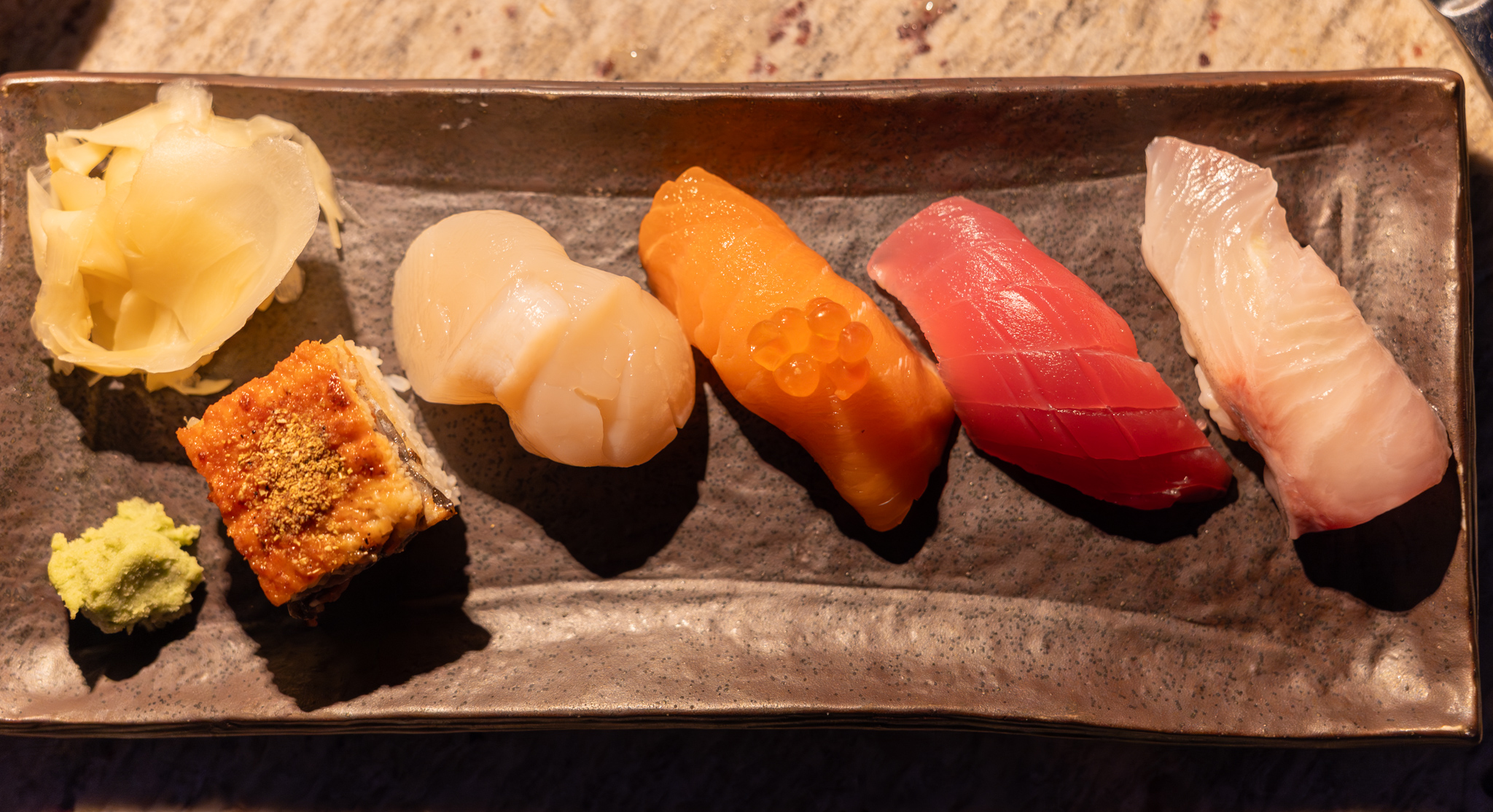
- Sushi Selection
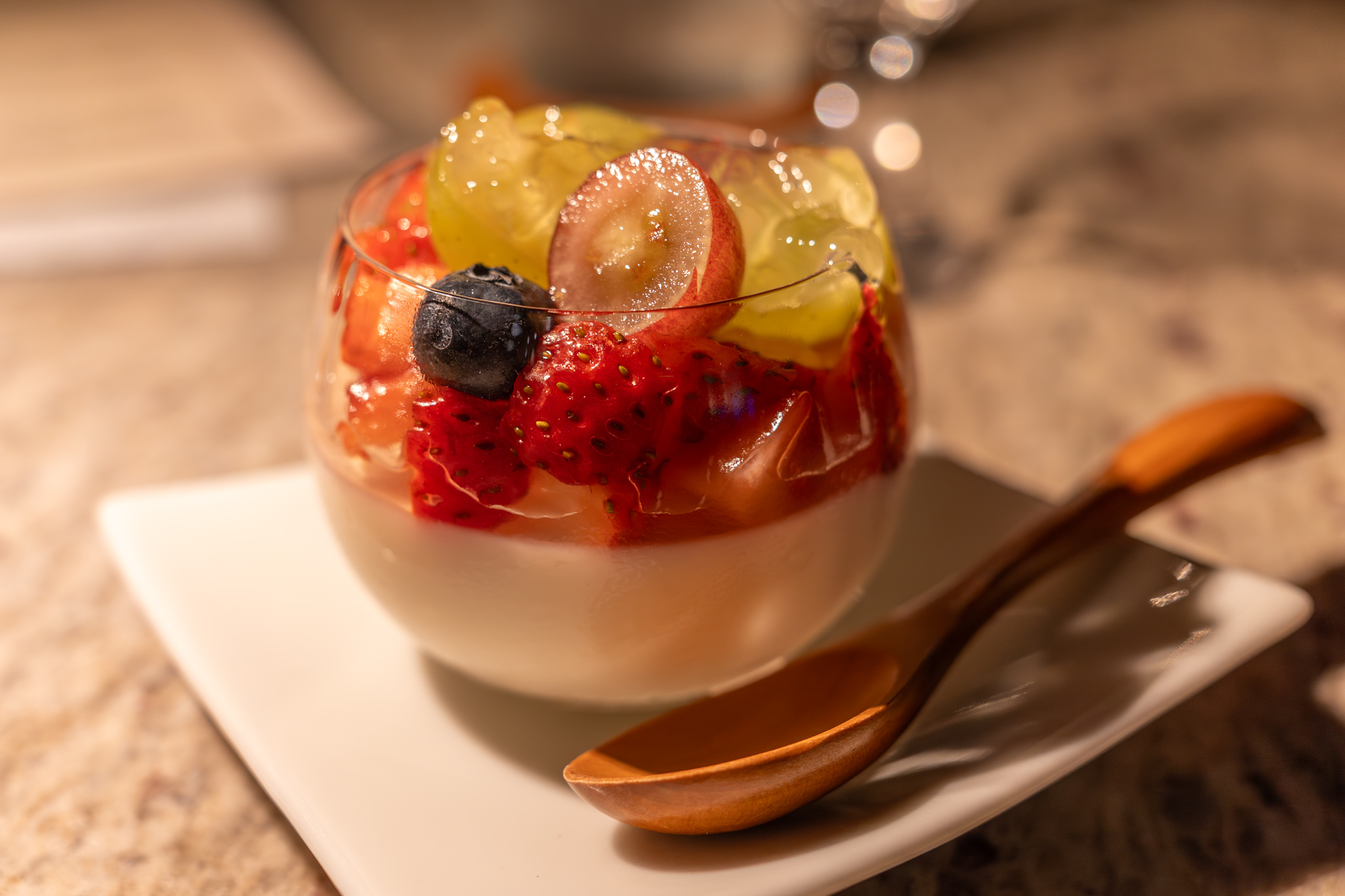
- Amazake Panna Cotta
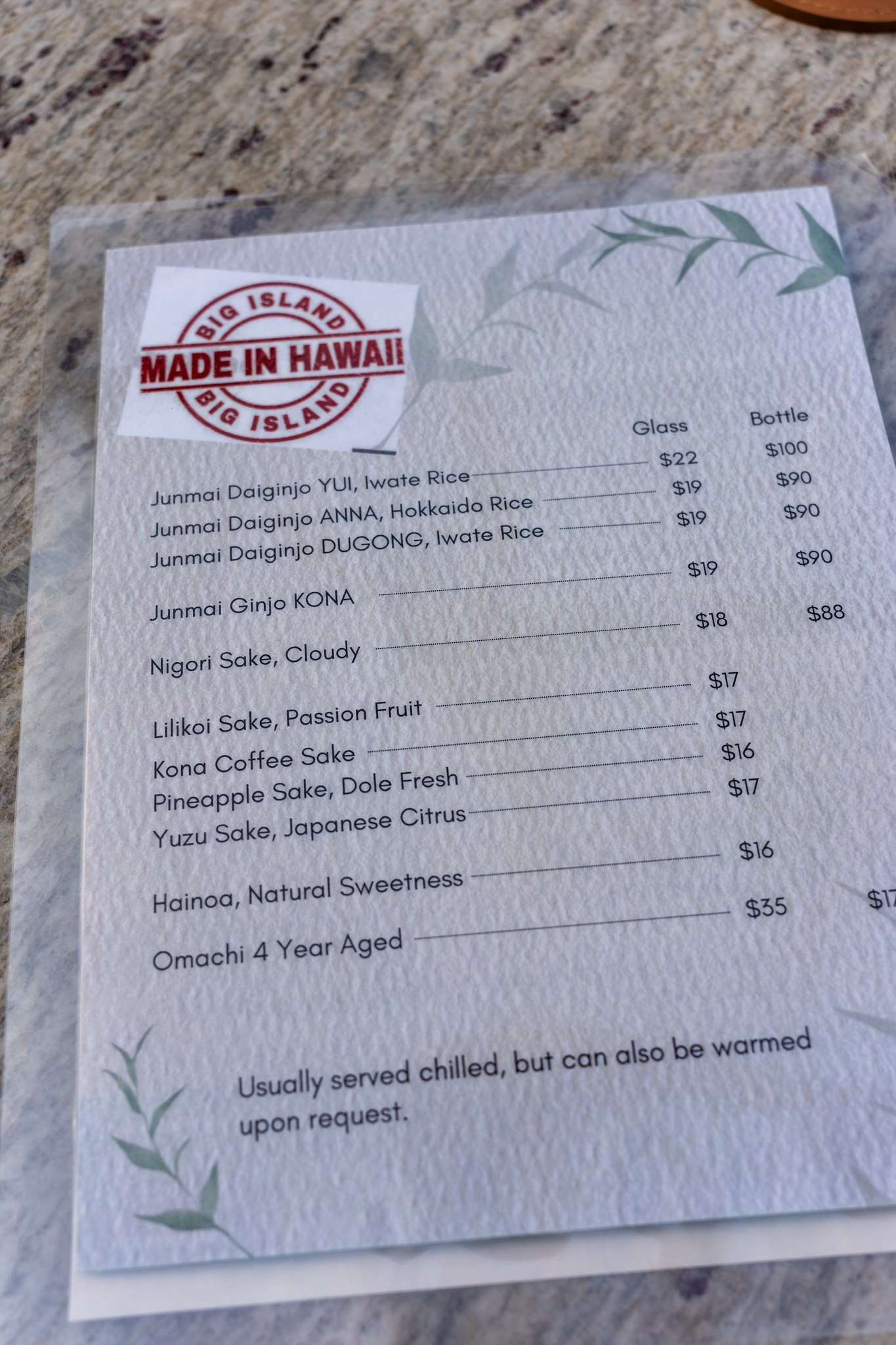
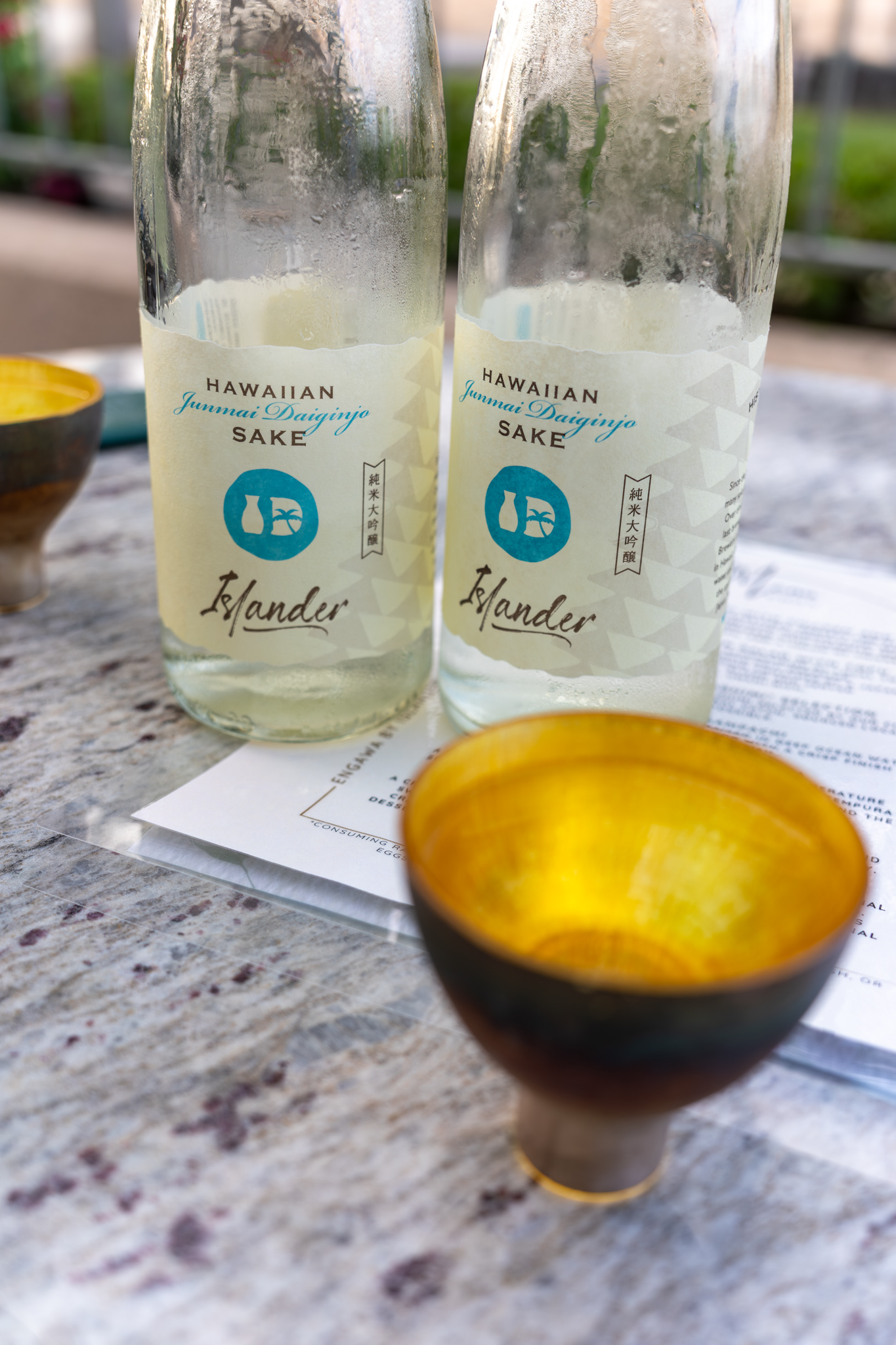
Included in the menu is one glass of sake which in this case was the KONA, a junmai ginjo and one of their newer offerings. There was also a 3-sake flight available, but we decided to go a la carte since we weren’t very interested in the flavored, sweet, or nigori sakes. The KONA was quite flavorful with the tropical fruit flavors, which I love. The waitperson (I forgot his name) was very good about explaining things. He talked about how sake can develop flavors a couple different ways one of which was to use cool temperature which was the case for this KONA.
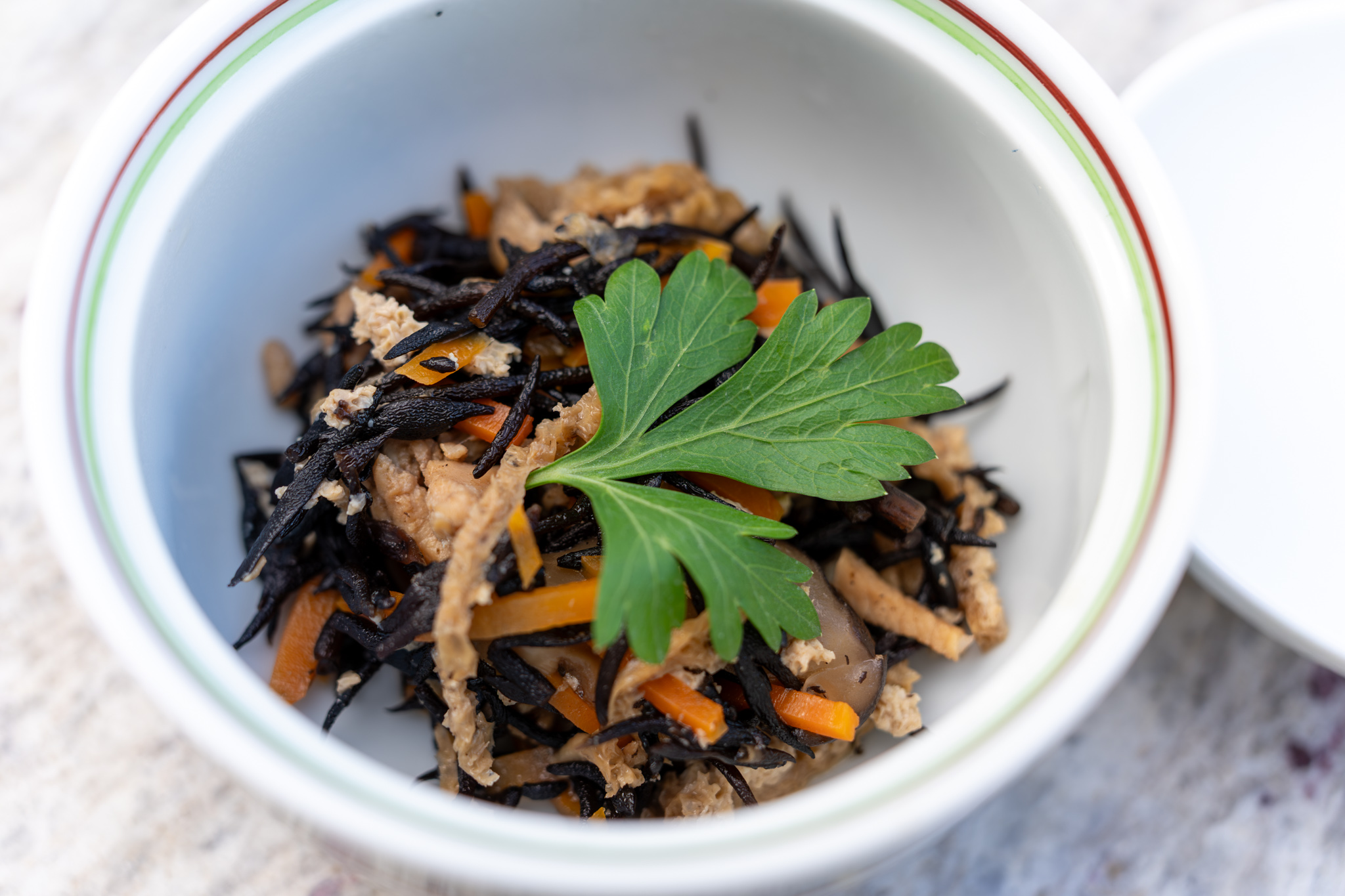
Our first course was a nicely flavored dish, umami from the shiitake mushrooms and some small pieces of chicken (and probably in the broth it was simmered in), seaweed from Japan, and bits of carrots, and fried tofu skin. A great start.
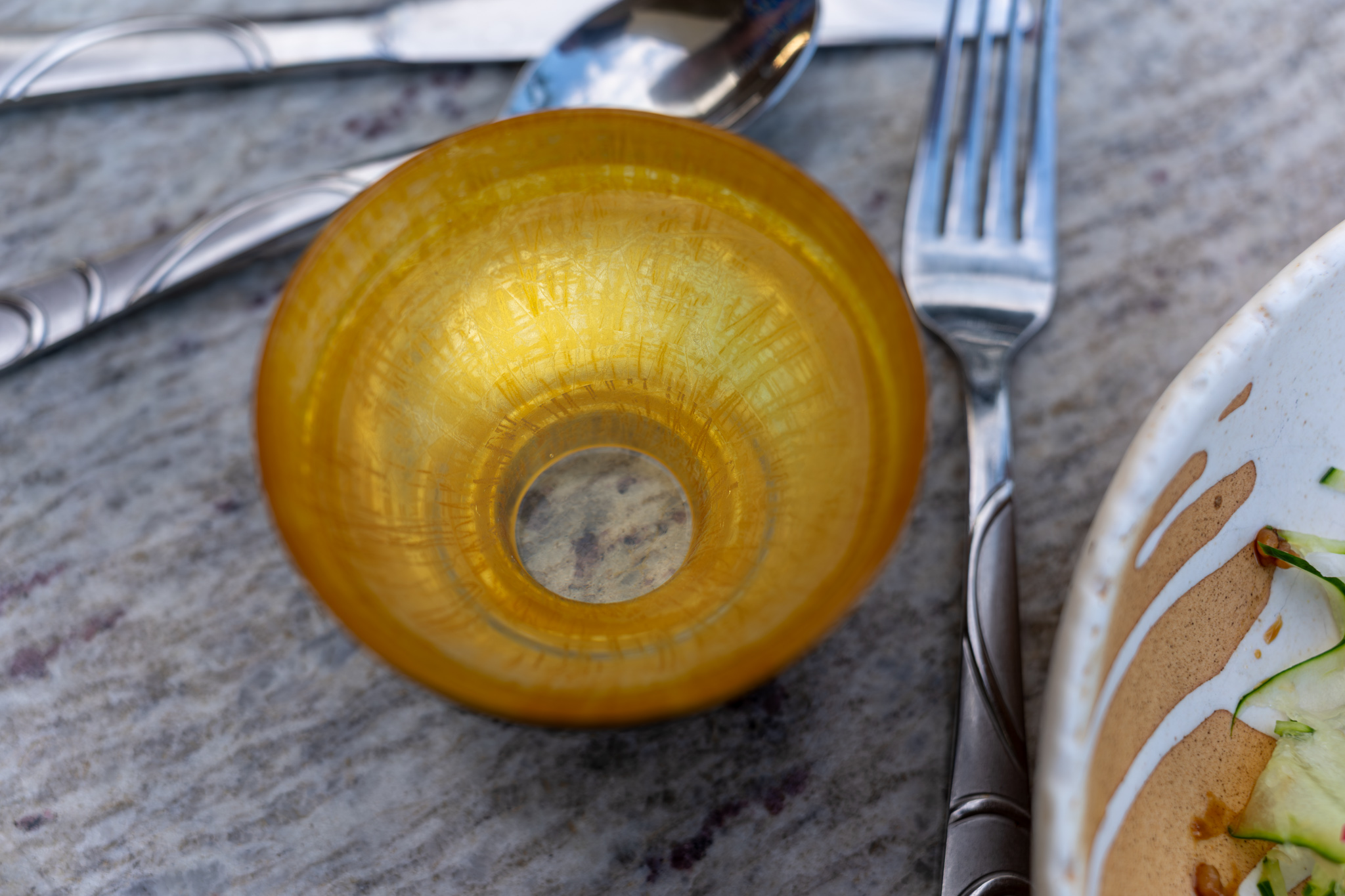
We ordered more sake. Andrea ordered a glass of the YUI junmai daiginjo made with rice from Iwate and I ordered ANNA junmai daiginjo made with Hokkaido rice. These were served in these beautiful sake cups with a gold interior, but the bottom was clear/transparent. Very cool.
The salad was made with greens from Waimea and the tofu was also made locally. What brought it together was the shoyu koji dressing.
Next came the sashimi. In general, we were both underwhelmed by this sashimi although the amaebi was the best of them. It was served still attached to the shrimp head. The body of the shrimp was deliciously sweet. I don’t know why anyone would eat a cooked shrimp when amaebi tastes this good. I was bummed that the head wasn’t served separately fried because I love eating fried shrimp head which is also incredibly flavorful.
Next came the grilled kanpachi. I can’t remember what marinade or glaze they used. Mine was particularly blackened and I’m not sure if that was intentional or not and the waitperson told me if I didn’t like it, I could just take it off, but tasted fine and no burnt flavor. The dish was relatively bland though, but the fish seemed of decently quality.
Then came the shrimp tempura. This was mainly two pieces of shrimp tempura and also some zucchini, carrot, and mushroom tempura. Tempura batter wasn’t too heavy or too light. Simple flavors, for better or for worse.
We ordered a couple more glasses of sake. Since we wanted to try other sake, I ordered the Dugong, also made with rice from Iwate but this time using Ginotome rice. Our waitperson had warned us that it was more full bodied which some chefs don’t like to use with fish, but we do like full bodied sake also. Andrea went with the Omachi which was aged 4 years. However, our waitperson told her that it needed to be warmed. I thought this meant to room temperature, but it was actually served like hot sake which we haven’t had in forever (and the places that do serve it hot are usually serving only cheap sake that way), so we were surprised by that. He explained that if it is chilled there isn’t as much flavor so warming it bring out more flavor. It was too different for us to say if we really liked it, but it wasn’t bad by any stretch and I still wonder if we would have preferred it served chilled instead or even just closer to room temp or even body temp (that is the warmest we’ve been served sake and that was at the IWA 5 sakemaker dinner at Birdsong).
Our penultimate course was the nigiri. These were again served very simply with no seasoning on the fish. The salmon had a few beads of ikura on it and of course the unagi was dressed and I ended finding these two the most flavorful by far. The others weren’t bad, but I think we’re used to having more flavor or the fish being of such incredible quality it speaks for itself.
For dessert, it was the amazake panna cotta which they were very clear in stating in the menu and when they served it that there was no alcohol from the amazake (not that it mattered to us, but it certainly could to others). I did enjoy this dessert with the fresh fruits and jellies.
Overall, the ambiance (despite the bare golf course) and the very small number of diners made this feel like a bespoke experience. I don’t think we found most of the fish/seafood dishes particularly flavorful. Maybe it’s just because our palates are so used to more flavor and I am assuming that they were going for a certain simplicity and presumably to just allow the fish/seafood to speak for itself. I think that would have been okay if the fish were some of the highest quality we’ve had, but it wasn’t (we do have a lot of nice sushi/sashimi here in SF although to be fair, we also pay a lot more for the places we like compared to here). We still enjoyed our experience and arguably this place is really about the sake which we most definitely did enjoy.
Leave a Reply